You’ve seen Part One and Part Two. In Part Three we will dive into the endless decisions indie writers must tackle in the branding arena. We’ll also sidestep into a discussion about fun collaborations.
I asked you recently about your insights on branding. We discussed what types of website platforms work best, whether to have a book sales platform separate from our author platform, and how it links up with our newsletter subscribers. We also talked about publishers’ marks and logos. Now that I can look back over four years of writing and creating my own marketing content, I wish I had given branding more consideration from the start for a consistent image. Still, I admit it has been a fascinating and fun journey creating all the content and seeing how it has advanced and improved to where I am now.
What are your goals for branding, Nicolas? What aspects of creating an author presence excite you most? What if any step seems like a necessary chore? Any favorite resources?
NL. I have barely started thinking about these presentation aspects of my indie business. I want to follow in your path eventually, but I admit I know nothing about logos and press marks, and creating an edition / publication company. I haven’t really given it any thought. I only know I should buy an ISBN number upon publishing a book, and grow my platform over time. I look forward to learning all about these details!
I’ve been thinking of domain names, though. For my website, I bought nicolaslemieux.com years ago, but I didn’t think of getting also the English version of my first name, with an “h”. Result: nicholaslemieux.com with an “h” is already taken. It’s a store with nothing in it (I saw a t-shirt at some point). It brags about being the “least profitable store on the Internet”. I offered them some money one time through my domain name registrar, but never got an answer. It might become available again because their site has gotten even worse since the last time I looked at it. So this was why I bought my .xyz extensions, both with “h” and without. Just try out and see: nicolaslemieux.xyz and nicholaslemieux.xyz.
I’m thinking of going more and more with book titles for my domain names, like sevendrifts.com and septaladerive.com, but I think I still want a website attached to my name. What do you think is best? One or the other? Or both? I could also get nicolaslemieuxauthor and nicholaslemieuxauthor, or something similar, but so far I haven’t fallen in love with another domain name. I’m not thinking of managing more than one website for the time being. I just redirect all my domain names, either to my only website or to my MailerLite landing page, as I do with the .xyz ones.
I may know next to nothing about branding, but I keep notes. The Creative Penn Podcast is a tremendous source of advice on the more technical aspects of writer marketing, so I guess I would rely on it when I get to that point. I know I’ll be able to rely on you as well, Darci, to answer some of the questions I will have. But with the limited time I have, I need to take those things one at a time.
Until I come closer to publishing, and I’m not there yet, I suspect I’ll want to play a bit with some ideas and questions before I can come up with anything like a brand.
Yes, I think branding may also be about presence, taking place in the world, being utterly and unapologetically ourselves, and finding our voices, not only as writers but also as marketers – maybe it’s the same. This comes with more questions. What do I give the hugest fuck about? What makes me mad, frustrated, sad, terrified? What is something I cannot bear to not act upon over the course of my life, or speak up about before I die? I want to find the most crucial questions and formulate them in a way that burns and drills down the murky depths of my soul. Everything will get more lively and interesting that way.
Darci, I love that you’re finding new avenues to share your work and grow your audience. I definitely believe the email list is a great move. You’ll own it forever, it is yours and yours only. The challenge is now to grow it. But time is on your side.
I followed Tim Grahl’s advice when I started building my writer platform and went for an email list from the get-go since he says it’s the most important part of it.
My first approach was to simply invite a lot of people to join my list, with just a simple DM, something short, nice, and respectful like “Hi, I’m sending out an email newsletter about my novel project. Would you mind if I added you to my list? Just tell me the best email for you.” I was thrilled at how positive the response was. About two out of twenty people I wrote to without any targeting joined my list. One out of two when I reached out for other writers. That’s 50%! I couldn’t believe it. And most people were so nice, and many gave me positive feedback on my free story Cradle. So I did this gradually, without spamming, without angering anyone, sending maybe ten or twenty messages per session, a little bit every day plus follow-ups – and there were many. Over 2021 and 2022, I built my list up to well over 2000 subscribers. I’ve kept it there since then.
Some would say my approach was flawed, not targeting the right audience. I say nah. I’m glad I reached out to so many fellow writers.
It was hard work, but oh my, was this rewarding! What it gave me, it’s priceless. It led me to connect with many new friends and acquaintances all over the planet. And now that we’re in touch, we can build upon those long-lasting relationships. Support each other. A good number of writers invited me to do interviews with them. This is how we met, Darci! So, yes, it was more than worth it.
But after a while, believe me, it can get old to keep sending the same kind of message over and over, no matter how rewarding it is. So my invitations trickled to a stop over time, probably sometime during 2022. But that’s okay. I have plenty on my hands already. It’s a good start, let’s say, and now I hope to grow my list all more organically.
How? I’m looking forward to creating my own podcast. It’s been a dream of mine for a while now. Podcasting… Will I really do it? When? Am I crapping my pants? Gotta think of finishing that book first…
After I publish Seven Drifts, I’ll want to crank up my collaborative project a couple of notches. I’ll want to do more of what we’re doing now. Or maybe, in a podcast version, audio or video or both, we’ll see. I love author interviews. I always derive so much from them. Again, it’s a matter of balance – I gotta write that book!
RomanceBookLovers.com – I like the concept. It sounds great. I’m intrigued. I’ll want to know more about it. Do they have the equivalent for science fiction? They probably do; I’ll want to spend some time researching that. Unless our awesome readers can help?
DLL. Thank you for breaking down your fantastic email list outreach. I love it! It seems pretty organic to me, which is awesome. I will definitely check out the Creative Penn Podcast and get back to Tim Grahl. You’ve talked about him before and he got lost in the shuffle. I predict when we come back next year for another chat, you’ll be on the finished side of publishing!
And aren’t those numbers mind-boggling? The first one back in February had me in a daze. The numbers kept going up by the hundreds every time I looked (which was often and I’m not ashamed to admit it 😁). The whole day seemed like a dream.
I discounted my Priss Starwillow short story collection to $.99 during the last one in July and got my first sales for that one too, 56 total! It made it to #4 on Amazon Best Sellers for Short Story Collections. I do believe there are similar blasts for sci-fi and fantasy without the romance component. But romance does seem to really take off with these kinds of collaborations. It’s those HEAs!
Something you are probably getting from me throughout this discussion is that other than the amazing help from my niece (recent editing and designing), readers, and fellow writers like you Nicolas, I have carried out every aspect of being an author on my own. I would love to hire services like editors, designers, audiobook narrators, etc., but I have no funds. I do have lots of determination to learn and for the most part it has all been a blast even if a ton of work I never anticipated engaging in post retirement. 😁
Here are my goals and progress in the branding arena:
Purchase a bundle of ISBNs for my upcoming paperback books so that I have more control over where to sell them, including developing a sales page on my website for signed copies (big goal – barely scratched the surface). I should say here though that I have had very nice experiences for the most part (a few little hiccups on occasion) with using the free ISBNs provided by Amazon and Draft2Digital. The print quality is excellent and the platforms are easy to use. It’s just that I end up with two versions of paperbacks out there with two ISBNs. It hasn’t killed me yet.
Create a publisher’s mark and name. I’m getting close and it will be added to my next paperback cover.
Decide whether to register the mark. (Decide whether to formally copyright my books for that matter… on my list but haven’t prioritized it yet.)
Learn to make wrap around cover in conjunction with displaying publisher’s mark. ✅ I’ve created my first wrap around with the help of another early connection and great friend, Lucky Noma. He referred me to a free resource, Bookow.com that provides a template service.
I considered designing a new logo recently but am sticking with the nice simple one I purchased for $30 using Fiverr’s logo design tool and have used since the beginning. The logo background color which is a deep purple is the brand color I incorporate into my newsletter, website, and other marketing graphics. I also try to stick with the same font. That is the extent of my branding so far. Any designs I create, I make sure to incorporate themes from my very first main female character and book, Selena Aires in Ursus Borealis. Her name means moon and she’s linked to the alpha of the North Star Pack. Moon and stars. I also created a logo on Canva specifically for The Starlight Chronicles covers.
I love collaborations!
NL. Speaking of collaborations… How did you come up with the delightful, very fluid format for your interviews? Did you have a lot of previous experience? The way you make them flow from one question to the next like a natural conversation, how you comment and answer each and every part of your interlocutor’s interventions; you transcend the Q&A format into a real conversation. I admit I am awed each time I read your Sunday Spotlight, and I marvel at the amount of work they must give you; but they are so masterfully done that I’d be sure not to be wrong if I say you’re having a blast doing them! Can you tell me a bit about how you started doing these great interviews?
DLL. Again, thank you so much for your comments and for appreciating what goes into creating my content! Q&As are fun AND a lot of work. I had to really think about how I went about this journey. For sure I did it in my typical pantser way like everything else. But I suppose I can point to my years of business correspondence for my style. When you want to communicate accurately and efficiently with a person who has no face but is important to getting the work done, you develop a writing style that is professional but also friendly and appealing, conversational.
I’ve always been thoughtful in my correspondence so that my message comes across cleanly and concisely and gets the results I need. That’s not to say I haven’t blundered or gotten wires crossed. Sometimes, I’m too hasty and that can lead to problems. It’s a delicate dance. The most enjoyable part of my interview sessions is responding to the answers because my guests never fail to inspire and spark more conversation
Learning As You Go…
NL. Now here’s another question I had in mind, Darci. You started writing your novels back in 2021 – at a time when I was already toiling away at the same draft of mine, I just finished only this year! You published an entire trilogy since then, and many wonderful short stories along the way, along with creating and tending to a beautiful, flourishing online platform. Watching you has been a great source of inspiration to me to be sure. I wonder, have you been learning everything as you went, or did you have prior experience or background that helped you get started so fast and so efficiently in both writing and marketing? What does your routine look like, what’s a typical writing/marketing day for you?
DLL. Thank you for your lovely comments, Nicolas! It is satisfying to put in the work to provide interesting, aesthetic, and hopefully helpful content on my website. To have someone appreciate not only the results but what goes into it is something to treasure. And to inspire someone… that’s always my hope. Thank you!
As for getting things published quickly, I have found after interviewing a multitude of authors, that each of us finds our own unique pace for every one of our stories. No two writers are alike, nor are any two stories. There are so many reasons for this that it is hard to distill into a simple answer. It comes down to deciding to let our baby go and what goes into that decision. I could very well have published mine too soon. Maybe the series would be better if I held on longer and did more rewrites. You’ll probably understand why I published when I did after reading more of my answers.
Learning as I Went – Yes! That’s the shortest and best answer. I’m a pantser at every level of life. Even my 34-year marriage has been nothing but learning as I go. LOL. I tend to dive in head first and navigate eagerly through the fishes, no matter how stinky or how beautiful, and I like to think I stick things out to the end. I’m sure readers can see that reflected in my books. It means I often learn things the hard way and have to go back and make adjustments. But that hasn’t killed me yet…
Prior experience – I spent my career as an admin assistant and paralegal, which equals decades of business and legal writing and editing. That’s about as formal as my experience gets. And that’s okay because my age is my biggest benefit when it comes to experience. Some might find age to be a questionable bullet point on a resume. I’m a dedicated learner, and every decade has seen me embracing a new craft, which makes life more interesting and gives me the tools I need to tackle more new things, like the mechanics of writing and publishing. It also means I can draw on a long work history, life experiences, traveling adventures, and hundreds of books, movies, and documentaries.
Starting fast and efficiently – Freedom is the best word to explain how I dove right in and kept up with the indie author learning curve. My husband has supported my need to spend inordinate amounts of time on this pursuit. We are also both committed to living a financially simple lifestyle, and I was able to retire at 59 to write full-time. Freedom.
Typical routine – What’s that? LOL. Being a pantser plays havoc with routines. That said, after writing full-time for the last year and a half, I can happily say there is some structure to my days. Retirement in those first months looked a lot like letting a kid run amok in a candy shop. I was all over the place doing everything I wanted when I wanted… early morning, late night, and everything in between just because I could.
These days, I’m in my office at a normal time of the morning, not the same time mind you, just normal.
It depends on whether my husband is available for chats over the breakfast table. But at some point, I sit at my desktop computer, dogs in their beds, and divide the next eight hours between writing, researching, learning, and creating and implementing marketing content. (Mixing these up helps when I get stuck on a scene.)
However, if we want a cozy day in the living room where he watches classic movies, my office becomes my laptop and the couch, dogs in their beds, maybe a little knitting or cross-stitching.
NL. I don’t even know myself, whether I’m a pantser or a plotter! I guess I must be both because I’ve been doing them both profusely over the course of writing Seven Drifts. It seems like the more I plan, the more room there is for improvisation and brainstorming within the constraints of the plan, and the more I go by the seat of my pants, the more there is to plan and organize afterward.
DLL. And I can’t wait to read the results, Nicolas. Seven Drifts is going to be epic!
I hope our discussion has highlighted issues and considerations for those of you who are on this journey. Questions and comments are welcome! Part Four, Writing Contests, is next and will close out this month’s writer’s life conversation with Nicolas Lemieux.
Another topic Nicolas and I like to get into is engaging with our readers through our newsletters and social media. Nicolas shared creative ways to reach out and offer encouragement in Part One. He also covered his recent website and newsletter revamps. We’ll go more in-depth here in Part Two and cover other avenues. We veer into the writing process as well. Enjoy!
I’ve found that what I use for outreach and how I use it has morphed quite a bit throughout the different stages of my writing career. I’ve now focused my activities on the positive places where I have the most fun and even if they don’t quite achieve all I’m going for, I’m sticking with them because I enjoy the creativity and the connections. Even the smallest rewards keep me going. You happen to be one of those early connections I met on Twitter that I’m grateful for every day. 😄
The X platform bears mentioning as one that I’ve since left despite meeting you and a few other supportive writers. It turned sour after becoming more political and rife with unchecked misinformation, so I made the hard choice and gave up a large following. Today, my four main engagements are:
4) an amazing promo collaboration with RomanceBookLovers.com, coordinated through a Facebook group.
I’ll break these out a bit below.
What outreach avenues work best for you? Have you given up certain platforms in favor of others?
NL. I have my email list that I hope to grow further over time, and my website, with my blog, Writing Notes. I added a new page this summer, to show off my past interviews.
I use social media as well while keeping in mind they may not be the awesome, efficient marketing tool they are often portrayed to be. But they are a great way to find people and reach out to them, and to practice showing up and being visible in the world. I am not too systematic about them, but I use a tool you might find interesting. It’s called Buffer. It has a free version that allows you to connect up to three social platforms. So instead of having to post three or four different times, I can do it only once. I post to Buffer, and my post goes automatically to Instagram (and Facebook), LinkedIn, and Twitter-X. Buffer has a scheduler, so you can spread your posts over time.
I agree, Twitter-X has turned sour. I have been thinking of leaving it for a while, but I feared losing contact with some nice, interesting people I met there. I went with the wave a couple of years back and opened an account on Mastodon, hoping to find a replacement. It didn’t work for me. Although I met some nice people during the short time I was there, I found the platform itself, the way it works, kind of tedious. Eventually, I closed the account. Sorry guys, if you love Mastodon. I wish you all the best. I’m not saying I won’t be back someday.
Anyways. Granted, it was easy to reach out to a lot of new people over X, but LinkedIn is even better. LinkedIn is where I connected with the most people while first growing my list, so I’m keeping it as one of my two favorites. I have good friends and contacts there. My other favorite, the most fun and addictive to be in, is Instagram. My Facebook page is more like an afterthought, already taken care of whenever I create something on Instagram.
Also… Did I mention I have a mild obsession with podcasts?
DLL. And you always have great suggestions for them! I need to catch up. It’s funny, I visit LinkedIn more now that I’ve connected with you there. I decided not to accept every invite for a connection because so many are trying to sell services. So, I’m being picky and haven’t yet found my voice. Plus, I left my previous work history intact, which is kind of weird now that I’ve updated my profile to my pen name. So, my connections include old work life and new work life.
I tried Threads but didn’t make waves there at all. It probably would be helpful to use an app that lets you post simultaneously. Thanks for sharing that. I confess after Facebook account mixups, I have moments where I contemplate going offline, but there would be so many people I’d miss like you. And there’s that momentum you can’t get back… And that marketing thing…
NL. Isn’t that so? I’ve been having the same thoughts about going offline, at least for longer periods of time. And Facebook, yes, it is a puzzle. How all the Meta tools relate isn’t really clear in every aspect. Particularly FB profile vs FB page; how to use them in clearer, different ways… I do not really know.
DLL.I’ve enjoyed blogging about the writer’s life and interviewing authors on my website from the outset of this journey, but this year, I’ve tried two new activities. I was thrilled to finally launch my newsletter (with assistance from my niece), and I’m having a blast with that creative outlet despite the challenges of adding subscribers. While I managed to grow my audience through a couple of promotions, the unsubscribers far outnumber the new ones. Sigh… That doesn’t stop me from thinking of new ways to offer fun content and writer’s life insights and tips. Right now, readers are getting monthly installments of a paranormal fantasy short story, a Fae vs. Punk Mashup…
You’re getting a sneak preview of my next installment.
The second boost in my outreach was joining the RomanceBookLovers.com quarterly book blasts. I discovered the collaboration concept last year and was grateful for the opportunity to hop on the bandwagon where a wonderful coordinator created a Facebook page and a website and invited authors to participate together in blasting out their books. I combined the first event with the launch of Tigris Vetus. You’ve probably seen those posts about stuffing your Kindles. That’s the kind of big event I’m talking about.
I participated in two this year and will participate again in October. The events netted me 13,494 processed orders (I’m including orders outside the events because they’re nominal and it’s easier than deducting them 🙂). These numbers are primarily orders for books one and two in The Starlight Chronicles. I didn’t register Tigris Vetus, but it benefited collaterally with sales totaling 86 for the year (to date). That tells you how readers can’t resist free books. I know I can’t, which means I’ve got a huge TBR to get through!
Platforms like Apple Books and BookBub have also jumped on the bandwagon and are now helping us help them by promoting our events. Apple even encourages becoming an affiliate where you earn a small amount for each click on your book even if it doesn’t result in a download.
On the downside. When you get your book loaded into thousands of Kindles during these blasts, you risk saturating your market with readers who will forget instantly that your book is in their library and never read it. Out of this 13,000, I’ve received around 20 Amazon reviews and a handful of Goodreads reviews. Still, you never know when a reader will browse their Kindle library and get started on your book. That’s always an exciting prospect.
I didn’t mean to ramble on about what really is more of a promotion than engagement, but I think they are somewhat related because those of us participating have a lot of fun collaborating in the outreach. I recommend finding a group suited to your genre and community.
NL. Wait… woooah! Did you really say 13,494 orders? For books #1 and #2? My eyes are kind of bulging right now… And 86 more for the book you didn’t even register, book #3? Okay, I’m kind of dealing with a frenetic heartbeat right now. I can’t wait to try one of those! Even if they’re free books you’re giving away, that’s so many potential new readers… My head is spinning! Way to go, Darci!
Do they have statistics on how many people are likely to actually read the books? Even if it’s a small percentage, I’d say it’s still more than worth it for sure. You’ve received 20 Amazon reviews and a handful on Goodreads in a short time; I think that is extraordinary! I can’t wait to have one of two books published so I can experiment with all these platforms like you do. Thank you so much for sharing your experience Darci, it is such an inspiration and a big source of motivation. The reason I can’t wait is how fun it sounds, actually.
About The Writing Craft
So, I had a few topics in mind, more about the writing itself – If you’d like to elaborate on them… How do you structure your stories? Do you have one, or many, go-to techniques and mentors? How do you first approach a new story? Plot or character? Pantsing or planning? All of these answers, or is there an emergent pattern that you can identify?
DLL. Credit goes to pantsing, and I’m not talking about when mischievous kids pull down someone’s pants. 😉A pantser am I. At least that was my predominant method in the beginning. These days, I tend to engage in multiple techniques, and often apply many to the same project, even a little outlining and planning, but mostly pantsing. I let the story dictate what’s needed.
I would also say my story structure style developed after enjoying and distilling hundreds of books by authors who write in my genres (listed later). Another technique that seems to work wonders is playing out scenes in my head as I fall asleep or wake up. I’m not good at writing them down, but I manage to retain the highlights. I’ll keep calling up the scene and working it out in that fashion so that when I sit down to write, it flows.
Confessions…
So, the pantsing worked in the beginning, and it is my preferred method, but I’ve let too many other techniques get under my skin after all the learning I’ve done since I started. I’m going to admit something here for the first time. I have over half a dozen novels in the works with significant progress on all of them, but they are all in a holding pattern because I’ve learned too much about writing! What does this bizarre admission mean? I’m experiencing a form of writer’s block.
When I wrote my series, I didn’t know enough to understand I was making mistakes and my writing flowed. It was free. The story I wanted to tell came out as my characters told it. Granted, the results were amateurish, but I had a complete story I could rewrite as I acquired new skills. Now that I understand more about structure, story beats, showing versus telling, and all that crap, I’m getting stuck in story after story soon after introducing my characters and the initial chapters. The plot falls apart and I lose my mojo.
The instincts I relied on at the beginning of my journey that carried me through until now have gone silent. I think it’s a clash between intuition and rules. All the stuff I’ve learned in the last four years fills my head and haunts me at the keyboard.
I realize I am my own worst enemy and it’s up to me to figure it out. It’s just that writing has been so steady since I started that it’s hard to face writer’s block for the first time and with so many stories. It’s like having a log jam in my brain. It’s an environment that has fostered a bad case of imposter syndrome, a feeling I no longer have a complete story in me… I suppose it’s the first major readjustment I’ve had to face.
NL. I can empathize with that! Each time I think my writing has improved, or that I’ve mastered some new aspect of the craft, the exact same thing happens to me. Also, after pretty much every developmental editor call, it takes me a couple of days to readjust and switch gears. I have too many ideas, and it’s like my vision of what I’m trying to achieve is too clear, if that’s even possible. Too clear, too beautiful, too grand. If I try to write when I’m in that state, I find I just can’t.
I need to remember to lower my expectations, tell myself it’s only a “shitty n-th draft”, that it won’t be, and shouldn’t be perfect, that it’s not supposed to, that I’m not even expected to get this right the first time, or the second, or even this time around, because there will be opportunities to make things better later. Until I tell myself all of these things, no writing is really possible. It takes some doing. But I think that with time and practice, we can learn to reconcile what we learn and know with our inner natural flow.
It was the same with singing. Singing was easy before I took my first voice lesson. But when I started learning and being more serious about it, it suddenly became very complicated. Almost impossible. It was like I couldn’t coordinate my breathing and my jaw, and my tongue, and my shoulders and whatever other parts of my body, and sing the right notes with the right rhythm, and do all of it at once. My brain was interfering with my natural flow. But eventually, after some time and a lot of practice and training, the technique became second nature (at least to a degree), and singing became a positive experience again.
DLL.Ah. Muscle memory and forming habits. I like that comparison, Nicolas. Part of my problem is that I haven’t taken enough breaks since starting this journey. I have many mindful craft projects I can turn to. Balance is the key, isn’t it? But jeez! It’s so hard to peel myself away from my passion.
Then… there’s my age. The sense of time ticking away gives me a sense of urgency to get my stories out there. Why do we only get the freedom of time when we are old and there never seems to be enough of it?
Okay, that’s it for confessions and rants. 😁
NL. Why does time always insist on passing so fast? Couldn’t we just slow it down or something? At 58, I can feel it as well. And too often, that pressure, to get it all out before it’s too late, I’ll just say… It gets overwhelming. And the imposter syndrome. That too can get overwhelming at times. We could write an entire book on it, and we wouldn’t even scratch the surface. But I want to thank you for your confessions, Darci, and I enjoy reading your rantings.
How About Genre?
On a different note, I noticed you’ve been playing with all kinds of genres, generally staying within the realm of romance, but adventuring into historical pirate stories, full-fledged fantasy, and of course, shape-shifting supernatural… I love the underneath freedom of creativity that this underlines in your work. Generally speaking, what’s your approach to genre? If you feel like thinking aloud on this for a while… I’ll just sit back and relax, and bask in whatever you have to say like the true fan that I am.
DLL. You’re so chill, Nicolas. I can totally picture you basking in the sun with your hat. And you’re the first person who’s said you’re my fan! Thank you for that.
NL. Absolutely.
DLL. This is an easy question. I write what I love to read. As I mentioned, I read a lot, which covers the spectrum from thrillers, historical fiction, romance, cozy mysteries, to sci-fi and fantasy. But fantasy as you pointed out allows us to paint with such wide brush strokes.
Fantasy romance, especially the paranormal or supernatural variety was the genre that consumed me as a reader in that first pandemic summer in 2020. Writers like Grace Draven (whom I interviewed last December), Laura Thalassa, Jeanienne Frost, Ilona Andrews, Stephenie Meyer, Cassandra Clare, Stephanie Hudson, and Carrie Pulkinen (another interview in January), all best sellers and many of them independent, or an independent hybrid, wrote the stories that infected me with the writing bug. And yes, like you say, fantasy.
Part Three will follow where we talk about our thoughts on branding and the writer’s life.
I took a month off in August for family obligations, but I really missed chatting with a fellow author on my blog. What better way to get back to it than catching up with a good friend? We had so much fun we ended up doing a 4-part miniseries!
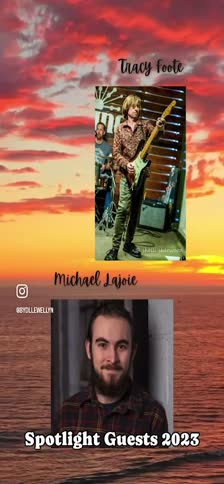
Nicolas visited my Spotlight in 2023 where we engaged in a two-way interview that was super fun. This year, we will do the same while we catch up on all the things that have gone on in our indie authors’ lives since. You can also find our discussion on Nicolas’s blog. I’m betting you’ll pick up a few writing processes, techniques, and experiences you can relate to and take away as you head off to your keyboards or notebooks!
How has your summer been Nicolas?
Funny you’d say you took a break in August, Darci because I did exactly the same! The break was necessary, and it felt good to lessen the inevitable pressures of life, but I missed the opportunity to exchange ideas about our writing as well. But now that my body and mind have refreshed a bit, and my head is full of ideas again, I feel ready to go back to my creative projects. This conversation is one such project, and so I am super excited to catch up with so many things that have happened in both our creative lives since our last conversation. Let’s tackle those big questions!
Let’s Meet The Authors
Nicolas Lemieux
His chosen genre is science fiction. Nicolas says, “I get my kicks out of dreaming up astonishing worlds packed with a sharp palette of badass, quirky characters who get tangled up in all manners of meaningful trouble.
Often funny, sometimes disquieting, always exciting. I believe each time you dive into a good book, you come out better off at the other end because you’ve gained a new, flaring spark that will stick with you until the end of times, helping you fend off the pits and falls that might have consumed you otherwise.”
Nicholas invites you to… “Be a badass reader! Read my free story today: CRADLE.”
D. L. Lewellyn
D. L. Lewellyn is an independent author writing fantasy romance every chance she gets. A passion for writing took her by surprise in 2021 following a summer of voracious pandemic-induced reading in a new favorite genre, paranormal romance.
Her latest publication is on Presale! Les Romances des Trois features three enchanting threesome tales and a bonus adult fairy tale.
Besides self-publishing her novels, her stories have found homes in anthology publications, and many more are in the works. Ask anyone who knows her, and they’ll tell you she’s a dedicated multi-crafter. She also enjoys blogging, chatting with authors and other creators on her monthly Sunday Spotlight, and classic cinema nights with her husband, dogs, and a big bowl of popcorn.
Let’s Get Started
Rewrites and Burnout
I’m so excited to look back at our highlights and learning experiences, Nicolas! We have a handful of fantastic topics, which we will share in this series of four blogs. Let’s start with what we’ve learned about engaging in the rewrite process in Part One, plus a bit about burnout and self-care.
Both of us have been working on epic novels since our last discussion. I truly felt like it was a miracle and something to celebrate when I finally launched the third book in my three-part paranormal romance series this February. You’re writing an epic space opera, Seven Drifts.
We talked about the ways you’ve rethought parts of your structure and what elements to focus more attention on, your character’s voices, all things that speak to us more powerfully during the rewriting process after having become intimate with every aspect of our story. I lost count of how many rewrites I did for Tigris Vetus, and the final version is starkly different from the first draft at the beginning of my writing journey before I even finished the first book in the series, Ursus Borealis. I would say it’s not even close to the same novel it was in its infancy.
I read recently that rewriting multiple drafts is a necessary part of the process, love it or hate it. Writers Write shared this thoughtful list of the pros and cons in its blog, Why You Should Love Doing Rewrites.
Gotham Writers shared these awesome and amusing insights in The 10 Revision Stages of a Novel (we definitely need humor as we stare down the barrel of this daunting phase of writing – Writers Write shared the meme).
Can you tell us where you’re at in the process and your takeaways? What or who has kept you going and motivated you to fine-tune your story? What has been your favorite part of the process and your least favorite?
Thanks for sharing these articles on rewrites! It’s very interesting to see new ways we can reframe how we view those long, repeated rewrites. Of course, we have to find ways to make our writing journey a pleasurable experience. I like to tell myself it’s very much about the journey, not only the destination. It takes both, and I enjoy the journey, it would seem to make sense that the reader is more likely to enjoy reading the result.
How My Summer Was
Let’s see… What happened since the last time we did this?
Over the fall and winter, I took some distance from social media and my platform in general in order to really focus on finishing my second full draft of Seven Drifts. Long story short, (but really, it’s long), this was the n-th version of the story, but only the second actual full draft, a full rewrite from the top.
It took way longer than I could ever have anticipated. But it felt good. Many parts of it felt very good. The deeper and the farther I went, and the closer to the end I got, the better it got. To sum it up, I really love that last part of the story and its ending that took me so many months to complete. I really feel like my writing was getting better and better as I went, and the story along with it as all its elements gradually converged and found their explanations, payoffs, and conclusions.
All in all, completing that full rewrite of Seven Drifts felt like a whole adventure in itself. I am proud of it, just for the sake of having done it, and I am super proud of the result. I can only marvel: How did it happen? Here I am, with this great story on my hands. Wow.
It’s not over, though, and far from it. Firstly, the story isn’t over. It has sequels lining up in my mind’s buffer – and with some substantial drafts already in my drawers. I can’t wait to turn my awareness to them.
But it’s not over yet either, in the sense that this one story, Seven Drifts, still requires a lot of attention on my part. It won’t be finished for quite a bit of time.
So here’s what I turned my attention to since reaching the glorious end of this draft…
Globally, the story seems a bit unbalanced, if you look at the word count for each of its parts. The last part – third act or ending payoff – turned out to be over 99K words. Wow. That’s longer than the average novel. While drafting, I chose not to obsess about the length of the scenes or their number. All I focussed on was taking the story to a point where it did make the active, exciting sense that it now does. I’m not bragging, I’m just talking from my heart. I really think it is that good, at least to my taste, as was my whole objective when I started on the project some years ago: to write a story I’d like to read. Check.
But wait, there’s still A LOT left to do. Some major challenges in fact.
How to balance the relative lengths of the first, second, and third acts?
From the moment I reached “The End”, there was a list of actions in my mind, all with the potential to help balance the story. I wasn’t even thinking yet about shortening my scenes or cutting stuff out. There will be a time for that.
While drafting, I came up with new ideas. Or solutions to problems I discovered along the way or answers to questions I hadn’t yet elucidated. I took notes. Things to change here and there (and also here, and here, and this whole section, and this scene, and this character motivation, etc.). I took many notes actually. Also, I saw things that could benefit the story if I moved them around a bit. A whole section that was in the second part, I’m now moving to the first part. Another that was before the midpoint, I’m going to use closer to the end of the second act. And so on.
And then, there are a lot of world-building elements that I allowed to stay fuzzy and loose on purpose during the draft, with a clear intention to come back to them after the story existed in its entirety, to flesh out more and use in a way that makes the story clearer and better.
There are also many places where I exposed some elements of the world or bits of backstory in a way that was redundant, just for the sake of clarity as I drafted. I’ll want some of these elements to drip on the story from earlier on, and I’ll want to make sure their exposition is well balanced; something that cannot be done, in my view, until the full story is written and I can see better; and know what goes where in the best way possible. Generally, it’s the first part – Act 1, or the Beginning Hook – that requires the most refactoring to start with.
So this is what I’ve been doing all winter and summer, ever since finishing that long, full rewrite of the story.
Burnout
Another challenge is that along the way I came to grasp just how exhausted I actually was – and am.
I took two weeks off this summer. One in July, another at the beginning of September – Off, even from my big writing project. This is unusual for me. I usually double down on writing whenever I can take time off from my work in IT.
Not this time though. I just couldn’t. Especially at the end of the summer, in August, it REALLY felt like I had to take that break. Actually, up to my week’s vacation in the first week of September, I stopped working on Seven Drifts for about a whole month. It was the first time I did that in more than 10 years.
I can cite many objective reasons for my exhaustion. Finding myself suddenly alone back in 2019 in my IT position – in my role as a DBA (Database Administrator). Then the pandemic. Then changing roles back in 2021, from DBA to sysadmin/DevOps (that’s another demanding IT position, exciting but also exhausting, with lots of steep, unending learning involved, and quite some stressful responsibilities). Also, general anxiety has been building up in me over the last few years. A lot of it was around my parent’s health, my wife’s and my own, and around my self-confidence in this IT work…
And also, my self-confidence in regard to my writing endeavors. As my project took more and more time, more than I would have thought, more than anyone around me would have thought… Today, I appreciate the fact that I won’t back down from being honest and open about this. That’s a huge positive in my book; a brand new way of thinking and being. It’s a brand new key to being more creative, productive, and happy in my whole life in general… But more about this later!
In short, I needed that break! I needed to be out of town for a few days, go sailing on my brother’s boat over the St. Lawrence River, swim in a lake, watch the lake, read, and basically just do nothing for a while… around some water.
… But I still managed to do a lot of exciting, constructive things over the summer.
What else I did this Summer
One upside to a slow writing summer was that I used the opportunity to revive my platform somewhat, to refresh my website and fix all kinds of little details about it, and to make its design incrementally better although I don’t have a clear plan for it.
Actually, I posted A LOT! I explored more personal content in my newsletter and over social media in general, as a practice in taking more space in the world, and I feel good about it. (I’ll tell you more about this later. Watch out for my bit about Simone Seol’s Garbage Post Challenge).
So I am now a little prouder of my platform overall, and much less self-conscious about what I post, write, and what bits of myself I show to the world. Plus, I discovered I like wearing hats.
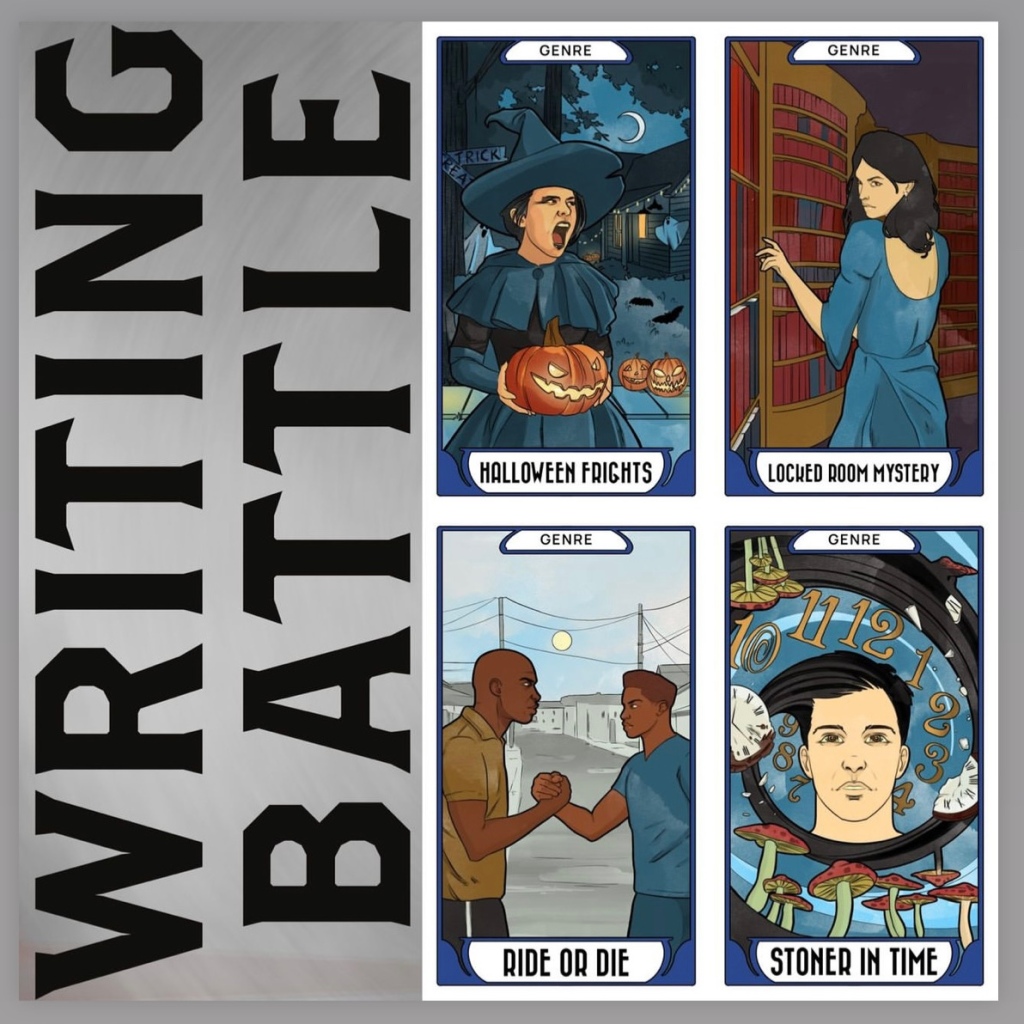
I did another Writing Battle. Fun times! (More on it below of course.)
I did the Garbage Post Challenge. That again? What on Earth is it? I’ll tell you about it, but first I’ll have to tell you about its creator, Simone Grace Seol. Stay tuned.
I got myself printed copies of your trilogy The Starlight Chronicles – I even got a signed copy of Drago Incendium! I’m diving into Ursus Borealis as we speak, and loving it…
One big highlight of my 2024 spring and summer was getting familiar with the work of Simone Grace Seol.
I was captivated as soon as I stumbled on her Instagram content, and I soon followed up to listen to her new podcast, called My Notes, and to her other, older podcast, I Am Your Korean Mom. I missed her May class by a hair, Writing With The Sword, but I did enroll in her online courses Cold Pitch Magic and How to Write Specific Copy. I’m now following her free course, The Simone Starter Pack: Marketing Essentials.
It may sound like it’s all about marketing, and it is… but it’s really not. In different words, you might want to say that everything in life is a kind of marketing, to a certain degree. Or better yet, just replace the word “marketing” with “expression”, or “creativity”, or “writing”… and there you have it. It’s the true essence of Simone Grace Seol’s work and philosophy.
This is life-changing stuff, you guys! Mind-bending. Me, I can’t get enough of it. It makes me hopeful, energized, self-loving, confident, free, bursting with ideas.
What she says is universal. Her advice and thoughts can be applied to ANYTHING – any kind of endeavor, really. They certainly apply to any kind of writing, and not only to copywriting. As I said, this is far from being all and only about marketing.
Because it’s not about the specific, technical details. I already have plenty of wonderful, plentiful, awesome, helpful mentors for those.
She’s made millions (no sh*t!) talking about doing your thing and feeling good about it. Imagine: Writing. Freely. Making your work known. Easily. Living. Lovingly. All the while, with everything in you aligned with your own truth and your own values. No BS. From your inner truth and whatever you do with it, to how you show up to do your work, to how you speak about it to others and present it and make it known to the world.
Simone Seol does away with so many received ideas and practices! She will help you take the ick out of the act of writing, by saying things like, and I quote…
– “Enjoy the people you’re writing to.“
– “Consistency is a product of dopamine.“
– “Writing (copywriting) is all about safety.“
– “Good writing doesn’t widen. It narrows. It’s an extreme zooming in of the imagination.“
– “Nobody has their shit together.“
– “Is your writing (copy) broadcasting fear?“
– “What if you have multiple passions?“
– “People want to fall in love with someone like you.“
– “How to create ethical urgency.“
– “Experts are obsessed with knowing, and knowledge. They want to give you their knowledge. They’re the ones who are the most afraid of not knowing.“
– “It breaks my heart because we are bypassing these great opportunities to learn and to connect when we wait until we know things.“
Here’s my personal understanding and experience of the GPC:
It’s SO simple. All you have to do is post one hundred times over a period of 30 days.
That’s it.
Minimum Word Count per post: 2
Maximum: whatever you like
Platform: whatever floats your boat. It can be social media, your newsletter, commenting on someone else’s posts, etc. (Don’t make it more complicated than it needs to be!)
It’s not even about widening your audience, or growing it, or even building your email list. It’s not about selling stuff in any way. It’s not about showing off or converting anything or anyone into anything or anyone or compelling anybody into doing anything.
No.
It’s a practice. A simple one. It’s about learning to take up space in the world and getting comfortable with it. It’s about claiming your right to exist, and to speak up, and to show yourself as you are, and to create whatever you want, or to just say two words or whatever, freely, whenever we feel like it. It’s about discovering how easy it is to take up space in the world, and accessible, and how many possibilities we have at our fingertips, all the time, all around us, inside and out.
It’s about learning to trust that we have a voice.
It’s about slaying our perfectionism and speaking up, or just sharing who we are to the world despite it.
It’s about daring to exist, even in the eyes of our imagined critics and detractors and frenemies.
It’s about realizing it doesn’t matter at all if we made a typo or a mistake; if we said something that reads weird or sounds weird or something we don’t even agree with. We can always correct, replace, readjust, say more, contradict… or just let things drown under piles of other things we put out.
It’s about understanding that people don’t care as much as we thought, that we’re freer than we thought, and above all, that people will adjust to seeing more of us. They’ll come to rely on us being there, with more pixels on their screens. They’ll love what they love, and they’ll just ignore whatever doesn’t resonate with them.
Most of the people from whom we fear judgment or remarks won’t even notice what we put out. But the ones who are more like us, the ones who share our tastes and thoughts, who vibe just like us or aspire to, the only ones that really count in the end, will enjoy and like and follow, and then they’ll always be on the lookout for more from us, no strings attached, whether we post three times a day or three times a week, or per month.
When we realize how much fun this can be, we’ll want to keep it up to a degree that we’ll choose ourselves and for ourselves, and it will help us build, slowly and gradually, but surely, many long-lasting relationships.
Over time, something is bound to happen. Some people will subscribe to our email lists, read our work, buy our books and other content we put out, and whatever big and small offers we craft for them. Some will talk about our work to their friends. Whatever we build, however slowly it seems to start, if we keep at it over the long run, it will snowball over time, and gather momentum. That’s a platform, our platform, at our disposal.
But that’s not even the best part of it.
In the process, we make friends. We’re called to have fun on collaborative projects. We’re fed more ideas. Presented with an infinite array of doors and avenues to explore at our own leisure.
Sounds exciting?
I see I got a little carried away. Did I digress? I hope it was worth it!
What I ended up posting as “garbage posts”
Photos of my walks around the neighborhood: flowers, back-alley surprises, selfies.
Sharing great blog posts from other writers and introducing them in a few words, or saying what I like about what they write. Telling people I appreciate what they do and why. Showing bits of my writing. (Like on Instagram: here, here, here, here and here.) Talking about aspects of my story, like here.
Anything goes really. Two words minimum. It’s nothing. One image of a colorful bunch of flowers, and then “Hey, hi!” – That counts as a post, because it is really me, taking up space, existing online by just showing up with something nice.
And why not improvise a quick poem, or a snippet of prose, just for the Heck of it? Or revisit topics I’ve barely brushed in the past; expand on them, one at a time. That’s a considerable source of ideas, right there!
I want to take more notes of my everyday thoughts and ideas, big and little, and most importantly, questions. I think questions are generally more interesting than answers; they are doors to countless new avenues to explore later. I’ll keep doing Julia Cameron’s Morning Pages, even if not every day. You’d be surprised how many ideas get caught on these pages.
And then, it’s just a matter of taking a few minutes here and there. Post. Reel. Story. Share. Buffer to the socials. Often, these little posts can make great newsletters that I can turn into great blog posts. And then I can post about them again. Simple. Lean. Quick… Repeat!
If you look at your social media, you may be doing the Garbage Post Challenge already: Three posts per day on average, plus ten more, all over the course of 30 days. No big deal. Easy and fun. You can post fifteen times one day, and then do nothing for a while. It’s entirely up to you.
And don’t forget. Embrace imperfection. Eff perfectionism!
DLL. Thank you so much for sharing these amazing summer journeys, Nicolas. I know folks will want to check out Simone Grace Seol. It’s so awesome to hear your enthusiasm and energy. You were already so generous with your time and support before you engaged in this learning and growth experience.
It’s super encouraging to see how you’ve coped with burnout and I’m glad you took that time to let down. The boating… Yes!I know I’ve been enjoying your revamped content and benefiting from all your shares and the joy that comes with it.
And let me tell you again how much it made my summer when I found you’d purchased my paperback books. I adore seeing them out in the wild! Great photos.Talk about encouragement, support, and great mentoring! Thanks, Nicolas.
The discussion continues in Part Two where we talk about Outreach and share Confessions!
My guest this month is Halli Starling, an author who participated with me and a couple hundred others in the Indie Author Spring Spectacular hosted by writer Hayley Anderton. It was a super fun event where I was surprised more by how many indie writers I enjoyed meeting than even the results of the group promo.
Halli’s book, ASK ME FOR FIRE (a fantastic title for a romance story and one reason I was captured right off), got added to my cart and proceeded to sweep me away. We’ll talk more about the book but I’ll just start with… Wow! It was a super compelling and satisfying romance.
I bought the second book in the series, A BRIGHTER, DARKER ART (another lovely title), which is getting checked off my Goodreads list this month. And this folks is all before I focused on the author’s first book about a vampire and other supernaturals! (I can never pass up a vampire story). I can’t wait to check WILDERWOOD off my list as well. This means we will be chatting about writing contemporary romance and fantasy romance, two separate animals, at least to me, in this month’s spotlight. Wait. Who am I kidding? Romance is romance, and love is love, and this author brings out the best of it all in her stories.
Let’s Meet the Author
Halli Starling is a queer librarian fascinated by the occult and strange history. She lives in Michigan with her spouse, feline supervisors, and is always surrounded by books.
When not writing, she co-hosts The Human Exception podcast, plays D&D, and spends time in the beautiful outdoors of Michigan.
Let’s Get Started
I love it! Feline supervisors. So, how many cat bosses do you have, Halli? And do they allow you any autonomy at all? Or, are they the secret to your prolific writing?
HS. I have four cat bosses! They all have different opinions about how much autonomy I should have, especially since 3 of them are quite elderly (19 years old, 16 years old, and 15 years old!) and sometimes their opinions supersede all else. And they’re all so so opinionated!
But seriously, I adore my cats, and maybe one of these days my dream of running a big farm where elderly and injured animals can live their days in peace and safety could be a reality.
DLL. Awe. What ages they’ve reached! So precious, and yes, the older the bossier. I can see that. I wish you the best on your dream farm. How lovely!
So, now that we have your household organization sorted out, Let’s dive into your books. You write all levels of spice, dip into different genres, and explore mental health and healing issues… And I love the diverse, layered variations in the settings, characters, and relationships.
As an example, you rate the spice in ASK ME FOR FIRE (AMFF) as a four and then Raf’s story in A BRIGHTER DARKER ART (ABDA) as a three. Raf, a main character in ABDA, is Ambrose’s best friend in AMFF. This means it’s a two-book series and the stories connect. While book two might have less on-the-page sex, that doesn’t mean the delicious page-turning sexual tension or any of the hot, sweet engagement is any less. The romance and spice levels were spot on and perfect for each story. I found that interesting and refreshing because so many romance authors write to a specific spice level.
Does the spice decide itself as the stories and characters develop? How do you build your diverse worlds, i.e. a lakeside community and wilderness in AMFF and a coastal art gallery business scene in California in ABDA? Where do you get your character inspiration? And my big question is, where does your insight and inspiration on the human condition come from? I’ve found the phenomenal struggles, growth, and ultimate revelations of your characters to be fleshed out so well and so powerful.
HS. Well, first of all, that’s a huge compliment and I’m totally floored by it!
The spice definitely decides itself (mostly) as I write. As the dynamic between love interests develops, it becomes quite natural for me to figure out the spiciness as I go. It’s hard to describe but I think a lot of authors will understand!
As far as how I build my towns and settings, it’s all about the vibe. I am, to both my benefit and detriment, an intuitive person and certain places I’ve visited over my life have installed themselves in my mind as potential settings for books. I grew up in the Midwest in the United States, but have always been in love with the cooler, darker, more forested places. The inherent mystery and allure of pine trees and mountains, crystalline lakes, and rocky coastlines, is pretty romantic!
Character inspiration is probably the hardest part for me as I write. Sometimes it flows really easily, and other times I have to metaphorically wrestle it to the ground and figure out what to do with a certain character, from how they talk to how they move their body, how expressive their face is, etc. I’ve certainly had characters fight me and over the years I’ve learned to put aside those projects until the character(s) come to life. The books I’ve published are the success stories for me!
The insight and inspiration question is also kind of tough to pin down, so I’ll do my best! A very long story short, I grew up in a household with very mentally ill parents who expected me, as the oldest child, to manage their emotions for them. When you do that starting at a young age, you become pretty hypersensitive to people’s emotions, the tone of their voice, little movements in their faces. Now, this is something that anyone who grew up in an abusive household will recognize as a trauma response. It’s one that I’ve taken to therapy and have been working on, but I also somehow learned to utilize it in my writing. I don’t want to use terminology like I’ve turned my trauma into some kind of “superpower”; that denigrates my experience and trivializes what trauma does, but I would never say that it’s not been a useful tool, even subconsciously, in my writing. I can’t tell you how much I appreciate you saying that the realness of the characters is so powerful, that means a lot!!
DLL. Thank you so much for sharing this, Halli. There are so many insights here, and it’s utterly inspiring how you’ve tapped into the experiences of such a challenging childhood to bring amazing depth to your writing. This helps me listen to my own voice when I’m struggling not to cater to tropes and trends and stick with what my characters are telling me.
I should also note that this depth doesn’t only apply to the main characters, but the richness comes out in your secondary characters. You bring to life the layered and varied backstories of the people most important to the MCs. They are entirely believable as individuals and add color and all the right touches to bring out the flaws and strengths of the MCs while not taking over the spotlight.
Here’s what one reviewer had to say about ASK ME FOR FIRE.
I’ve said it before and I’ll say it again. Mature communication is everything! While the two love interests spend a good amount of time in their own heads thinking about how the other feels, once they actually start vocalizing their interest in each other, their communication is fantastic. They’re transparent and honest about their needs, open to compromise and willing to lay out their expectations. We love to see it!!
This book doesn’t follow the typical romance pattern of them getting together super quick, having some misunderstanding and breaking up, and then getting back together by the end. Because of that, this may feel like a slow burn to some. And it kind of is with the way they agree to take their time with each other, but to me it fees like a realistic simmer of getting to know someone rather than the more common insta-lust/love. I love the way you can see what they see in each other by their first kiss. That kiss happens just over 40% of the way in, by the way.
An entertaining mystery plot line occurs while our MCs fall for each other. It’s important and is ultimately what sets the romance into motion, but it isn’t the main draw of the book so manage your expectations on that front.
Overall, Ask Me for Fire is a soft and sexy romance read featuring mature, communicative men in their mid-30s. Their romance feels good, makes them feel good, and is just plain satisfying. Nice job, Starling.
I’m looking forward to Raf’s romance in the follow-up A Brighter, Darker Art! ~ Phobos
Note to our readers, I adore Halli’s Book Guide on her website. It’s a handy and attractive way to showcase not only the books but also the themes and spice levels before her fans pick their next read.
Now, let’s break it down a little further and talk about contemporary romance vs. paranormal or fantasy romance. First, are all your stories in the romance category, and are romantic relationships (HEAs) your focus? Second, what might drive your story into a fantasy setting as opposed to what drives it into a contemporary backdrop? What is your overall process for developing a story?
HS. Ooof, you’re asking the hard ones, I love it!
Most of my stories are in the romance category. As far as if romance is the focus of the books, it very much depends! When I started writing, yes, romance was the big focus. As I’ve gone on to different projects, different genres, romance sometimes takes a backseat to something else. My upcoming release, VENOR, is first a paranormal thriller featuring queer characters. Romance is only hinted at in the mutual attraction between the main characters, but only a bit of flirting and a few kisses happen toward the end of that, and the reader is left wondering if Renzo and Cedrick will or won’t get together.
As far as driving motivations in fantasy vs contemporary settings…there’s this idea I see pop up every now and then that books without a giant plot and ALL THE THINGS HAPPENING aren’t worth it. That the quieter, cozier stories aren’t actually books, and because “nothing happens”, they suck. I think a lot of us, as readers and consumers of media, are starting to realize that those quieter, softer stories are sometimes what we really need in a world that is constantly on fire. Contemporary settings allow me, as a writer, to weave those quieter stories. That’s not to say that cozy fantasy/cottagecore fantasy isn’t possible; it’s a great subgenre with some wonderful titles! I aspire to write something like that in future and admire the authors who have created those cozy little worlds. But in a contemporary story, I can really focus on the characters.
With fantasy…I grew up reading so much fantasy and loving all the sword and shield books, all the ones with magic and mystery and tales to unravel. I’m also a huge D&D/TTRPG player, so fantasy is kind of my jam. So in my fantasy books, my brain immediately wants to create these big worlds, but with a twist. We don’t always need to explain the “magic systems” (I low-key hate that phrase, why is it a “system” all the time?? Why does it have to have laws? What happens if magic simply is?), we don’t always need the big hero stories. Fantasy settings give me so much room to run around as a writer, so I try to take advantage of that.
My overall process for developing a story is different book to book! A lot of it has to do with where I am mentally and emotionally in the moment. My novellas were written at a time when I was wrestling with some personal demons, and I just needed some soft, sometimes sexy, stories. I mostly wrote the novellas to entertain myself, and they’ve all thankfully found an audience who appreciate them for what they are: low or no-stakes books about people falling in love.
With novels, I’ve slowly become a fan of scattershot plotting. My latest book, COUP DE COEUR, is an example of that. I wrote an outline! I kept it nearby as I started to write the first draft! And then…everything went sideways and the book veered in a direction I was not expecting but was so excited about. Basically, my imagination doesn’t shut up and I’ve learned to let it take the wheel now and again.
DLL. I’m trying to figure out where to start. There are so many great points resonating with me right now. I guess I’ll just say that you’ve put into words the things that are important to me and it’s wonderful to know other writers feel the same. I totally dig what you’re saying about a place for slice-of-life, calm stories without the need for intricate worlds or magic systems because character-driven stories and complex relationships in everyday settings can have the power to engage and entertain in a way so different from full-on action pact adventures.
I’ve used my short stories to hone that idea since there isn’t time to build rules and societies. The backdrop has to be woven in with choice words, letting the reader’s mind conjure the details while they enjoy the characters’ journey, which they do! Readers are great conjurers.
HS. Yes, exactly! Short stories are so much fun, but it is a whole other art form than long prose. I love dumping readers into a world all set up and ready for them in short stories.
I did that with “Neon Needle” in A Chronicle of Monsters, which came out earlier this year. Who doesn’t want to read about an outcast gorgon who now works as a tattoo artist in a shop run by an automaton and a poppet, where the shop computer is also trying to be a cult leader? Short stories are amazing.
DLL. OMG. I’m going to have to read that one just to see how you put those things together!
Can you talk about your latest release, COUP DE COEUR, your presale VENOR (ooh yeah… a werewolf story!) coming in September, and your works in progress? What can we expect next and when?
HS. Oooo yes! COUP DE COEUR started as a novella titled THE PERMISSIVE LIBERTINE, which is a phrase I read in one of my favorite books (THE CITY OF STAIRS by Robert Jackson Bennett), and it stuck in my brain. I really wanted to write a book about the toxic friendship between two people. I had no idea who they were or how they presented, but the idea was like a hook in my brain. I sat on it for a bit, worked on other books, and after about a year, I went back to the idea. At the same time, I had just learned about Dr. John Dee, who was (and this is true) Queen Elizabeth I’s court mage/advisor. He would do all the predictions for her of the future, and advise her on all matters of the court, but he was both deeply religious and fascinated by the occult. A lot of people were at that time, in the 16th and 17th centuries, which is very different from what we see today. People like Dee saw magic as religious, as a gift from God, and once I learned about him, I was fascinated. Suffice it to say that he and his partner, Edward Kell(e)y/Talbot, and their work with attempting to talk to angels, plays a huge role in COUP and the rest of the trilogy. So if you like super weird occult stuff, magical books that talk, and a bit of multiverse shenanigans, COUP might be for you! It’s also a “why choose” romance between three men who are thrown together by accident and quickly fall for each other, but then have to reexamine their relationship as the story goes on.
VENOR is a werewolf story! And a thriller! And a story about a city on the brink, and addiction, and enmeshment. It’s part 1 of 2, with Book 2 (VERTO), coming out in mid/late 2025. Honestly, this book really wasn’t planned at all, and I started it as an experiment on writing werewolves and writing about addiction. I have personal experience with addiction and serious mental health issues via family and here I am again, writing to help exorcize my personal demons. But I quickly realized that Renzo and Cedrick’s story has a third character, the city of Bennek. It’s the story we keep seeing played out – a city where the gap between the wealthy and the poor grows each day and systematic oppression – a main tenet of capitalism – forces poverty to not simply happen, but become lodged into the workings of daily life, including the systems supposedly meant to help those who need it.
And as far as what’s upcoming…
DEMIMONDE, the sequel to COUP DE COEUR, should be out in early 2025. The cover artist is starting work this autumn, and the editing begins soon as well! I’ll want a few months to promote the book before it goes on sale. With any luck, I’ll have the first draft of Book 3 written by the time DEMIMONDE is out in the world. I’ll also be working on VERTO this autumn.
And I’m currently poking at a fantasy story about an 800-year-old sorcerer who gets pulled back into adventure by a mysterious visitor who seems to know quite a bit about her past. I love “one last job” fantasy books, and while that plotline is a lot of fun, I think it also works really well with themes about grief and loss and regret. I also have about four other ideas I want to work on, but I need to be patient with myself!
DLL. Wow! These all sound absolutely fantastic and are going into my Kindle as soon as they come out. Not to mention how inspiring your volume of ideas is to a writer who dreams about getting out more stories! Your imagination is boundless!
You started writing in 2020, which is the same time I got started. My ambition came after reading tons of fantasy romances my niece introduced me to during the first summer of the pandemic. Can you talk about what inspired you to start your writing journey?
HS. Oh, this is an easy one! I ran a D&D campaign for friends I met online (hey friends!) for almost 3 years. Before that, I had tried to write a book but nothing stuck. Running the campaign was like writing four or five novels…just PAGES of notes, whole notebooks of plotlines and locations, and NPCs and schemes, and it gave my creativity a serious jump-start.
DLL. I’ve had other guests with D&D backgrounds and am so impressed, as well as envious, of the skills role-playing fantasy games instill in writers, those layers upon layers of detail.
HS. I truly recommend folks give role-playing a shot! It seems super intimidating, and admittedly it’s not everyone’s jam, but the doors it can open in your mind! When you start to strip away preconceived notions we all carry with us and truly embody another character, the experience can actually be life-changing. I’m lucky to have people I’ve role-played with for years who also like to lean in and really dig into characters and stories.
DLL. Totally making me want to delve in! I’ve often felt that I missed out by not getting into gaming with real players, especially a group of friends.
What else has helped you hone your skills? How did you explore and make decisions about publishing your books? What are your favorite tools and resources you’ve assembled along the way? Are there any favorite discoveries or things to avoid you’d like to share? (Sorry for the multi-questions 🙂 but I could squeeze in even more!)
HS. I’m a reader first. So my writing has been heavily influenced by the books and authors who have stuck with me. From the way Robert Jackson Bennett structures his stories and overall narratives, to the romances from authors like K.J. Charles and Cat Sebastian, to the nonfiction writers who dive deep into the weird occult stuff that I love, everything always ties back to the books cemented in my brain.
As far as publishing goes, I am lucky in that regard. I’m a librarian and worked in public libraries for over a decade, so I understand a lot of the technical side of things (how to get ISBNs, which platforms to use to sell my books, etc). The other part of it – formatting, cover art, writing blurbs – is because, even after leaving public libraries, I still work with books. So a lot of it is job experience, but also because I am such a big reader. I know what books I love, so I try to write what I’d want to read. I know that’s cheesy, overused “advice”, but in my case, it’s pretty true. It also means that my books aren’t written to market, which means that my reader pool is probably pretty small.
The biggest piece of advice I’d give any author is to make sure you own all the stuff and develop skills where you can. That will save you some serious cash and make you more self-sufficient. This means that, if possible, you have your own ISBNs (how to get them varies from country to country, and in the US, they’re ridiculously expensive). If you commission cover art, you own the commercial license for it. And if you can, learn some editing/text placement in Canva or another program so that you develop your own method for formatting your books (whether it’s in Docs, Word, Atticus, Vellum, etc.). You might even be able to help out other authors in the long run or market your skills into a nice little side hustle.
And if you don’t know how to get started or how to do something, ask another indie author! Heck, come ask me! I would be more than happy to help someone avoid the mistakes I made and save them some time, frustration, and money.
And whatever you do, remember that reviews are for readers. I only read reviews I’ve solicited through ARCs and beta reads. Once my book is out there in the big world, how it is interpreted is out of my hands. I know I did my best to represent the story and characters fully, and how the book is read is none of my business.
DLL. Fantastic! So much great advice from your extensive background. We’ll dive more into being a librarian later. Thanks for the author shoutouts. I’m checking them out and added links.
I’m pretty much bound to Amazon and their free ISBNs. I’ve done separate ISBNs through Draft2Digital for sales in other stores, but have decided for now to be exclusive to Amazon’s KDP Select and delisted in those stores. Your advice helps me in this whole decision process going forward. Thanks!
HS. It’s so hard to get started publishing your own stuff! There’s a number of factors most people wouldn’t be aware of, and why would they? ISBNs aren’t things people think about a lot, if ever. It looks like a barcode like any other product, what does it really do?
And that’s the thing about Amazon vs. Ingram vs. D2D, etc…they all have advantages and disadvantages. You can absolutely publish your stuff on your own website but when you use another service’s platform, you’re tapping into their market. I started with Amazon-exclusive and gradually expanded my platform reach as I published more books. There’s no one way to do any of this, and thankfully it’s a ton easier to self-publish now.
DLL. Thank you for that encouragement and the reminder to get informed on all the options. There is a lot of free information out there on how to self-publish, and authors like you sharing experiences is what this Spotlight is all about. So all you struggling indie authors, reach out to other authors. Don’t be shy.
So, as we just emphasized, selling our books is a business, and time management factors in. How do you stay organized? What are your preferred methods or techniques to create and maintain a productive environment?
HS. “Organized” might be a bit too strong of a word! I’m a mood writer first and foremost, so unless I’m seriously dug into a story, sometimes my brain just needs to hop around. I usually have at least one project on the side that gives me a break from my main focus if I’m stuck or need a breather. It’s hard to describe, but my brain is pretty good at filling in holes and figuring out plot points randomly; like “shower thoughts”, where things suddenly clarify while you’re washing your hair. That’s my mind 90% of the time!
Productivity is easy-come, easy-go for me. I try not to stress if I’m not in the mood to write, which is admittedly very hard some days. I’m always reminding myself that no one is dictating my release schedule…it’s all me! So if I need to slow down or take a break, then I need to listen to that. Otherwise, I prefer to write in bed on my iPad while listening to rain sounds or some kind of lo-fi jazz. I’m easily distracted on the best days, so that particular set-up is how I’ve learned to focus on my writing. I also suffer from a chronic pain condition, so my bed is the most comfortable spot in the house.
DLL. Shower thinking! Perfect. A new term for organization and an awesome reminder to give our brains space to do their own thing… and to ease off that self-enforced schedule and enjoy the writing! Our deadlines are our own! (I need to chant that to myself a lot).
Who or what has been your biggest influence in fiction?
HS. Simply put, it has to do with how a book makes me feel. I’m an extremely picky reader, so when a book clicks with me, I immediately start tearing it apart to figure out why it resonates. It’s the same for me with most media, especially television shows.
DLL. I can see you deconstructing your reads. I need to get more analytical about why I love a story.
HS. I have a very particular vibe I latch onto, so several years ago I got curious as to why certain media hit me so hard. For example, I have watched all three seasons of Hannibal maybe 5 times. Certain episodes, more than that. Now, I am not a fan of horror when it comes to visual media (love it in books); I’m a big wimp. But that show has some of the most beautiful cinematic shots I’ve ever seen, and the themes are (and I say this lovingly) perfectly demented. I got curious as to why I love that show, books likeTHE MONSTRUMOLOGIST by Rick Yancey, the first season of Penny Dreadful, both seasons of Interview with the Vampire. The darkness, the monsters, the costumes, all amazing, but the deeper themes about the monsters in people and how extremes (despair, pain, lust, envy) make monsters of us all. I eat them up.
DLL. Sorry to say, I haven’t watched Hannibal, but I can add to your comments about the monsters in people, which I agree is such a compelling theme, by pointing to the books by Thomas Harris. The author created an extraordinary amalgamation of the deviant, resourceful mind. RED DRAGON was my first introduction to profiling, and it floored me like it did so many back in the eighties, especially the idea that to catch a killer, you have to think like a killer… And where do you stop that transition? Monstrumologist! What a great title!
I would like to talk about your cover art for two reasons. AMFF and ABDA had such captivating artsy covers. Can you tell us about the designer and your collaboration? And… You also design covers! Tell us about your graphic design background/passion and how to commission your work.
HS. Oh my gosh yes! So Daze is the artist for both covers. She’s INCREDIBLE. We met via the Witcher fandom a few years ago and she did some fandom art for me on commission, then I got the idea to ask her about doing a cover. Daze is so easy to work with and obviously wickedly talented; she deserves all the praise and flowers for these covers. Once she finished the art, I did the text formatting and layouts, and I realized I wanted to learn to do cover art. So I read some tutorials and taught myself how to put covers together in Canva!
I started doing some graphic design for a library I worked at many years ago. We had a really small staff and very little budget, so we were forced to do pretty much everything by the seat of our pants. I had a colleague at the time who was also passionate about graphic design, so we sort of taught each other different skills. I’m no professional but it’s the same with my writing – I know what resonates with me, and I try to recreate that.
If you want to commission me for a cover, you can DM me on Instagram or email me at hallistarlingbooks.com. I also have examples of covers in my Etsy shop (booksbyhalli.etsy.com) and I post examples of covers I’ve done in the past on my Instagram. I’ve been working really closely with the team at the Twisted Retreat Book Box and making covers for them has really helped me hone my skills.
DLL. This is exciting stuff. Collaborating with artists is a dream for me and a perk of being a writer. Hopefully, I can tap into that resource one day soon. Here is a beautiful piece Daze did for Halli’s awesome characters.
Along with the amazing covers.
What are your tips for engaging in outreach and marketing? You have a lively Instagram and a vibrant website. And you get out to meet your readers in public at signing events. How important is it to carve out that time and engage with readers? Where else can readers find you?
HS. I think a lot of indie authors will tell you that marketing is a slog because we’re usually doing it all ourselves! I was just saying this to the lovely and talented Laura R. Samotin (author of THE SINS ON OUR BONES, a heart-wrenching, atmospheric, freaking gorgeous queer romance inspired by Jewish fantasy and history) about this very topic. Her book is traditionally published and she was doing a lot of the marketing herself! In our increasingly hectic world, trying to gain anyone’s attention for 3 seconds feels impossible. So I’ve stopped thinking about it as “selling” my books and more putting them out into the world to find the right readers. Writing will never supplant my day job. I write for myself and for the readers who are looking for something different, something heartfelt and quietly introspective. Maybe occasionally sexy.
I LOVE meeting readers! I’m a very extroverted introvert, which comes from years of public service (including a five-year stint as a children’s librarian). And with my books featuring queer characters front and center, going to Pride just made the most sense. That’s my audience!
I did my first Pride event last year and got hooked, and did four more this year (with one more to go and a book conference in August). The events are always tiring, doubly so because I have a condition that exacerbates my fatigue, but it’s really important to me to be there.
Readers can find me on Instagram and my website. My website links out to aggregate pages where all my books are listed at online retailers, in physical and ebook form (and two have audiobooks as well!). I have a Threads account that I use sometimes, but Instagram is my go-to.
DLL. I’ve heard this so many times about the work involved with marketing even if traditionally published. I enjoy the control I have over my content and stories so will likely continue along the indie path. Still, pitching to an agent has its romantic appeal. I am definitely noting your method of getting books out into the world as the focus rather than slogging through the selling. It really should be about the joy and connection to our readers.
Yay on the audiobooks! How awesome is that?… And way to go, getting out there to meet your readers despite the challenges, and congratulations on the results.
HS. Thank you so much! I’m the same way, having control over my content is key. That’s not to say if someone offered me a publishing deal that I would automatically reject it. I’d have to think very seriously about it. I’ve queried ASK ME FOR FIRE and COUP DE COEUR, both with some success as far as agent interest goes. But I work in the book industry, and I’ve seen the good and bad aspects. Your agent should be your biggest champion, and the agents I interacted with for both of those books wanted to make changes out of the gate I wasn’t comfortable with. I’m a recovering people pleaser, so there was power in me telling those folks, “No, I won’t do that to my story” when they wanted to make changes. And no one’s feelings were hurt. It was just the reality of the situation.
DLL. Ooh! Thank you so much for sharing your journey! I dream about an agent who’s totally in my corner. For now, we can be that person to ourselves, eh? Way to go on sticking to your guns. I can’t imagine ASK ME FOR FIRE being changed in any way. Yikes!
Aside from writing, being a librarian, and your cats bossing a good portion of your life, you run an Etsy shop. Selling signed books, premade covers, book swag, etc. Awesome! I’m curious about that marketing avenue, particularly for your signed books. Can you give us some insights, pros and cons, and your best practice tips? How is it working out for you?
HS. Well, with the recent news that Etsy is going to allow AI-generated content to be sold on their site, I’m trying to figure out if I’m sticking with them or going back to listing my signed books and other stuff on my website. I started with a small shop on my own site, but I was struggling with the shipping aspect of it, so switching to Etsy, at the time, made sense. I’ll probably stay on Etsy for now; it is cheaper and easier for me, as a single owner small business, and if people are grossed out by the AI aspect, I would just encourage folks to take a few extra minutes to make sure that the person they’re buying from actually owns the product/art/etc. That’s the struggle when you’re doing this all on your own! It takes so much to make even a single dollar of profit, and the platform or tool you were using can suddenly throw a giant monkey wrench in the works.
I would recommend finding a rhythm that works for you. I know we all want to make things easy and appear accessible to everyone all the time, but even little things can help. For example, my Etsy store lists my shipping period as Monday-Friday. It gives me a bit of breathing room as a human being with needs outside of all the book stuff. It also keeps me from panicking and trying to fulfill orders on a weekend, especially given how busy this summer has been with Pride and book events.
DLL. Great advice. Thank you! And again, I enjoy hearing how busy you are getting out there, which equals steady growth!
So wait! There’s more. You also host a podcast. Can you tell us about the Human Exception and where we can listen?
HS. I freaking love the people I do this podcast with. I met Nathan first, he was the DM for our online D&D group, and he was so laid back and loved every chaotic thing we did, and we quickly became friends. I met his partner, Cayla, via that game as well (we played in-game girlfriends, total chaos between a 7ft tall gnoll and a 2 ft tall gnome). And through them, I met Courtney. We’ve been recording for nearly 4 years (on Halloween!), which is hard to believe.
It all started when we were talking about our varied interests and the weird things that fascinate us, and I think it was Nathan who suggested doing a podcast. Mostly to entertain ourselves, but it’s slowly grown a wonderful audience of listeners who like the same weird stuff we do. And that’s what HEX really is, four friends telling each other stories about weird things we’ve researched, or in the case of a long-running series, them listening to me read aloud the infamous fanfiction, “My Immortal”.
HEX is available on our website, where we also list all our resources/references and you can read the scripts for each podcast. It’s also available on Spotify, Google, Redcircle, pretty much any podcatcher out there.
DLL. That sounds like an absolute blast not to mention fascinating. And Wow! I just took a look at the website–totally cool. HEX Files. I love it! And what a great thing to provide the audio content with all the backup resource material. Love the t-shirt, too. I can’t wait to dig in to those topics.
Let’s wrap it up with a peek into your other career–a librarian! One of my biggest regrets is that I didn’t go into library sciences. Can you tell us how you followed that path and the highlights of a library work life?
HS. Library work was the love of my life for so long! And it still is, just in a different regard. Libraries pretty much raised me; I found solace in them at a very young age, and the librarians I met were very encouraging to a young girl who just loved books so much. I got a part-time job at a small public library when I was 19, and this was the kind of place so small that we did everything. Circulation, reference work, computer help, programming. I got a very intensive, very educational experience working there, and when I left that library to go to a larger branch in the same system after graduating with my Bachelor’s in English, my supervisor encouraged me to go after my MLIS (Master’s in Library Science). She was instrumental in helping me understand what I wanted and I’ll always be grateful to her for so much.
After that, I spent some years as a children’s librarian, and as someone who grew up the way I did, that job was the thing I needed. I fell in love with children’s books and working with kids, especially ones who didn’t have access to a lot of books at home and came to the library with their school or daycare groups. I made it my job to make them laugh and find a new book to take with them. This was a long time ago, but those experiences stuck with me. I stayed in libraries for several years after that, and I kind of bounced around between management and programming. My heart was always with the small community libraries, so I mostly stayed in those places and worked hard to advocate for literacy and book access. Libraries are SO important to their communities; they’re one of the few places that don’t ask for a monetary transaction for you to come in, stay, and use their resources. For an international audience, I know your libraries can be quite different but they’re no less important. When people want to take away your access to information, it’s for a reason and we should all be ready to fight back against that.
I left library land about 8 years ago but I still work with books. I was really burning out doing so much public-facing work and was struggling with my health, so the change came when I needed it the most. I started working from home way before COVID hit and was fortunate enough to stay in that kind of role up to now.
DLL. Fantastic! Libraries are the best fantasy worlds in my book. (Eeek. Sorry for the pun.) I was reminiscing the other day with my husband about our respective library experiences from our childhoods. Before computer games stuck us in our rooms, there were libraries encouraging you to venture outside your home and traverse multi-storied, awesome-smelling, real bound paper heavens. And to have worked in them… Sigh…
Thank you so much for visiting with me on my Spotlight, Halli. Any parting words of advice for those who want to explore writing fiction, and queer romance in particular?
HS. The indie scene is where it’s at! We’re the ones writing queer books that don’t just focus on tragedy. There are definitely beautiful traditionally published books with great queer stories, but if you want authenticity unfiltered, indie authors know what’s up. And as far as writing goes, give yourself time. I know it looks like we’re all competing against each other, but it’s true that a rising tide lifts all boats. We should celebrate each other! Don’t let anyone else try to tell you how to write or publish. It’s your story, and it will find readers.
DLL. What a fantastic thought to leave us with and I’m thrilled to be part of the rising tide with you. Thanks again, Halli!
My guest this month is a sci-fi author and poet. He’s also a regular blogger, and you can follow his works and musings at Lines by Leon right here on WordPress. Leon is a member of my Fantasy Sci-Fi Writers Alliance and his thought-provoking stories and cartoon illustrations captured my imagination, so I invited him for a chat. Read on and be inspired.
Let’s Meet the Author
Leon Stevens is a multi-genre author, composer, guitarist, and artist, with a Bachelor of Music and Education. He published his first book of poetry in 2020, followed by a book of original classical guitar compositions and a short story collection of science fiction/post-apocalyptic tales. His newest publications are the sci-fi trilogy, The View from Here, and a new collection of poetry titled, A Wonder of Words.
Let’s Get Started
I’ve been looking forward to our chat, Leon! You’re my first space exploration type of sci-fi writer guest and I’m eager to delve into that genre with you and learn what inspires you most about writing sci-fi as well as poetry and music. I’ve been enjoying your collection of short stories in The Knot at the End of the Rope available on Amazon. Of course, The View From Here got me reading the novella trilogy. What an awesome premise!
You published your first book of poetry around the same time I started writing fiction. I’m wondering if you’re like me and quite a few of my Spotlight guests who used the time at home during the Pandemic to follow your dreams. Or, what’s the story behind your 2020 journey?
LS. I started writing song lyrics and poetry to get me through a difficult time before the world went through its own, and I decided to publish some of the poems so that others might benefit or at least be entertained. I enjoyed the writing process so I continued it by crafting some short science fiction stories.
DLL. Well, your reviews tell me you achieved your goal. Here’s what one reviewer had to say about Wonder of Words:
This is an inspiring, straightforward and original poetry borne from everyday experiences of the author. It contains poems created in lockdown, poems on the environment, a 30-day poetry challenge, and ends with a short biographic story.
I like how the author introduces each poem with his thoughts and how the author manages to speak to the reader in an everyday way, often with humour. There’s material here for the reader to want to create their own poetry, so can be a useful resource for newer poets.
5 stars is reserved for classic poetry, so this 100-page book gets a 4-star rating due to its ease of picking up the book from anywhere and easy understanding of the poetry content, and also the good value for money. I also like the author’s quick sketches. ~ Karuna
I think of you as an author firmly planted in sci-fi. When you say in your bio that you’re a multi-genre author, does that mean your stories fall within multiple sci-fi sub-genres, or do you also write outside of that umbrella?
LS. Well, I do write poetry, science fiction, humor, and romance, so that’s pretty multi, right? Wait, did I say romance? I may have written a short story about that…
DLL. Awesome! Multi is where it’s at. And every writer needs to write at least one romance. I thought of another question. Were you inspired by other humorist writers, and if so who is your favorite?
DLL. Ah yes! Dave Barry. Another that comes to mind is Patrick McManus. My Dad loved his pieces in Field and Stream and my husband has all his books.
As I read your eclectic short story and poetry collection, Knot at the End of the Rope (great title by the way), the thing that stands out is your use of a variety of short-story and poetic styles and how masterfully you craft each one at whichever length, whether three lines or three pages. Writing short pieces is quite different from writing novels. How long had you been writing short stories before publishing your first collection? Did you use or recommend using contests or community writing challenges to hone your skills? Or how else did you build your body of work?
I think I started with short stories because of my short attention span. Say what you want and get out, I suppose. Also many of my stories seemed to come to a natural conclusion on their own, sooner rather than later.
I don’t think I used any prompts for my short stories, but for my second poetry collection I did include all 31 poems I wrote during the National Poetry Month 30 poems in 30 days. The 31st poem was for my mom. I had mentioned my dad in two of them and knew she’d be mad if I left her out.
My first novella started as a short story and I decided to do NaNoWriMo (National Novel Writing Month). Yeah, it ended as a novella, 20 000 words short.
DLL. That’s marvelous. You’re now my go to for short story and poetry inspiration. I recently tried my hand at poetry, and I’m hooked! I love writing short stories in between working on the big drafts and taking time out on occasion to participate in contests like Writing Battle. The creators Max and Teona are from Nova Scotia by the way and have been my guests the last two years if you want to get behind the scenes of a super creative writing contest platform.
Thanks for sharing the blog about your dad. We both had fathers who instilled the reading bug it seems. Can you add a little more here about how he got you into sci-fi?
LS You’ll have to read the blog post. How’s that for driving traffic to my website?
DLL. Nicely done! 😊
So, that leads to another aspect of writing short stories, which is the number of completed works you can produce compared to a lengthy novel, by which I also mean the volume of ideas. You’ve built up quite a collection in addition to putting out regular cartoon illustrations, blogging, and other endeavors. What is your idea process like? Are you one of those who dream stories while you sleep? What are your tips and practices for generating and keeping track of so many ideas?
LS. Most of my blog posts are written on the day I post, so they are often topical. With my cartoons, more often than not, a weird idea will just occur to me.
Sometimes I’ll come up with ideas when I’m out cycling or running. Or, after I turn out the lights and settle into bed. I don’t recommend that, though. I’m positive I’ve left many great ideas in slumberland.
DLL. I suspected it might be a grab them as they pop up sort of process, which makes your cartoons so fun–that momentary thought becoming an image on paper before it disappears. And I bet many of them slip into existence from your dreamworld. Dreaming ideas is a topic for a whole other conversation, eh?
LS. I used to write down my dreams as soon as I woke up, but not for quite a while. It is a good way to remember them before they fade.
DLL. It truly is. Now, if I could be so disciplined. My husband even bought me a small recorder, but do I use it? Not once. I’d rather wake up in a dither trying to keep all the threads of my imagination alive. Brain exercise.
At the outset, I mentioned the great premise in The View From Here–taking two ordinary outdoor explorers who stumble separately into a mysterious… I’ll just say ‘place’ to guard against spoilers… and then decide to explore the mysteries together using their nature skills and rudimentary knowledge about science. Can you talk more about your three-part story and the inspiration behind it?
LS. The View from Here is the short story that became a novella, which eventually ended up as a trilogy. The original idea was about a hidden entrance (or was it an exit) in an underground society, but I think I changed it because of my enjoyment of the outdoors.
Like many short stories, it had an open ending, so when I decided to attempt NaNoWriMo, I cheated and got a 4000 word head start, which didn’t help me any. The novella was written to be a stand-alone, but again the ending had loose ends, so I kept going.
Being my first attempt at a longer work, I limited the characters to two. I also wanted it to feel like the video game Myst, where there are situations that present a puzzle to be solved before moving forward.
DLL. Great stuff. Thanks! And hey, cheating at NaNoWriMo often leads to amazing success. So, glad we get to enjoy The View From Here as a result.
You have a new novel on presale, Euphrates Vanished. The premise looks amazing. Is this a full-sized novel? Can you give us a peek inside?
LS. I tried to make it a novel, I really did, but it tapped out at 39K. So close. Here is the blurb:
“This is not a drill!”
He wakes up to the sound of his alarm and the announcement blaring. Looking around the room, he realizes he is a member of a starship crew. There’s only one problem: he doesn’t remember who he is or how he got there. With no time to think, he finds his way to the bridge, while being careful not to call attention to his predicament.
The first problem is piecing together the puzzle of his missing memories to reveal his knowledge, rank, and friendships. Another problem is being stranded on an alien planet during his first away mission.
[You can download the first chapter when you sign up for Leon’s newsletter.]
Who or what is your biggest inspiration when it comes to writing fiction? What are your top three favorite reads? Or in the alternative, your top three favorite authors?
LS. My favorite authors would be Kurt Vonnegut and Isaac Asimov and my favorite books would be…Nope, can’t do it.
I grew up on the classics. Wells, Asimov, Bradbury, Heinlein, Niven, I always joke that it was much easier to write science fiction in the early days because you could make up more stuff that the public didn’t question. Now, if you describe how a warp drive works incorrectly…Yikes!
DLL. LOL. That is so true! I love it!
I tried my hand at incorporating science fiction in the third part of The Starlight Chronicles. My antagonists were ancient aliens, so I eventually addressed their evolution and biology, how their moons gave them immortality (even delving into gamma rays), and other cool stuff.
For me, it’s another opportunity to fall down the rabbit hole of research in a totally fictional way. Fortunately, my readers aren’t likely to question my science because it’s more about the romance. But you never know, so I do my best.
So many amazing poems, Leon! Tell us about your love of writing poetry, how you got started, and your advice to someone who would like to write in prose.
LS. I mentioned earlier the impetus for writing poetry, but essentially, it’s a way to create a little snippet of life, always from the poet’s perspective but often relatable by the readers who are unable to put certain feelings into words. I try not to complicate my poems too much by creating confusing or obscure analogies. I want my readers not to have to think too hard about what I am trying to say.
My advice? Avoid rhymes.
No, that’s not true. There is a place for rhyming poems, but I try not to follow any specific form or rhyme scheme. Usually it happens when it happens.
DLL. Great insight! Thanks!
I enjoy your cartoons immensely though I admit I don’t always get the joke. Sometimes I do, and I laugh out loud or say to myself, “Huh… good point.” Other times, they make me stare at them while I scratch my head and think about what I’m seeing and why you decided to capture the idea with your brief “squiggles.” They truly are mini-stories, and your joy in conveying them comes through. I appreciated your Instagram post about “how a little squiggle can convey an idea.” Can you talk more about that?
LS. Yeah, some of the cartoons get the reaction, “Whaaa?!” I started The Miniscules because I had some funny—well I thought they were—ideas, but since I was terrible at drawing characters, I just did a squiggle and said, “That’s, good enough.” Later, I had to force myself to attempt more detail when I created The Untitled. Great name, huh? Guess how I came up with that…
DLL. Hmmm. I’m guessing because they’re untitled. It’s funny but I often gravitate towards poems titled Untitled. I supposed because right off, it asks a question.
By the way, Leon has a great Merch Shop on his website if you’d like to help out an indie author while enjoying his art on a mug or two.
You’re also a musician. Tell us about that area of your creative life and how it intertwines with your writing.
LS. Writing music is like writing words. Notes, put in the right order will tell a story, set a mood, or evoke an emotion. I don’t play or write as much as I used to, but I did write a short piece as homage to the story and the characters of my trilogy.
When a reader finishes The Final View, there is a link to a video I created for it as well.
I still have a couple of compositions I want to record, but I’ve always found it a long and difficult process to do, but all my recordings are here:
DLL.Here is a YouTube video with a classical guitar piece by Leon that I particularly enjoyed.
Oh. I forgot I had a YouTube channel…
DLL. Haha! Well, I found it.
Can you share how you benefit and what you enjoy most about engaging with your audience through your newsletter, blog, and social posts? What tips do you have for independent authors on finding their outreach niche?
LS. Authors love to hear from their readers! So many authors (both indie and mainstream) have embraced various platforms allowing them to interact with their fans. It’s pretty cool when someone like Neil Gaiman responds to a comment you have posted.
Newsletters, blogs, and social media posts have to be an extension of a writer’s craft. I feel it has to add value to the readership by entertaining them beyond the books.
DLL. Awesome. Thank you! And now I know someone who knows Neil Gaiman. 😄
LS. Yeah. “Knows.” I don’t think he follows me, though.
What are the best tools and resources you’ve found as an independent author for covers, editing, publishing, etc?
LS. There’s so many it can be overwhelming, but the top 5 are:
Canva (covers)
Reedsy (editor)
Ama— I can’t believe I have to say it…Amazon. It’s easy, and it has a large reach with good promotions.
ChatGPT
Wait! What?
Oh, I joke of course. Want to get into a discussion about AI “authored” books? I didn’t think so.
DLL. Lots of good stuff here! And yes, I could talk a lot about AI. So many sides to that controversial technology, good and bad. Just yesterday, someone I follow on Writer’s Digest posted a quick take on what she is hearing from the average person (non-writer) who uses AI to do their job. To them, “It’s just another tool.”
I love Canva for design. I’ve used other resources, but always end up there the most. Reedsy is also one of my favorite resources for instructional content, live and otherwise. It’s good to get a recommendation regarding their editing option. And yes, Amazon is super easy. However, I go back and forth with being enrolled in the 90-day KDP Select. I like having my books in more stores, but the truth is Amazon is where the sales are.
What are your favorite tips and techniques for staying productive while balancing life with your creative endeavors?
LS. I try to write every day, even if it is just a single line of dialogue.
DLL. So, do you keep a notebook close at all times?
LS. Nope, just sit at the computer and check my email, oops, I mean my social channels, wait, I mean write.
🙂Ah yes. Talk about rabbit holes. By the way, I recently decided rabbit hole is synonymous with retirement. I now have the freedom to spend the day going down them… until I remember I still need to be productive.
I’ll wrap this up with a question to a sci-fi writer I’ve always wanted to ask: Where do you most want to encounter life from beyond our planet… on Earth, or from a starship, and why?
LS. Want to encounter? Who says I haven’t?
DLL. Haha! Good answer. I’ll be looking for clues in your stories. Thank you so much for stopping by Leon. All the best to you!
Oh, and thank you so much for having me as a guest on your blog too in this beautiful month of June. I super enjoyed this exchange!
It is such a pleasure meeting new authors on my Spotlight and a special treat when they come back for another chat to catch up on the latest happenings and explore new topics.
So, Let’s Meet My April Guest
E.B. Hunter lives in a remote town in Northern Alberta, Canada with his wife and daughter. He spends his days working, and his nights crafting stories to entertain himself through the long, harsh winters. He hopes these stories portray people as they are, flawed humans capable of great and terrible things, and you can see yourself within his body of works. He strives for representation in his storytelling, and believes that everyone’s story is worth being told. If he ever stops writing, there are strict instructions for him to be put out of his misery. You can find his short stories in anthologies with Dragon Soul Press, and Starlite Pulp, as well as on Vocal Media.
Let’s Get Started
Thanks so much for stopping by, Eric! I’ve been eager to check in this year and talk to you about some of your latest works. I just finished the rest of your stories in Tales From Beyond the Veil and had so much fun being surprised by that last story! I want to gush about it, but I don’t want to let slip any spoilers. Also, I just ordered my copy of Starlight Pulp Review #2. Those covers are the bomb! And I can’t wait to read the stories, especially yours.
I was super impressed with Starlite Pulp’s website and its vibe. Let’s start by asking you about the story you submitted for Review #2 and your submission experience with the publisher and then we’ll delve into Tales From Beyond the Veil and talk about horror.
E.B. Danny Galieote’s artwork is superb! I am a big fan of his femme fatale series. Fun fact: the title of the review #2 piece is Damn, I Broke a Nail.
I have submitted a few times with Starlite Pulp, and it has always been a good experience. They are responsive and get back to you when they say they are going to. They work hard to cultivate not just good stories, but ones that carry a unique voice. I had a story sent in for #3 that didn’t make the cut, and I don’t even feel bad about it because I know they have a very specific vision for all their collections. They do charge to submit, but like they say on the site, there is a LOT of work that goes into putting these out, and the people doing the work deserve to get paid for it.
The story I have in Review #2 is an urban fantasy called Luck that sees Peter Halliday caught in between two vengeful Irish deities and an ancient game. I think it is one of my best short stories, and I can’t wait to hear what you think of it.
D.L. Ooh. Thanks for sharing the name of the cover art piece! Fabulous! And for sharing the artist’s Instagram. And yes, I agree that the nominal submission fee is very well spent. I had a blast reading Luck. Loved the ending because my mind went all over the place thinking of what I might do in Peter Halliday’s place.
My favorite partial line…
… I said, heading for the maroon Porsche that screamed ‘my owner wears turtlenecks.’
That totally landed on so many levels. Congratulations on being part of this great collection.
Here’s a shot of my book mail. I must say it was a very pleasant shopping experience.
I like how your Instagram vibe is noir, including the classic movie graphics you’ve been sharing on your posts. Can you talk a bit about that noir influence on your creativity?
E. B. When I first started writing, a friend of mine described my writing as ‘punchy’. I didn’t know exactly what that meant, but soon found out she was right! I like to keep things tight. Short, concise sentences like a shotgun slug that packs a wallop. I ended up reading the entire works of Raymond Chandler, then moved on to Dashiell Hammet. Starlite Pulp definitely got me more interested, and I really liked the vibe of the old gumshoe stories. I think the biggest influence on my writing style was seeing these masters of similes deliver such impactful dialogue with such punchy timing. I try to do that with my work, and hopefully succeed. My favorite line from Chandler has a woman tell Phillip Marlowe, ‘geez, you’re awfully tall.’ to which Marlowe replies, ‘I’m sorry. I didn’t mean to be.’ I just love stuff like that, and the old crime books are chock full of it.
D. L. I think you’ve found your voice, and that punchy style resonates with me for sure. I so appreciate getting the story behind the influence.
You recently published your first book under your own publishing banner, Heorot Press. It’s a collection of horror stories where each protagonist has an encounter of the supernatural kind.
Here are a few of my favorite lines as examples of the mood and setting your stories evoke.
Moth at the Window
“It’s stupid. To look into something like an attic and feel like death is staring back at you.” ~ Tiff
“A broken record is the worst noise in the world, other than maybe nails on a chalkboard.” ~ Tiff
As You Wish
“The reverberation of his neck breaking rumbled up my arms and across my back, making my stomach flip-flop.” ~ Amir
What Lies Beneath
“I’m glad that I was unable to sleep, or didn’t seem to be anyway (for all I know, it was all sleep though my eyes felt open). I was thankful for the stillness and the calm that came with knowing that nothing would happen in that place. I don’t know how I knew that, but it seemed true while I was there. But now I’m no longer there, and calm is a memory.” ~ Lawrence
Wow! I’m thinking our readers know what I’m talking about here. I enjoyed how each story had its own voice. Each protagonist was completely unique and anchored the reader immediately to what was happening. Thus anchored, each story moved along at a satisfyingly brisk pace, either with pure horror driving it, a gritty noir setting immersing the character (which I adore), or the soul-searching dread of fate moving inexorably towards them like a freight train.
If I had to pick, I think What Lies Beneath is my favorite. Lawrence was a compelling character, relatable in many ways, perfectly illustrating our human weaknesses and the consequences of giving in to them. Also, following him on his journey was probably the most terrifying read for me. And in Moth at the Window, my second favorite, I’m glad about Larry the Terrier, though I won’t say more. 🙂
I’ve read about half of these stories in earlier formats, so I know many of them have been around for a while. I’m enamored with how they all came together in this volume and curious about your process.
So, my questions… Did you plan early on to link them through a supernatural theme and publish them together? When did you construct that last story in the scheme of things? And tell us about Heorot Press and how that came about.
E.B. Ahh! So many good quotes! I love how things like that creep up on you after you haven’t read them in a while.
It all started when I felt like I needed a break from my third person narrative I was doing for my novel. I wrote a horror story called Graveyard Shift, and people seemed to like it, so I wrote three more. Once I had three stories together, it gave me the idea for the eighth and final story. All I had to do was keep writing! I did Moth at the Window and What Lies Beneath, then finished with the eighth story. I really wanted each of them to have a unique feel to the character and capture who they were.
For Heorot Press, I decided to create a banner for the book to be released under. I felt like I wanted something a bit eldritch, and a bit fantasy as well. I chose the name Heorot, which is the name of King Hrothgar’s lodge in Beowulf. It is an old English word that translates to stag, so the logo came easily enough for it as well!
D.L. This is great stuff! So fun to dip into your process a bit and to learn the story behind your publishing mark, which I really like btw. It’s a great idea to have one, and I’m thrilled to see an example.
What is it about the horror genre that appeals to you most? What elements are typically involved in a good horror story, and which of those do you focus on most as a writer? Can you give us an idea about the tools a writer needs to tackle the genre and tap into terror and fear?
E.B. I think the biggest thing to be aware of is your own fears. I don’t try to make a scary story when I’m writing horror. I write about human nature and lean on primal instincts to evoke that fear. In any horror movie, as soon as you see the creature, the jig is up and it isn’t scary anymore. I think showing your hand too soon is never good, so like with most storytelling, timing is key. So far as the tools you need in your toolbox, I think reading Stephen King’s ‘On Writing’ is step number one. After that, just make sure to write about what makes your skin crawl.
You write fantasy as well. I enjoyed beta reading your fantasy novel in progress, which I might classify as dark fantasy. To me, your author’s voice in horror and fantasy is distinct. In your horror stories, there is often a gritty (think shadows and rain trickling down windows and splashing on pavement) noir atmosphere, though I did detect some of that in certain scenes in your novel. Are dark fantasy and horror interchangeable for you? What are your aims for each? Feel free to take the opportunity to talk more about your novel here. We would love the scoop!
E. B. I think genre is really subjective, so it is hard for me to pin anything down to one category. I really love urban fantasy. The thing with that is, when you introduce any fantasy creature into a modern urban setting, it doesn’t take long to become Horror. Just look at the TV series Supernatural. There are ghosts and demons, but the episodes with Gods pulling out fingernails and people sacrificing their granddaughters for bumper apple crops are the ones that are really good. I can’t get enough of the supernatural, and I will take it in most any form I can get it! So far as my aims, I just want to write what I love. I’m currently working on what I am calling an Occult Western that sees Brant Garret working with an astral plane being to avenge his lost family. I do plan to continue with my urban dark fantasy series once I find representation though!
D. L. Thank you for sharing what inspires you (including fingernail torture 😄) and what you’re working on! I’m with you on the supernatural subject matter. There is so much in the way of mythology, legends (including the modern urban variety), history, and ancient texts to draw from for the speculative fiction writer.
I believe you’ve written a romance as well. And I love the diversity of your protagonists and how their individuality comes through. Do you enjoy and are you exploring other genres besides the ones mentioned? And out of so many amazing characters, do you have a favorite that resonates the most?
E. B. I did write and get published a sci-fi romance short story! It is called Pink Lights and is about the last surviving human refugee on a starship far away. He fights with feelings of his lost planet and wife while coming to terms with the new love he has found in the heavens. It is definitely a NSFW kind of read, and it was a lot of fun writing it!
I really do enjoy genre-hopping, and it is all dependent on what I am in the mood for. I think to really get a good view of the human experience, no viewpoint should be left unexplored.
I don’t really have any one character that resonates with me the most. I think if I needed to choose, I would say Alex from my story Graveyard Shift has a lot of me in him.
D. L. Pink Lights… awesome! (Click on the cover to find Eric’s sci-fi romance in Dragon Soul Press’ Union anthology) For links to this volume and Eric’s other publications, check out his website.
Thanks for addressing the favorite character question again, Eric. I know I’ve asked before, and it’s fun to see that Alex is still your favorite!
Can you share more about your works in progress and what we can expect to see next?
E. B. I am in a bit of a lull at the moment as I await the birth of my second daughter. I have described this experience as waiting at an airport, but I don’t know when the flight is leaving. It is exciting, but the waiting makes it hard to want to jump into anything with fervor.
I am currently focusing on my Occult Western called Revenge, as mentioned above. Once the first draft for this is completed I plan to throw my shoulder into finding an agent for Into the Grey, my dark urban fantasy about a secret organization that keeps parallel earth demons from taking over our world. I also have the short stories from the FSF Alliance to keep me busy as well as the occasional poem when the mood strikes. I like to work on a lot of things at once!
D. L. Well, I can’t wait to see both in print, Eric. And I’m up for another beta read! All the best on the projects!
We’re both members of the Fantasy Sci-Fi Writers Alliance, you being one of the founders and me being an early member. So, I’ve watched it grow and am blown away these days by all the new members and support. There are lots of fun events, including Instagram follow trains. But I wanted to highlight how well thought out the short story competitions are and how they’ve inspired some fantastic stories.
ScreenshotScreenshot
The group published its first anthology Versus. The whole process was impressive, from the competition to the editing and compiling–to the cover art and marketing. Congratulations to the volunteers and writers and kudos for all their hard work!
Can you tell us more about the Alliance?
E. B. Absolutely! It was started because it can be a really lonely place, being a writer. A lot of people have a hard time finding feedback or support for their work in the early stages, and I think it can be really demoralizing when you don’t have that community. We wanted to create a community that could be that support, and it took off from there! The anthology was really born from that. We wanted to have a contest for the people who are looking to get some recognition for their work, and I think the anthology is a great way to support the members.
D. L. Well, the prompts are fantastic. The current one I believe is a mashup of Punk meets Fae. I love it! And the graphic is really inspiring. I hope there are lots of fabulous submissions.
Check out the submission page and reach out to Eric or sign up here to become a member.
Thank you so much for taking the time out of your busy working, family, and writing life to chat, Eric. Congratulations on your growing family, and I look forward to your upcoming works. Do you have any parting words of advice for those who dream about embarking on their writing journey?
E. B. I will leave you with wise words from Colum McCann in his book Letters to a Young Writer, “if you want to be a writer, get your butt in the chair.” At the end of the day, we only have to conquer the blank page and keep honing our skills. To do that, you need to sit down and do it!
“Write one. Read ten. Win thousands… The peer-powered short story competition where everyone receives oodles of feedback.”
Writing Battle
As a participant, I can attest to the oodles of feedback, which is one half of the backbone of this engaging community. The other half is Max and Teona. Last summer, I visited with the dynamic duo as they prepared to launch their revamped platform—and soon after—what was fun got funner! We’re checking in this month to see how it’s going. Here’s what one member had to say about Writing Battle.
“This is a growing community with a mix of experienced and curious writers. Sharing your work and feedback in the forums is invaluable.”
Matt Gamarra
In The Beginning
We learned during their visit in 2023 that software engineer Max Bjork wanted a chance to use his creativity in his working life. Like many of us back in 2020, the disruptions to our lives and routines wrought by the pandemic inspired big changes. As an amateur screenwriter, Max turned his creative aspirations to writing contest platforms, recognizing a need to offer more to participants like a robust and engaging community, easier navigation, and more ways to have fun during the contest. Max gave up his job, took over daytime parenting so Teona could get back to work after maternity leave as an EEG Technologist, and started creating. See our previous chat for the couple’s in-depth discussion on how Writing Battle (“WB”) got started.
The unique structure, engaging graphics, and shining personalities behind Writing Battle were an instant hit, and WB captured my attention from the first Instagram post.
Let’s Meet Writing Battle!
Thanks both of you for coming back for a chat in 2024! I’ve been dying to check in to see how things are going–in general–but especially since you launched the new design. What is your biggest highlight since July? And if you each have a take on that, we’d love to hear both perspectives!
Max: Thanks for having us back, Darci! I think it was the last interview we did with you that we announced a redesign of the site. Cool to do this again a year later and everything is in full swing with the new site. The biggest highlight I think is that this “product” (if you want to call it that) is feeling more and more complete. We’re really just refining at this point and that feels weird in a way since we spent years trying very different battle structures.
Teona: Things are great! We have come leaps and bounds when it comes to restoring some stability to our life when the battle gear comes off. There have been a lot of things that we have been able to put a happy little book-end on so that we can spend more focused time and energy on the business. A highlight for me would be the merch store–it is a part of Writing Battle that I helm and gives me more sense of connection to the community since I’m not a programmer and don’t have much to offer in terms of site features.
Darci: In other words, you both are totally in the groove. Awesome!
We talked about your phenomenal success last summer. There have been two Battles since then. Two of my peeps (a Canadian writing friend and my niece) signed up for the Fall Short Story Battle, which I participated in, and my niece participated in the Winter Flash Fiction event that just ended. So, if every member pulls in just one or two… yikes! This might be a good place to insert that WB’s slogan rocks! Write one. Read ten. Win thousands. Are we talking about exponential growth? What are the overall stats since last summer?
Max: Thank you for spreading the word about Writing Battle! You know, the slogan actually came from the community. If I recall correctly, Cristi Lynn, a previous winner from an early Screenwriting Battle suggested that slogan. She said it on the Forum and I immediately asked if I could use it. When we started these Battles we really thought that the reading part of the contest was going to be a chore. As it turns out, it’s everyone’s favourite part about the contest, so why not highlight the reading aspect.
Teona: Definitely seeing something along an exponential growth curve. It’s still amazing to us! It looks like we might 3X the Spring 2023 Battle. And, like you say, if one person pulls in one or two friends to join in the fun, it really just takes off from there.
Our New Year’s resolution with WB was to make long-term realistic and holistic goals for the year. So instead of saying we need to accomplish X,Y,Z… we set a single goal of 3000 participants for the Autumn Battle. We’re then able to reverse-engineer a path to that goal and then it has been more figuring out what that goal looks like in the shorter term in regards to the Spring and Summer battles. What has been so incredible and exciting has been seeing the numbers for the upcoming Spring Battle SMASHING the shorter goal in place for the Spring. It really looks like there is some snow-balling happening and we are just grateful the site broke when it did last year because there is no way this growth would have been stable or sustainable on the old platform. Our new website handles traffic with ease because it is built on Google’s infrastructure.
Darci: So exciting to hear the numbers! And I love that about the slogan being a community contribution.
A little side story on the fall Battle. I hadn’t been in touch with my niece, Arianna, for a few weeks, and I had no idea she’d participated until a few weeks after it was over. We could easily have ended up critiquing each other’s stories… but we didn’t. Still, the idea that we could have added another fun element to the contest.
Her story was excellent, too. She does audio narration and has a one-minute audio excerpt of The Emperor’s Noose on her website’s project page. I was super happy with my story, Little Shop of Honeybees, as it was my first whodunnit and I enjoyed researching how to write a locked room mystery. Every time I participate, I’m glad I took on the challenge of a new genre I might never have tried otherwise and happier each time with the results.
How is the feedback stacking up since launching the revamped platform? Has the revised structure made a difference in participation aside from the momentum WB had going already?
Max: Absolutely. There were over 3.5 million words of feedback written in the Winter Battle. 1 million of those words were written after the Battle was complete in Debrief. There’s still a lot of improvements to the site coming, but the revamped platform has helped with that.
Darci: Mindboggling!
To get an idea of how far you’ve progressed in the short time since starting up WB, I’m throwing out multiple questions. 😊 Have you reached a place where the business is starting to run itself, or does it still require a lot of hands-on attention? How much of that is the fun stuff, and how much is business? What constitutes both? Is this turning into a full-time business for you both?
Teona: It is definitely turning into a full-time business for the both of us. Our youngest starts school in the fall which means that I will have time in the day to dedicate to WB and to work on things we would like to see evolve in the future. I would say the vast majority of what I do is fun. I think Max will likely say the same. There is a lot of hands-on. There is a LOT of reading–and not just stories. We are constantly on the forums trying to keep an eye on the community to ensure that needs are being met and that members maintain the constructive space we believe WB to be.
Max: I don’t think Writing Battle will ever run itself, but my job as the sole software dev is to build systems that make things easier on Teona and I during a Battle. It is ALL fun. Honestly, I still love every second of every Battle. It’s been a full time business for a while now. We will be building the tools for Forum mods soon, so that will help some of the stress. With so many passionate creatives, you want to put out fires as quickly as possible, so the Forums require a lot of attention. Having a few mods might ease the workload a bit.
Darci: I’m sure I speak for the community when I say your joy comes through and we appreciate all the hard work.
WB opened an online merchandise shop. My Two Crows sweatshirt just arrived! I’m excited about the designs and to have something to show for my battles. Also, being a sticker and planner fanatic, I adored getting your stickers in my happy mail! What a great idea to offer merchandise. How is that going? Will we see more offerings–more designs?
Teona: The merch store has been a lot of fun and I get a little giddy knowing that there are people out in the wild sporting the WB logo! I handle the majority of the merch dealings because it isn’t too time consuming now that it is up and running.
Modeling my Two Crows sweatshirtLove me some stickers!
Once our littlest little starts school, I will have a lot more time to dedicate to expanding options and designs. I have been looking to source pottery mugs and had a prototype made but we are putting a lot of that on hold while we set up our new Tarot Card Decks that will hopefully be ready for purchase on the site late summer. I will let Max get into detail on this…
Max: Actually, I don’t want to go into too much detail because we’re still working on it. But I will say that there will be a card-collecting aspect to the site. You will get digital cards for participating in Battles and then if you order the physical cards, you’ll automatically get all of them digitally.
From My Fall Battle in 2023. Aren’t these amazing genres? The card turned up for me was Locked Room Mystery
Darci: OMG! We get the scoop right here folks. I love the card collecting idea! It shouts “huge hit!” I’m super impressed with my merch, and I must say the customer service was excellent. I can’t wait to see what’s next.
Was it a tremendous undertaking adding a shop?
Teona: Long story short: Max said “I think we need a merch shop. Go.” And after panicking ever so slightly, I learned how to set up a Shopify store and a Printify print-on-demand service. It was very much out of my comfort zone at first (and perhaps a few tears of frustration spilled) but I feel I have a handle on it now and it works quite well!
Darci: You are so totally inspiring, Teona! I see the merch shop exploding in the near future. I’m trying to get up the gumption to add a shop on my website for signed paperbacks. Supposedly it’s as easy to offer a small line as it is for a larger one.
I asked this question last time, and I’ll ask again because I’m sure everyone wants to know. Who’s behind the artwork? How do you come up with so many wonderful ideas and illustrations for the slew of genre cards needed four times a year and for social media marketing?
Max: The Italian tattoo artist, Vincenzo Ingenito, does most of our artwork and he illustrated an entire 78 card tarot deck for us. We are also using Valerie P (@valerie_pl on Fiverr) for a lot of cards. We commissioned a few pieces of art from some folks from our community too. Oh! Someone is getting a Writing Battle inspired tattoo and used Vincenzo as the illustrator. The person that had the art commissioned gave us permission to use the illustration. I can’t wait for people to see it. It’s going to be a cool tattoo!
Darci: This is so fabulous! Thanks for sharing, Max. Check out Writing Battle’s Instagram page to see all the wonderful art and stay posted on everything Max just shared.
Let’s talk about the community. The WB forum is super active, and I love to see that. Do the conversations continue between the Battles?
Max: Things definitely die down in-between Battles in the Forums. I think that will change when we have more of a reason to come back to the site when a Battle is not underway. But you know – in the end, that’s probably healthy. Battles are pretty intense (haha it’s not just the name). People get fairly invested in each one and it’s a bit of an emotional rollercoaster. It’s probably a good thing to take a break and recoup before the next Battle. That being said, we are working on features that might keep more Ravens** engaged in-between Battles. **Our community members now refer to themselves as Ravens which is fairly bad ass.
Darci: That’s about what I expected. I think WB has settled into a very nice ebb and flow with the four yearly Battles.
Teona has been awesome about reading and sharing works by WB’s members and the newsletter is generous with its shoutouts. You’ve truly made it feel like family and it’s clear from your adorable Instagram reels that WB is a family affair in your household. What are some of the other activities going on in the community and what are a few of the recent highlights?
Teona: For a hot second we were going to plan an in-person meet up because we basically wanted an excuse to hang out with WB’s incredible community in person. It fell through because it turned out to be a bit more of an endeavor than we anticipated and I won’t be able to put in the hours for something like that until at least this time next year. We’re now looking at an in-person meet up for 2025!
Darci: Okay, now my heart is really pounding. Another sneak peek at what’s coming! A WB Retreat would be phenomenal!!
What routines have you found to be helpful to keep the productivity and creativity flowing for Writing Battle? Any tips or tricks you can share about staying organized and balanced with other aspects of daily and family life?
Teona: One thing we are looking to set boundaries on this year involves not trying to implement new features during a Battle. The intensity of programming AND running a Battle can take its toll and Max gets completely burnt out and needs time to decompress. So we have “official meetings” at least twice a week. It sounds kinda funny to me since we’re husband and wife and these conversations can happen at any time of day (and they do) but actually setting time aside with the purpose to brainstorm and discuss what’s working and what’s not is so valuable to how we maintain boundaries between work and home lives.
Max: Yeah, no new features while a Battle is underway is going to be huge. The plan is to get a lot done in-between Battles so during a Battle, I can just focus on the community and not coding new features.
Darci: I really appreciate getting a glimpse into what you’ve learned as you grow with Writing Battle.
What advice can you offer to those who would love to leave their mundane jobs to pursue their dreams?
Max: Oh, if you’re reading this and you are thinking about starting your own business or side hustle, go for it! Even if Writing Battle was deemed a failure and shut down for whatever reason, this entire journey would still have been worth it. I’ve met the coolest people and have learned so much from them – and learned a lot about myself. It’s hard work and expect to work long hours, but there is a price to pay for not pursuing your dreams too. I promise that you won’t regret it.
Teona: Have a “yes-buddy” in your corner. There are going to be people who give unsolicited advice and who are going to help you find reasons not to follow a dream. There has to be at least one person in your life who will listen and encourage you without question. And I know for Max and for Writing Battle, this person wasn’t always me… I became a bit more certain about WB when it transitioned from an amorphous and iterative early idea to an actual thing with rules and a schedule. Max’s brother has ALWAYS understood what WB could be way before it was WB.
Great insights, and what a blast it has been catching up. Any parting words of advice?
Max: Thank you, Darci! My parting words of advice would be to reach out to Teona at teona@writingbattle.com if you are someone that is thinking of participating in Writing Battle but are a bit short on cash at the moment. Our amazing community organized a “Spartan Fund” to help fund entry fees. Please reach out to her if this is you or if you know someone that may appreciate a Battle ticket.
Teona: Thanks so much for having us again! We love the questions and are grateful for the opportunity to connect with you and your followers!
One thing I’ve discovered during this writing journey is you never know how or where you’ll come across your next great resource. So long as you keep your finger on the online pulse, surprises will come along. I happened to come across a Twitter post by Fantasy/Horror Writer E. B. Hunter sharing Richie Billing’s Fantasy Writers’ Toolshed.
I followed the link and was blown away by the wealth of help I found there for indie writers and ended up with two amazing new connections and getting involved with a great Discord community. E. B. Hunter will be visiting my Spotlight again in April.
Let’s meet the author
Richie Billing writes all kinds of stories, but mostly fantasy fiction. His tales often explore real-world issues, zooming in on the characters and their troubles. Richie worked as a lawyer for a number of years before giving it all up to pursue writing.
His short fiction has been widely published, with one story adapted for BBC radio. And in March 2021 his debut novel, Pariah’s Lament, was published by indie press Of Metal and Magic Publishing.
Richie also hosts the podcast The Fantasy Writers’ readers of his acclaimed craft book, A Fantasy Writers’ Handbook. When not writing, Richie works as an editor and digital marketer and teaches creative writing both online and in his home city of Liverpool. You can also find his writing in more formal publications like the Solicitors Journal.
Most nights you can find him up into the early hours scribbling away or watching the NBA.
Let’s Get Started
Thanks so much for visiting my blog, Richie! I’m thrilled to have this opportunity to ask you about your writer’s life and works. I just took a dive into the rich world of Tervia and got lost in your wonderful tales, and I thought we could start by having you give us a glimpse into your current projects like The Hills of Moragon. What else can we look forward to and when?
RB. Thank you so much for inviting me! It’s a pleasure to share this space with you.
The Hills of Moragon was a project that began as a novella and ended up a novel. I wanted to keep it as a novella but after chatting with a publisher they said they’d be interested in it but only as a novel. So I decided to give it a go and by the time I’d finished the publisher had gone under.
The story is now called Elanta and it’s about the great risks and sacrifices people make for love, familial love in particular. It’s my take on the classic fantasy trope of good v evil, with more monsters and magic than previous stories I’ve written.
I’m also editing a novella set just before the novel. That one’s about a revolution in a city within the same world and serves as a critique of capitalism and its negative impacts on humanity, society and the environment. It’s been something I’ve wanted to do for a while. A way to express my inner frustrations.
DLL. These sound amazing, and what a story about how your novella took on the life of a novel. Thanks for sharing that.
I had a hard time choosing a favorite story in Tales of Tervia, though I did have a preference for the fishing adventures. But if I had to choose a favorite character, I’d pick the elderly nana in Forgotten. What a moving tale of what it might be like to be reminded by our past that we aren’t forgotten. It was a beautiful thing when she reached back to her love and found the will to carry out her last act of bravery. Which of these tales is your favorite, and which character? …If I can be so bold as to make you choose.
RB. I’m glad you like Nana because she’s my favourite too. That was the first story I ever had published and it’s also one that means a lot to me. I was moved to write something because of things that were going on in my life at the time and it all came out on the page.
I’m also a fan of Mal, and she features in my novella too. I really do like The Pigeon Catchers story and it’s the kind of thing I’m definitely gearing more toward.
DLL. How awesome is it that I picked your favorite! I loved The Pigeon Catchers too and wanted more. It’s nice to know we will see some of these characters again.
Richie offers this wonderful collection for free! Click on the cover to find your copy.
I’m dying to know if you love to fish because I was right there casting my line. These tales gripped me in part because of my memories of traveling through Great Britain and the narrowboats on the canals, and I confess I’ve spent a great many lazy afternoons watching CountryHouseGent chug along the English countryside in Aslan. Can you talk about the inspiration behind your immersive settings–the fantasy and the real?
RB. A lot of my fantasy stories do have the landscape you’d expect—leafy forests, hills, lakes, rivers. Some readers say they’re bored of this kind of setting, but it’s what I’m surrounded by and what I love to immerse myself in.
One of my favourite places to go for inspiration is a little village called Hough Green, not far from Preston in England. JRR Tolkien stayed in a college in the village while writing his stories and there’s a great walking trail you can do called the Tolkien Trail. He supposedly did it each day. It’s an ideal source of inspiration. You have rolling hills and meadows, thick forests with streams meandering through them, carrying the water downhill to a big river that you follow.
And I did enjoy fishing for a good spell! If you’ve ever watched River Monsters with Jeremy Wade, there’s an easter egg in the story Noodlin’ in homage to that.
DLL. Thank you, Richie, for sending me on a little adventure. Such beautiful, inspiring country.
You’ve amassed a substantial body of short stories. Another book on my TBR is Flying on the Ground. Love the cover! How many have you published to date? Can we look forward to more collections? And how exciting was that moment to learn one was selected for the BBC?
RB. I really enjoy writing short stories, but they’re not something I do often anymore. Much of the past 4 or 5 years has been devoted to novel writing. But I like a short project.
My biggest problem with short stories is knowing the most effective way to utilise them. I just want people to read what I write, but sometimes sending them to magazines won’t get you any readers. So I do enjoy putting them into collections or even publishing them individually as small books and promoting them myself.
The BBC adaptation news was very exciting. It wasn’t something I expected, but it was a lot of fun and a little bit strange to hear it go live.
DLL. It’s interesting to get your take on finding homes for short stories. I’ve found that same problem. I used to think readers would enjoy short stories as quick reads over breakfast like the ones in subscription magazines back in the day, but I’m realizing fiction fans want the novels—and with fantasy—the bigger the better.
Now for your fantasy novel. How long did it take you to write Pariah’s Lament, and what was it like to finish it and let it go? Can you give us a glimpse of what we’ll find when we dive in? And how does it fit with Of Metal and Magic?
RB.Pariah’s Lament took me about a year to draft and about 18 months to edit (part-time). The editing was a little tricky because it’s part of a shared universe, so it has to tie in with things beyond my creation.
By the end, I was very much fed up with the editing but I was satisfied with what I’d done. But that was the extent of my elation. I actually felt a bit down and I think it was because I was saying goodbye to something that had been a part of my daily life for nearly three years. A part of you asks, “what now?”. And I missed the characters too, which hopefully is a testament to how well-formed they became.
As for the story itself, it’s an underdog’s tale about two young adults who get swept up in a conflict between two warring kings. These two characters, Isy and Edvar, are very different and have very different stories, but their fates are intertwined. It all comes to a head in classic fantasy fashion—epic battles, lots of heroic moments and a touch of humour and romance.
Here’s what one reviewer had to say about Pariah’s Lament:
Great Debut Fantasy Novel! – I’ve been waiting for the release of Pariah’s Lament since listening to the audiobook version of the first chapter Richie Billing released some time ago. In his debut novel, Billings takes his readers on a journey of misfits–Isy, mistreated by her family and rejected by her community, and Edvar, a young man struggling to step beyond his father’s broad shadow. In their own ways, they champion the plight of the Amast, a persecuted race facing extermination by an invading army. Their fates intertwined, they join forces to stand for the things they believe in. Along the way, they confront deprivation, the intrigues of government officials, and the prospect of sacrificing their lives.
Perhaps the most interesting aspect of Pariah’s Lament is that it’s part of a larger universe of tales focusing on the same world but written from a variety of perspectives in the Of Metal and Magic–like crowd-sourced fantasy. I look forward to seeing further developments in this realm!
J. Christopher
DLL. This might be a good spot to share the link to your online classes. I took the one on how to write fantasy characters a while back. Lots of great stuff! I loved the help on creating character arcs especially.
What can you share with us about your best experiences in getting your stories out in the world? What have you found to be pitfalls?
RB. Getting my stories out there to enough people is still a hill I’m yet to conquer. It’s a current focus of mine however and I’m determined to get my head around it.
The best thing to do is to make the process of someone accessing your stories as easy as possible. That unfortunately means listing them on Amazon, which is the biggest marketplace for books. There are lots of different strategies people use, like giving away the first book for free and advertising other books within it.
Some people pay for ads, but these can be expensive if you don’t know what you’re up to with them, so be careful.
Book tour companies and PR agents should also be used with caution. Some are very good, but others are useless and will use AI to create re-hashed reviews of your book. This happened to me last year. So always check independent reviews before pushing ahead.
The best method I use for promoting books is my mailing list. I have campaigns that run automatically and every now and then I see spikes in sales and downloads when those emails go out, so this is the most effective method. But it takes time to build a list, engage with people and create that positive relationship.
Social media is also a good option but not one I’ve invested much time in so can’t really comment. I just know that there are millions of new posts each day and getting noticed can be tricky, but if you collaborate with others and support each other, you can get better results.
DLL. Millions of new posts, new authors, and new stories. Sometimes I feel like a castaway bobbing around in a vast sea trying to send up a flare. That’s why I love chatting with authors like you who are willing to share your experiences. Thank you, Richie!
RB. This book I decided to put together to help people with their writing. It’s made up of lots of expanded blog posts and articles from my website that discuss different aspects of writing that I’ve found the most helpful over the years.
I find a lot of craft books a bit stuffy and overly complicated so I try to simplify a lot of things here, breaking them down into more understandable chunks.
You can find a lot of advice on the key aspects of storytelling and advice from bestselling authors and award-winning editors. I also have some advice and guidance on getting published and building your author platform.
DLL. You can get a copy of Thoughts on Writing when you join Richie’s community.
You say you get grumpy when you can’t write. I know the feeling. But you give us so much of your time producing your resource-packed podcasts, newsletters, blogs, live panel discussions, and appearances as a guest speaker… and the list goes on. I get the sense you have an equal passion for helping others reach their potential. Can you tell us how sharing your craft came about and your plans going forward? What are some of the highlights in this exchange?
RB. I do have a passion for helping other people. That’s something I’ve always had and something I get the most satisfaction out of in life. When I began to study creative writing properly I produced a lot of notes. When I mustered the courage to make a website I decided to type up those notes for blog posts. People seemed to find them helpful so I kept on doing it and that led to a couple of books and a podcast on writing, which at the beginning I would have sworn I’d never do, so I’m proud that I’ve challenged and pushed myself to do those not-so-introverty things.
As for future plans, series 3 of The Fantasy Writers’ Toolshed podcast comes out on 14th March, or on 1st March if you subscribe on Patreon. I’m aiming to create more video-based content this year, but hold me to nothing because time has a habit of slipping away from me.
DLL. Exciting! And thank you for sharing your experience with putting yourself out there.
Which Fantasy Writers’ Toolshed episode should we start with and what is your favorite topic you’ve explored with your guests?
RB. My favourite episode is the one on body language with Joe Navarro. I’d decided I wanted to cover the topic so set out to find an expert in the field. Joe popped up on Google and he was everything I was looking for and more—a former FBI special agent, author and lecturer. He agreed to do it and we had an awesome chat. It was only after did I realise how big of a deal he is. He does Ted Talks all around the world and is one of if not the leading expert on body language, so I’m still really honoured that I got a chance to speak with him and learn from him. And you all can too if you listen to the episode. It’s a good one to start with but you can pretty much listen to whatever one you want in any order. I design it so you can listen by topic but there are some continuity elements so if you like to listen chronologically you’ll get that side too.
DLL. This is a great one! I worked with a retired FBI agent who was our investigator, and the stories he could tell—about crimes that I thought were boring... Makes for great fiction. And understanding body language is so important for a writer. I highly recommend a listen.
My other favorites are A Lawyer’s Perspective on Writing Fantasy and Jobs in Fantasy. And there are so many more! You can find all the episodes on your favorite platforms here.
Let’s turn to your writers’ life. What are your best practices for balancing life with your writing passion? What techniques have you discovered to help you stay creative and productive?
RB. It’s difficult to find balance. We have lots going on in life and we don’t always have enough time to do things like write and read. When you do find the time though I’d say protect it like a bear guarding her cub. Otherwise, you’ll find it filled by something else and you’ll get frustrated that you don’t get to do what you want to do. The main thing is not to beat yourself up if you don’t or can’t write. Just try to make time for it the next day.
Sometimes having smaller windows can lead to greater productivity. There’s less time to waste so you have to make the most of things. Having too much time can see you procrastinate!
So I like to set output targets rather than time limits. I aim for 1,000 words a day when drafting stories. If I have a full day to write I’d increase that to 2,000. But then I’ll forget about it as I write and just keep focused on the next sentence to try and churn out as much as I can.
DLL. I love that image—a bear protecting her cub. Perfect!
Where is your favorite place to write? As a provider of lots of tools for every aspect of the craft, what are your favorites to have at hand? Do you have favorite effects you set up in your writing space to help with your creative mood?
RB. My favourite place to write was my little old shed back in my childhood home. It was outside in the yard, because I like the quiet and the fresh air. It was big enough for a single chair and for years I shared it with our little rabbit Tilly. She used to sit on my knee while I typed away. I had a world map drawn on the inside wall too. But sadly it was dismantled and we’ve moved house. I don’t really have a good space to write in right now. I just try and get some done in any quiet spot possible.
DLL. Okay, this just made me think that someday folks will be talking about Richie Billing’s writing shed like Tolkien’s walking trail. I love it!
It’s astonishing that you gave up a career as a lawyer so you could follow your creative passion. Have you ever looked back?
RB. Not really! I didn’t like the job in practice. It’s a lot of stressful work for little reward, but I’m moved by a strong sense of injustice, and I also hate insurance companies, so I’ve carried that with me into my digital marketing job. That’s mostly focused on marketing for law firms so I’m putting my knowledge to some use.
I do still draw upon my experiences, though. In the novella I’m editing right now, there’s a workplace accident in there and references to factories and different industries so it follows me around.
DLL. Awesome!All the best to you, Richie, in life and your endeavors!Thanks again for stopping by!
You can join Richie’s Discord community, his Patreon, and stay posted on Richie’s offerings and works on his website and Instagram.
Early in my epic fantasy romance journey, I discovered this paranormal romance author and her amazing storytelling that keeps the pages turning, those surprise laughs coming, and the heat pulsing. Yum!
Let’s meet the author
I’ve always been fascinated with the paranormal. Of course, when you grow up next door to a cemetery, the dead (and the undead) are hard to ignore. Pair that with my love of a good happily-ever-after, and becoming a paranormal author seems like the logical choice!
I love ghosts, psychics, werewolves, vampires, demons, and even the occasional guardian angel. If it’s paranormal, I’ve probably written about it…or at least considered writing about it.
In my past life, I was a high school journalism teacher. But after ten years of teaching other people how to write, I decided to stay home with my kids and write my own stories in my free time. When I’m not writing or reading books about writing, you’ll find me reading paranormal romances, thrillers, romantic suspense, YA, and middle grade fantasy (I have a teen and a tween who love to read. It’s fun to discuss books with them!).
I love red wine and chocolate, and I can make a mean mojito. I like movies, I’m passionate about traveling, and I might have a mild Dave and Buster’s addiction. I’m married to a tall sexy Dutch guy with piercing blue eyes and a swoon-worthy accent. He also shares my enthusiasm for D&B!
In addition to my two human children, I also have two fur babies who swear they’re chihuahuas (but at 12 & 18 pounds respectively, I’m not so sure).
Let’s Get Started
I am thrilled to have you join me today, Carrie! Thank you so much for taking a break from your super-packed schedule to chat with me and share your insights with our audience. First, congratulations on your new cover designs for your earlier series and your recent releases! You are on fire!
You’re also the first paranormal romance author I read before I caught the fever–the best fever anyone can catch. And I attribute it to Luke in Werewolves Only. Shifters… sigh…
You write about shifters, vampires, witches, demons, and so many more, and you like to mix them up in diverse couple dynamics. Which paranormal race is your favorite? Which combination is your favorite?
CP. That’s a tough one! I think for the women, I would have to choose witches. I really enjoy the magic aspect with the ability to control the elements and cast spells. For the men, it’s a toss-up between wolf shifters and demons. I like them being able to growl and claim you as their mate.
DLL. Nuff said! 😁 Especially about the growly part.
When did you start writing and what was your journey like in those early days while you navigated independent publishing? What would be your top tips for authors starting this journey today?
CP. I started writing fiction in 2009 (inspired by Twilight like a lot of us were at the time). I had been writing for newspapers and businesses for ages, and writing novels always seemed impossible. My friends encouraged me to try, so I did. Now I have thirty published books!
I was first published through a small press that has since gone out of business. When I got my rights back from them, I tried another small press but decided I’d rather have complete control over the process. I went indie, and I haven’t looked back!
Tips for brand new authors… Read, read, read. Learn the craft to the best of your ability and read as many books as you can in the genre you want to write. Every niche has certain expectations, and you can’t twist things and make them your own until you learn what readers want.
DLL. This is all encouraging for those of us going the indie route who think about traditional publication. I’ve watched you build your brand for a while now, and have learned a lot, especially about consistency and staying in touch. Thanks, Carrie!
Is romance your first love? How does it fit with your preferred fantasy genre?
CP. I noticed when I would read or watch movies, no matter the genre, I would always be disappointed if there wasn’t at least a little bit of romance in there. I’m a sucker for a happily ever after, even if the romance is a minor plot point, so yeah, I guess romance is my first love…as long as there are some creatures and magic thrown in the mix!
Who is your biggest influence as a writer? Can you share your top three authors?
CP. I mentioned Twilight before, so Stephenie Meyer played a big role in my becoming an author. But Lara Adrian’s Midnight Breed series were the first adult paranormal romances I ever read. Her books are the ones that made me go ooohhhhh…I want to do this! Another favorite of mine is Heather Graham.
DLL. Awesome. Thanks! Twilight got me going too, only I was quite a late bloomer. The others are on my TBR!
One of the many things I enjoy about your stories is that you combine the right proportion of suspense, horror, humor, and sizzling romance, which makes for a fun, fast, and thrilling read. What is your top advice for learning that formula?
CP. I am a total pantser, so giving advice on a formula is next to impossible for me. Most of the time, I don’t know what’s going to happen until the characters tell me.
DLL. Pantser here too… It’s why I started writing. For the adventure…
I know it’s tough to pick favorites because we fall in love with every one of our characters as we write their story… but out of so many books you’ve given your readers, who is your favorite character and why? And if you have more than one, feel free to give us a list.
CP. Now why would you ask me that? It’s like asking who’s my favorite child! Lol.
I supposed if I had to choose a hero, I would go with Sean from Love and Ghosts. He’s artistic, in touch with his emotions, and just overall a swoon-worthy man. Although Gaston from New Orleans Nocturnes will always have a special place in my heart.
For the heroine, maybe Ash from Fire Witches of Salem. She’s very relatable to me, and I had so much fun writing from her point of view. I also love Odette from A Deal With Death. She is such a strong woman, and the things she has to go through to get her HEA would crumble most people.
DLL. 😁 After Luke in Werewolves Only, I would have picked Sean. The only thing better than reading swoon-worthy is writing it–what a surprise that was.
I just finished the first New Orleans Nocturnes installment, Chaos and Ash. I love Ash! What a fantastic dynamic… Chaos vs an orderly librarian. Sizzling hot! Can’t wait to dive into Commanding Chaos (Love the titles!)Your covers are looking fabulous and I love the fonts.
Besides Amazon, Carrie sells her books from her website. Click Here!
I would call you a prolific writer. One of my burning questions, as a writer who is struggling to finish the third book in a debut series and finally getting there, is do you write faster these days? How many books do you plan for the year, end up writing, and end up publishing? In other words, what are your yearly publishing goals?
CP. Much like how I write, I don’t really plan my publishing. My life has been hectic (that’s putting it lightly) for the past year or so, and I try not to set expectations for myself when there is a good chance I won’t meet them. I published three books last year, but there was a time (a long time) when I didn’t think I’d publish anything.
This year, I am shooting for at least three (the second trilogy in Fire Witches of Salem), but four would be nice!
DLL. Good luck!!
While we’re on the topic of productivity, what are your tips for staying productive, keeping those creative juices flowing, and the stories coming while balancing other aspects of life?
CP. The one tool that has helped me the most is an app called Focus Keeper. It’s a timer that uses the Pomodoro method. So I set it and write for 25 minutes, take a 5-minute break, write for 25, etc. That goes on for two hours, and then you take a half-hour break. When I can make myself use it, then I’m pretty productive.
DLL. Wow! Great tip. I haven’t heard of that.
Another aspect I’ve enjoyed in following you is being part of your community. I love the way you engage, and your Facebook Group The Pulkinen Pack is a lot of fun. What’s your advice for getting involved with your reading community and being accessible?
CP. I share a lot of memes on my Facebook page, so I made the group so readers could share them too. I’ve realized that my sense of humor has become my brand, and the readers who follow me on Facebook share the same dark, twisted idea of funny as me!
Dark Romance Humor
I would also say you live the life you write. By that, I mean your joy in being part of a Mardi Gras krewe and the other ways you experience the paranormal vibes of your settings. I’ve started reading the Fire Witches of Salem, so I can dive into that environment after enjoying many of your settings in New Orleans. Can you talk a bit about the inspiration behind your fantasy worlds?
CP. Setting and world-building are important aspects of my books. So many are set in New Orleans because it is my favorite city to visit and I have been there dozens of times.
For Fire Witches of Salem, I took a trip to Salem to experience the city first-hand so that I could hopefully bring it to life like I do with my New Orleans books.
So I incorporate real aspects of the cities, and then embellish them, making them more magical.
DLL. What a blast. Thanks, Carrie. Exploring your settings—Another fun aspect of writing fiction.
Another burning question I have for a romance writer… Does your husband read your books?
CP. Absolutely! He is my biggest fan! He beta reads them when they are in a rough state, and then he proofreads the finished product to make sure we didn’t miss any typos in the editing process.
DLL. Fantastic!! My husband is great for bouncing ideas off of, especially for weapons and battle questions. He also reads a lot of my material… But a whole romance book? We don’t go there.😉
Thank you so much, Carrie. This has been a blast, and I wish the you the best in 2024! What parting advice do you have for those of us who want to pursue writing fantasy fiction?
CP. I heard a quote once, and I wish I could remember who said it so I could give them credit. “Writing a first draft is like shoveling sand into a sandbox to build castles with later.” Keep on writing, even if you feel like it’s garbage. You can always fix it later.
DLL. Awesome!Thank you for that. And I found that great quote. It’s from author Shannon Hale. You nailed it! Here it is so we can all tack it up on our project board.