A while back, I shared this little bookshop in Belgium where I’ve since sold a few paperbacks to European readers. Yes!
Author and creator of the shop, Chantal Agapiti, has been sharing “get to know the author” Q&As with her participating authors.
Check out our chat for brief glimpses into my writer’s life, including meeting my furbabies (aka writing buddies). And while you’re there, have fun exploring The Dreamer’s Bookshop for great books by indie authors and lots of fun bookish extras. Chantal offers a unique local shopping experience as well if you happen to visit Belgium.
Here are the highlights, and please pardon if I end up teachin’ yer Granny tae suck eggs and you think me bum’s oot the windae. I’ll do my best to point you to the best places to discover the delightful, colorful expressions of people who, as actor Gerard Butler puts it, “are pretty much sarcastic all the time.”
Favorite things I discovered:
Scotland has three languages: Scots, Scottish Gaelic, and English. The Scotsman has several articles linked here, so be sure to check them out.
Gerard Butler’s grin-inducing Scottish slang video shared in The Scottican’s Huv Ye Seen Itblog. I’ve been a huge fan of this hunky Glasgow law school grad-turned-actor since Reign of Fire. If you haven’t seen the movie, do! Nothing better than Gerard Butler and Christian Bale battling together in a riveting, suspenseful post-apocalyptic tale with dragons. Hmmm. I think I’m going to have to go pull out my DVD and make some popcorn.
An older blog from author, Kate MacRitchie on her favorite words to use in her fantasy stories. I love how she includes her personal experiences in her multilingual homeland.
An absolutely astonishing video on the Glaswegian accent.
Thank you for going down another research rabbit hole with an indie author in the middle of writing her latest paranormal romance.
For more on my published books, visit my novels page.
Wow! 🤩 If you want to know how much my friends, family, and fellow writers have played a part in this crazy, awesome writing journey, check out this super fun chat. Happy writing! D. L. L.
So many fun sales this week. Keep scrolling for ways to shop. 😀
Happy New Year and thanks for your support!
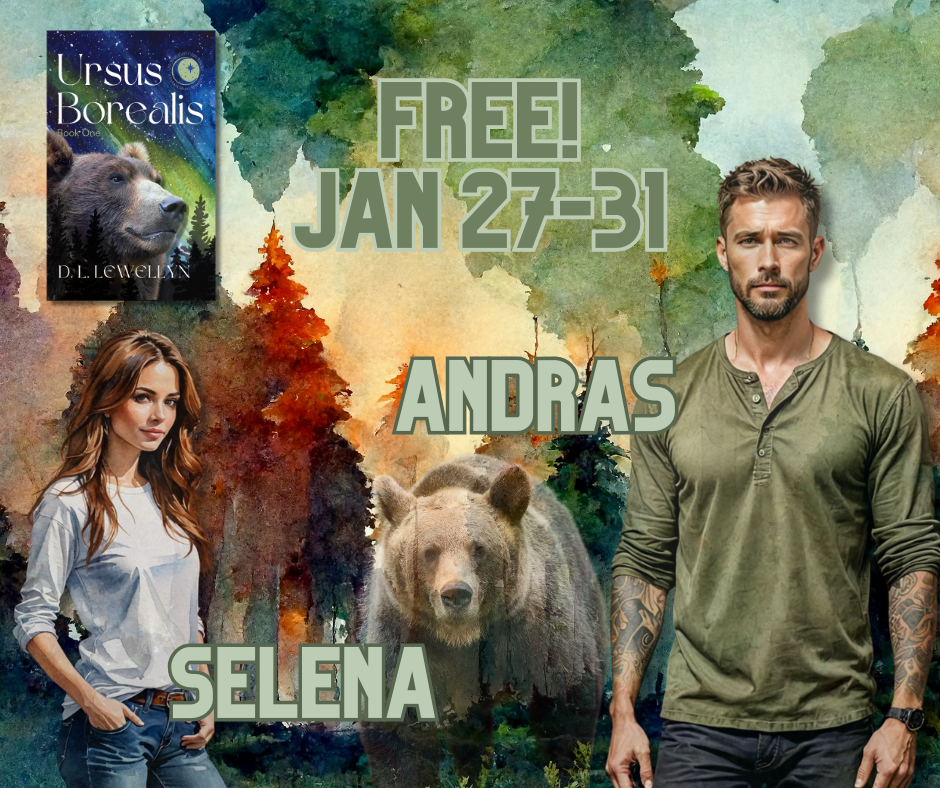
Bears are supposed to live in the woods. Just not one who sends you to the moon.
Selena Aires
I promised my friend on his deathbed that I would find the place I was destined for. Neither of us had a clue what that meant, but searching for it after he’s gone helps me cope with my grief, and I pack up my art supplies and hit the highway. When I stop for gas in Quincy, Thomas is waiting for me—in spirit. So, I stay—and find my dream cottage with a studio and hiking trails out the back door, and a quaint old tavern called the Starlight with a cozy booth in the corner. I set out my sketchbook and pencils and get busy drawing faces—my way of getting to know people while I enjoy a beer.
It works. I’m making friends and filling my journal with the kind of diverse characters typical of a crossroads pub. But diversity doesn’t explain why the people coming to life on my pages are the stuff of fairytales. The most fascinating is Andras Johns, and I’m wondering more often whether the towering man who sets me on fire with one look is the prince in the story or the beast lurking in the woods.
Andras Johns
I’ve been the alpha of the North Star Pack for a long time. My policy? Never mix it up with a human. I can’t stand the idea of exposing a vulnerable species to the hazards of my job, and the hazards recently ramped up. But there’s a new face in town. A beautiful, human face. The first time Selena Aires gives me her smile, I smile back. It’s a mistake—and I know I’m done for, which is a problem because an alpha can’t break his own rules.
Meet a giant, smoking-hot cinnamon roll hero and a diminutive lovable kickass heroine in this paranormal romance with heart, medium spice, and a little bit of danger. *This is not a standalone.* The hazards and thrills ramp up in Book Two, Drago Incendium.
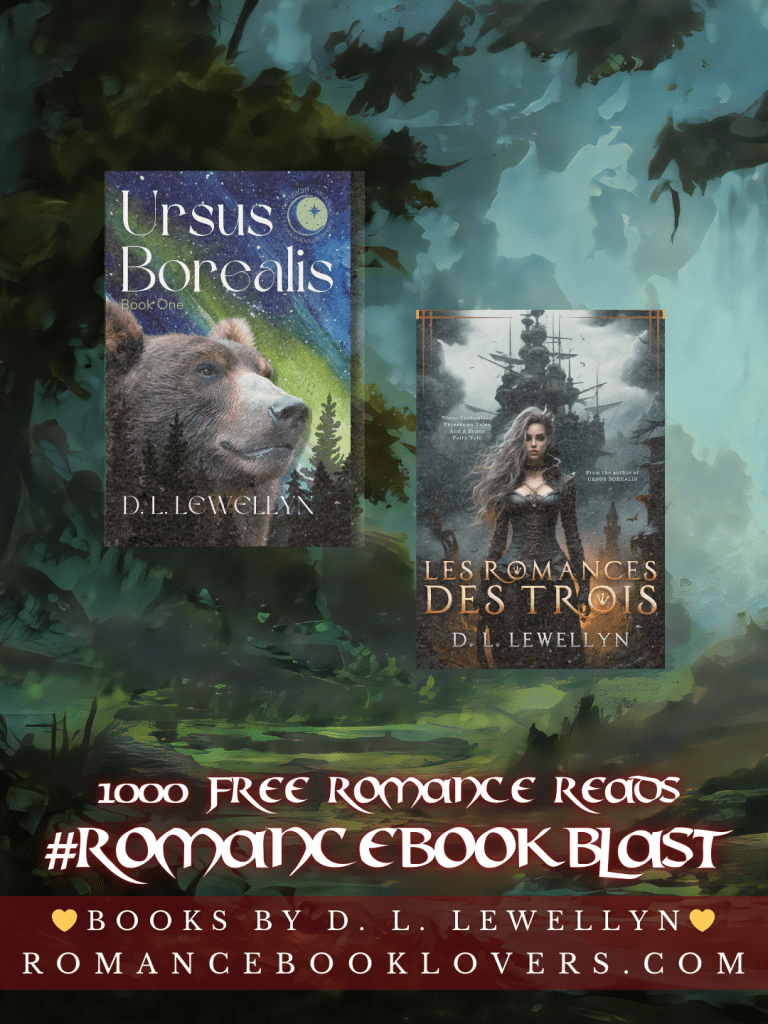
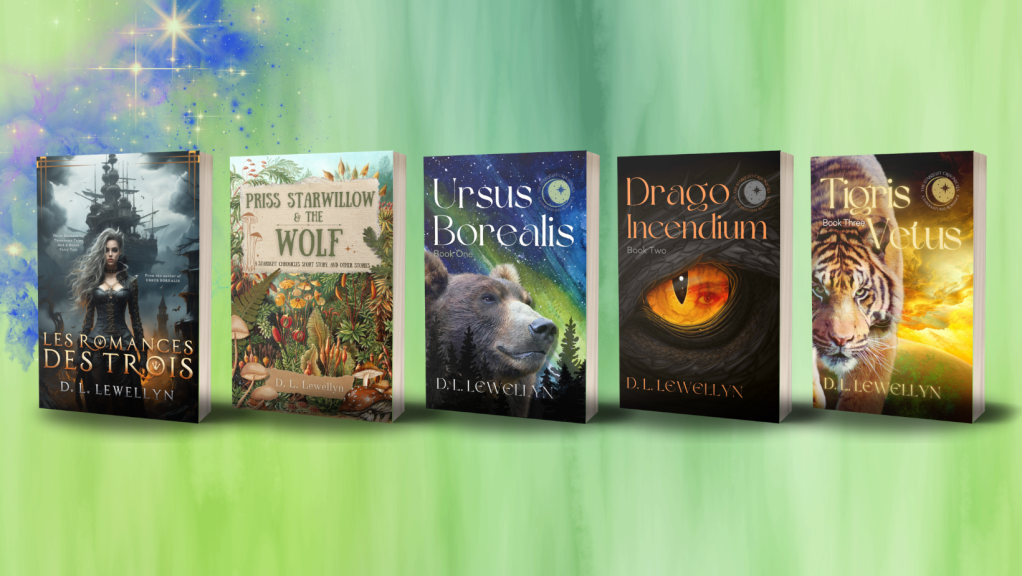
And there’s more. All five books by D. L. Lewellyn are $1.99 on Google Audio.Listen to this amazing example of Les Romances Des Trois.
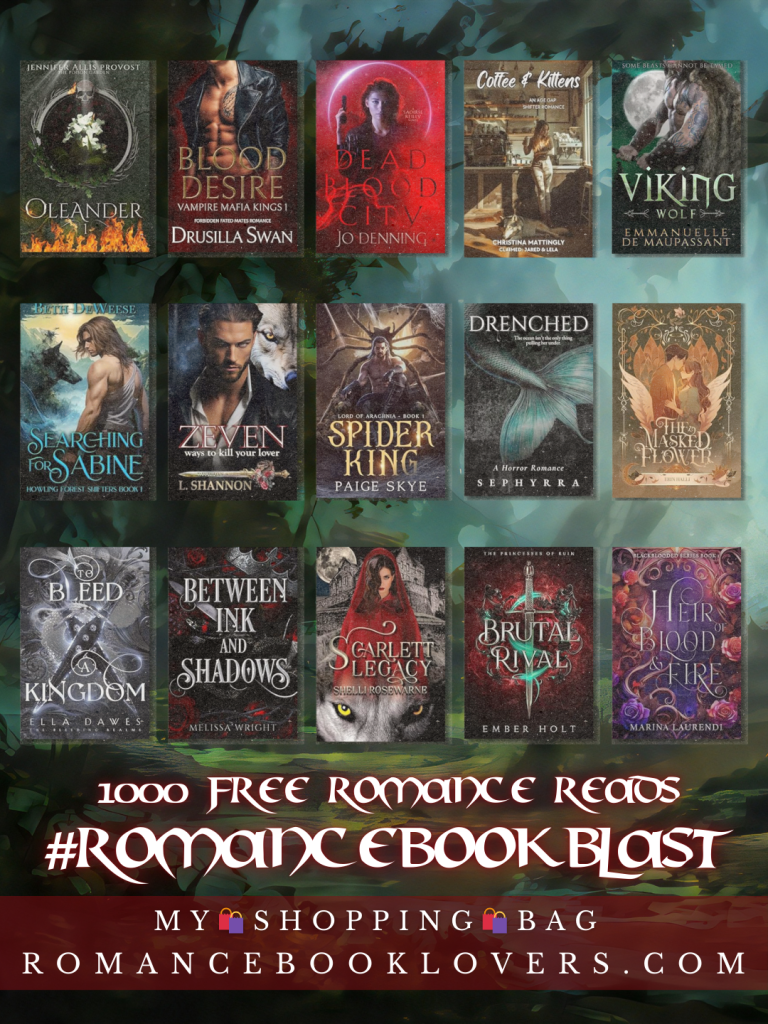
Ursus Borealis and Les Romances des Trois are part of the #RomanceBookBlast on January 28!
Browse a 1000 romance books now and have a blast stuffing your eReaders.
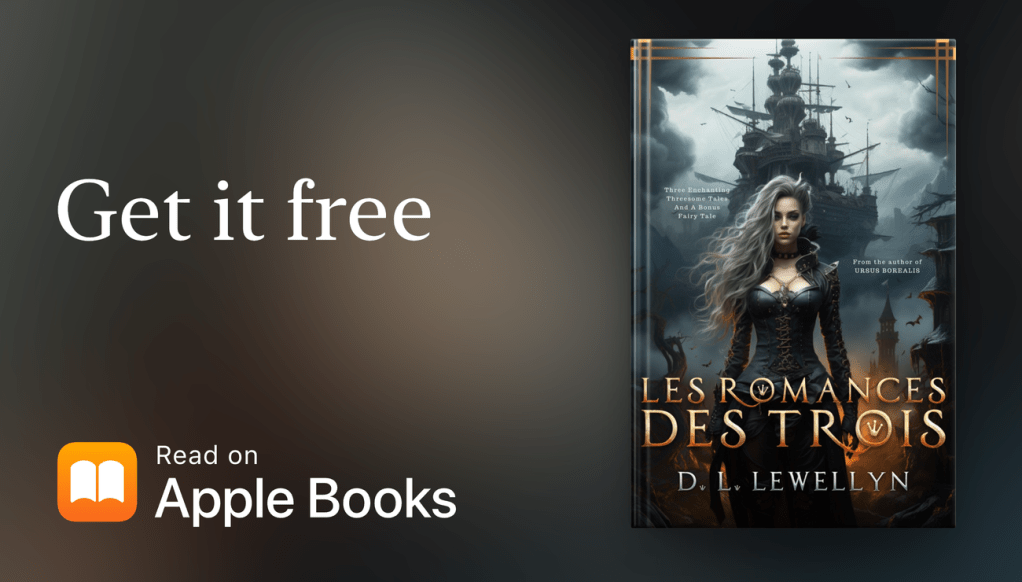
For Apple Book Lovers, Click below for your free copy of Les Romances des Trois.
Three Novellas… Three enchanting settings and adventures… Three unlikely lovers finding each other along the way…
Experience sailing the Caribbean Ocean with a pirate captain and his mythical lovers in The Salty Pearl’s Reluctant Commander. How will Bastien Verdon deal with his superstitious crew and a vengeful god who wants what’s his? Next is Captured By the Hunted, a vampire hunter story that asks who is the hunted? Gedeon Kadar, a Scythian warrior turned vampire or a pair of mated dhampirs hunting vampires for the Oltalom Order?
Fate Sent Her Two immerses you in a contemporary farmhouse setting in coastal California. Maggie McConklin, a widow and well-known figurative painter, launches an ad for housemates to save her home. Adam and Greg answer the ad. Sparks fly the moment the gorgeous men step out of their classic Charger to find Maggie and her Blue Heeler, Sorcha, waiting on the porch.
As a bonus to this diverse collection of sweeping, deeply romantic ménage à trois fantasy stories, enjoy Pinpricks: An Adult Fairy Tale. In its anthology appearance in Magick & Mystery by Dragon Soul Press, one reviewer said: “Superfast start. Very interesting premise. An unexpected joy.” Find out where a prince and three witches end up in a tale about choices, discovery, and questionable happy-ever-afters.
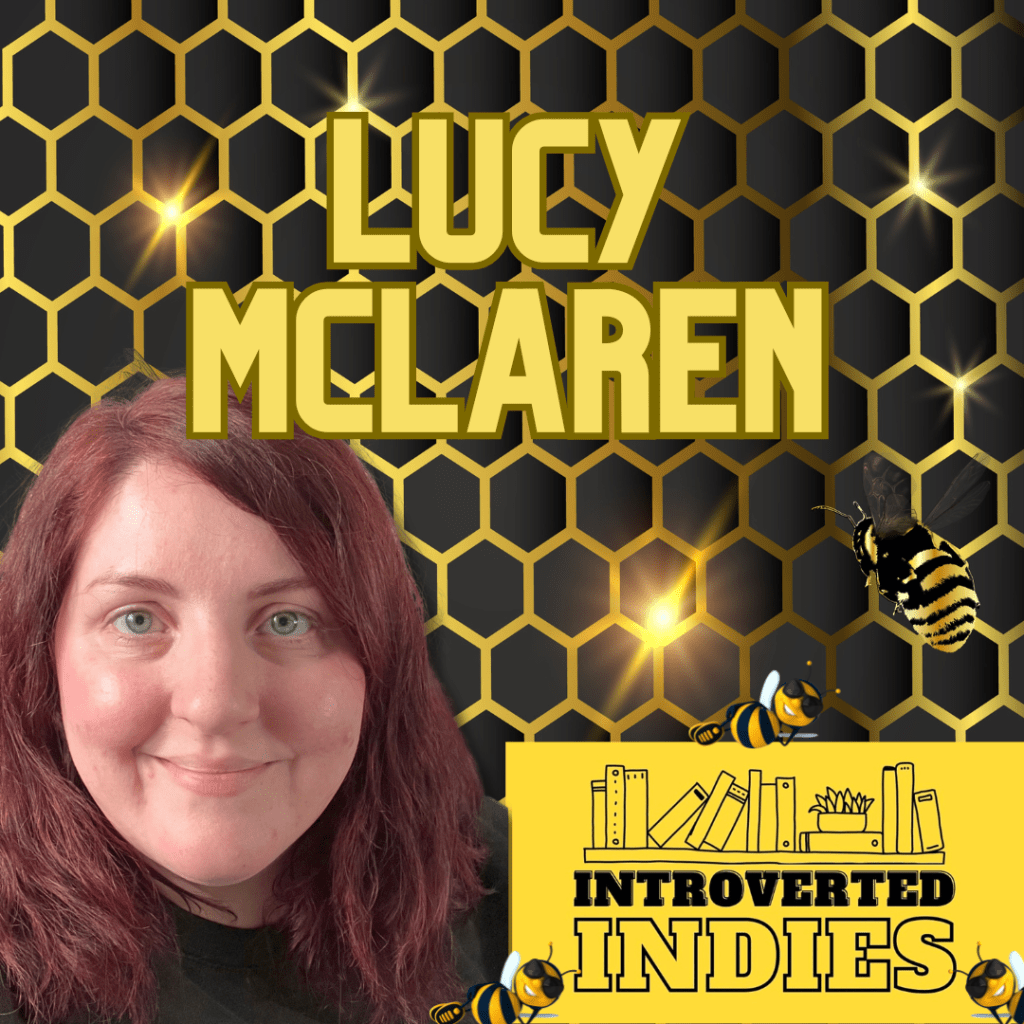
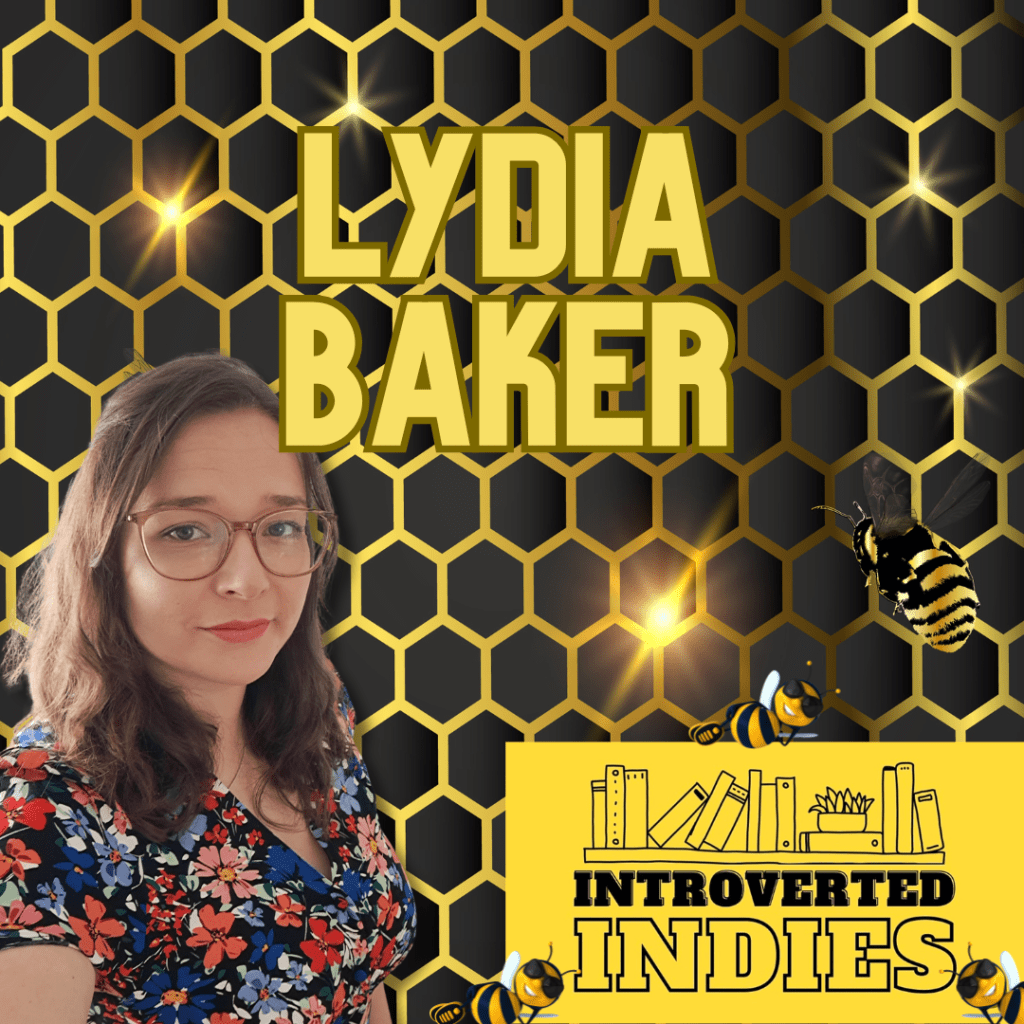
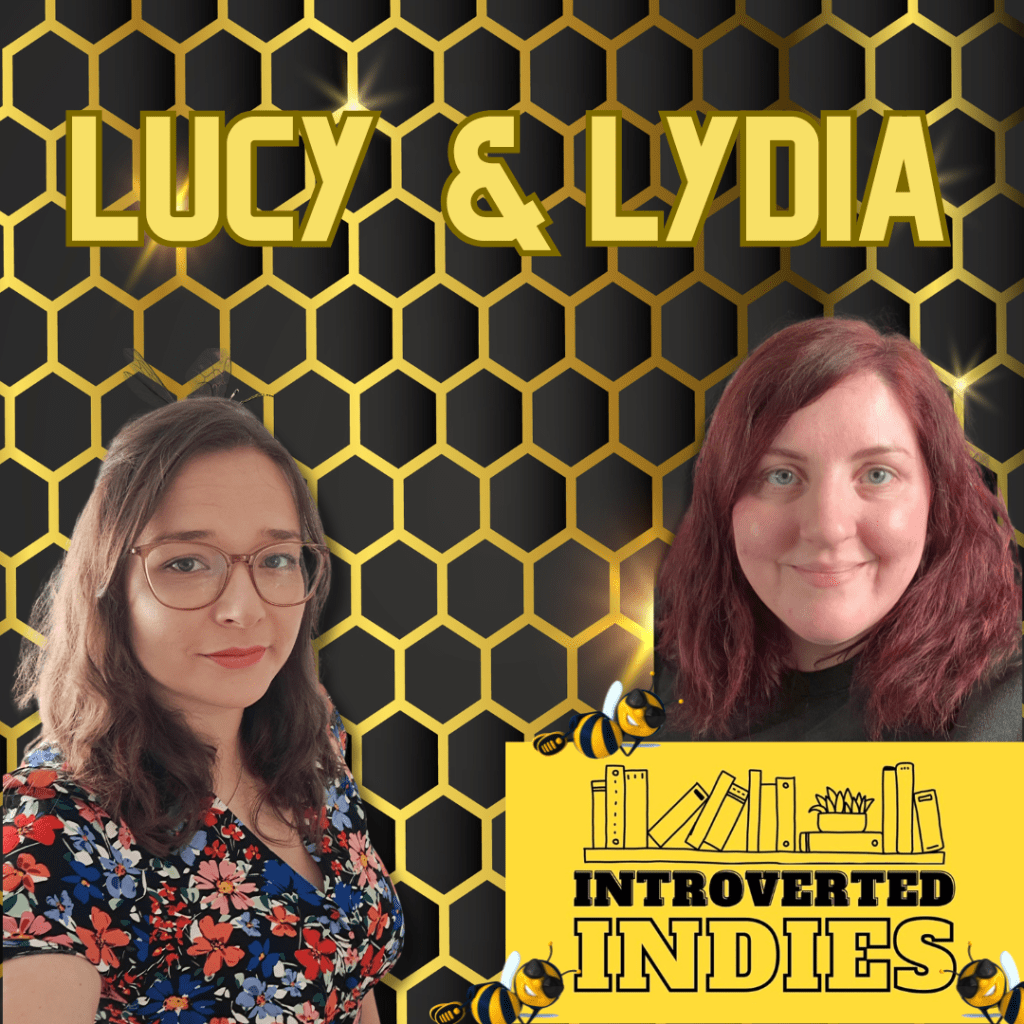
UK fantasy writers, Lydia Baker and Lucy McLaren decided to get together and give indie authors a platform for conversation. Check out their channel to help them share. You will meet amazing authors as they chat with the hosts, and you can enjoy author readings.
Read on to meet the hosts and learn about Introverted Indies’ purpose and goals.
The Hosts
My name’s Lucy and I write fantasy stories that focus on the light of human connection in dark, oppressive societies.
For as long as I can remember, I’ve been drawn to the magic of storytelling, whether via books, video games, TV shows, or films.
Fantasy has always been my genre of choice (though I do love a good horror, psychological thriller, or murder mystery). There is something inherently captivating about journeying into another world with a character—though I find myself most drawn to fantasy stories, characters, and worlds that aren’t so different from our own.
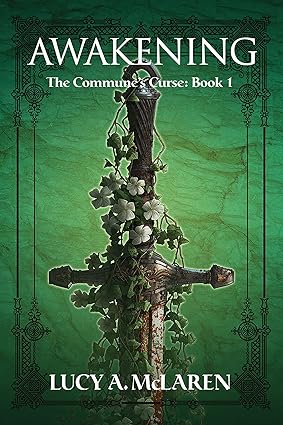
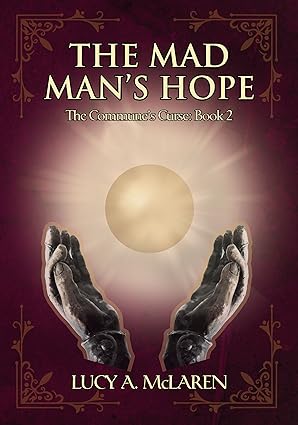
I am currently working on a fantasy trilogy called The Commune’s Curse. The first and second books in this series, Awakening, and The Mad Man’s Hope are available now. In addition to this, my gothic fantasy book, EtherStone (working title), will be releasing in 2025 from Owl Talyn Press. I also enjoy writing short stories as they provide the opportunity to dip into new characters and settings without the commitment of a full-length novel.
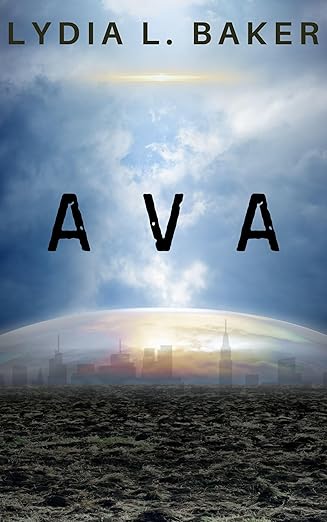
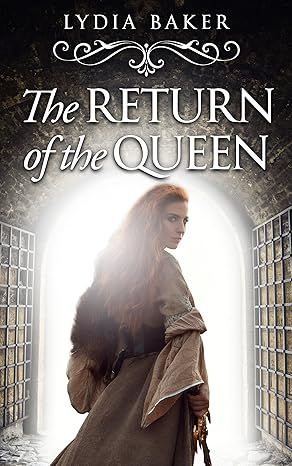
Hi, I’m Lydia and I live in the UK with my husband and four children. I’m the author of romantasy novel, The Return of the Queen, and scifi-dystopian novel, AVA. I’m currently working on a crime novel. When I’m not writing, I enjoy crocheting, gaming, and being outdoors in the woods.
Let’s Get Started
It has been amazing watching this platform take off since you launched the signup form last September. What brought you two together in this Introverted Indies endeavor? Tell us about the name.
Lydia – Lucy and I first met through our joint experience with small press publishers just over a year ago, and our friendship has blossomed from there. We had been talking for a while, sharing the highs and lows of writing and helping each other out with our WIPs, when I broached the idea of making our own platform to support indie authors.
As I am sure Lucy will tell you, we have both had our fair share of difficulties with getting our books into the world, and we wanted to be able to help other indie authors in the same position as ourselves. It also helps us as authors to get our name known in the authoring world!
As for the name, that was Lucy’s wonderful idea! I’ll let her explain more about that one.
Lucy – Thanks, Lydia! Well, the name Introverted Indies came from the fact that we are both introverts and so many of the other authors I know would label themselves the same. And of course, we’re aiming to support fellow indie authors (self or small press published) like ourselves.
Just to add to what Lydia said as well, our friendship has been really lovely and invaluable in terms of being able to connect with a fellow writer who understands the emotional rollercoaster of writing and querying/publishing a book. So another part of us forming Introverted Indies was about wanting to connect with other authors too, to build a community of sorts.
Have you had a chance to pause and think about what Introverted Indies has achieved so far? The above image lists your goals. Can you tell us more about those?
Lucy – We were actually very surprised with how many authors signed up to be interviewed by us when we first opened up. But it was also very exciting to have so much interest!
Lydia – The other day I was thinking about how many amazing authors Lucy and I have had the opportunity to chat with since we started Introverted Indies in September last year and it’s around 30! Personally, I find chatting with new people makes me feel a little anxious, so for me, it has pushed me out of my comfort zone and made me feel more confident, something that is great for all walks of life.
Lucy – Yes, I agree. I always get a little nervous before the interview recordings, but everyone has been so lovely and it really is fascinating learning about everyone’s creative processes and stories. My TBR pile has grown significantly since we started our chats, and it was already far too long!
Lydia – As far as what II has achieved, I really hope that we have managed to bring readers and authors together and that book sales have been made. But also, I hope that we are adding in a positive way to the indie author community and I am praying that we keep growing and reach more and more people so that indie authors can get their books seen. Our aim has always been to help indie authors and it will continue to be that.
Lucy – Yeah, absolutely. We want to have a positive impact, to help authors find their readers, as we know how tough that can be from personal experience. We have lots of ideas on how to grow Introverted Indies. This is really just the beginning!
Darci – Well it truly is astonishing and it’s great to see you’re meeting your objectives with flying colors and benefiting from widening out in the community.
Do you have any special Introverted Indie events planned for this year?
Lydia – We have just launched our sign-up for Author Discussion Panels and we have had a good amount of interest so far. Our video interview and written interview sign up will be opening soon as well. But Lucy and I are hoping to meet in person again this year to discuss other ways we can give authors a platform and events we can do. However, we both work and have families, as well as our own WIPs, so it’s making sure we have a good balance as it’s so easy to burnout.
Lucy – Yup, what Lydia said. We’re really excited to chat to authors on the panels about various topics, from authoring and parenting, to author mental health. We’ve had lots of interest so far, so those promise to be great. And we know a few people are waiting for the interview waiting list to reopen. We want to do as much as we can to help authors, but of course, like Lydia mentioned, we’re also juggling our own lives. Finding a balance is very important, but I think everyone we’ve interacted with so far understands that.
Darci – I look forward to seeing all the exciting things roll out.
Can you share a few of your favorite Author Top Tips? Do you have other highlights/insights from your interviews that you’d like to share here?
Lucy – Ahh, I’ve heard so many good tips and pieces of advice so far. I’m writing this after a full day of toddler parenting so I’ll let Lydia say hers while I try to pick my brain…
Lydia – I’ve found it so reassuring to know that all of the authors I’ve spoken to are in the same boat when it comes to marketing, imposter syndrome, publishing, drafting, etc. It’s been great to chat about those experiences. What I’ve found useful is some of the technology authors use to draft. One author uses Scrivener which I didn’t know anything about and actually it sounds like it would be really useful to how I like to draft a novel.
The biggest highlight for me is just how lovely everyone I’ve spoken to has been. Every single author has been kind, chatty, and fun to speak with.
Lucy – Yes! Agreed. Having all of those same struggles as authors shows why it’s so important to have an author community. We’re all in this together and can get through it together.
Lydia – The one thing every author keeps saying is to keep writing and keep investing in the author community and I think those two things are very important.
Lucy – Yeah, a lot of the authors I’ve spoken to have said the same thing. Just write, draft your idea, even if it’s complete garbage at first–write it. And having supportive author friends around you can really help to get you through that first draft (and beyond) too.
Darci – Great stuff! Thank you!
I’ve included your bios at the outset but tell us a little more about yourselves and your writing journeys.
Lucy – I always wanted to write and did dabble in it when I was a teenager, though self-doubt/anxiety/general teenage life soon stopped me from trying. I didn’t properly start writing again until I was in my late twenties and training to be a counsellor. I had a lightbulb moment that was like–wait, this is something I’ve always wanted to do… why aren’t I doing it? And so I set myself the goal of writing a book, and I did it! Ahh, to be a student again with so much free time. Anyway, that book turned out to be Awakening (my debut and the first in my dark fantasy series, The Commune’s Curse) which was signed with a small press in 2020 and released in 2022.
I’ve since taken the rights back to my series and self-published the second book, The Mad Man’s Hope, at the end of 2024–which was exciting and scary. I also have a gothic fantasy book coming out sometime in 2025 from Owl Talyn Press. Alongside that, I’m working on the third book in The Commune’s Curse series and two other WIPs.
As for my ‘real job,’ I’m a counsellor, which is where my passion for mental health comes from. I find it incredibly important to explore this in the stories I tell, and will always seek to delve into some darker themes and experiences as part of this.
When I’m not writing or counselling, I’m raising my toddler alongside my husband–which is a challenge of its own.
Lydia – So, I’ve always loved books and writing since I was small, but I penned my first fantasy novel when I was fifteen/sixteen (it was awful!) and forced it upon my English teacher back in the days when we used floppy disks. She was so encouraging that I kept writing.
I decided to venture into self-publishing when my daughter (and 4th child!) was around 6 months old. Probably not the best decision I’ve ever made, and self-publishing felt like a very different thing back in 2017. I know that sometimes people still look down on indie authors now, but when I published it was much more looked down on. I had some success but nothing major.
In 2022 I signed with a small press publisher, however, I made the decision to have the rights to my book returned to me this year so I could have control over my books and release other books in the series. While being with a publisher was an interesting and valuable experience, I felt that overall I could champion my books as well as they did, if not better.
Darci – Ooh, I appreciate that insight about your foray into small press publishing Lydia. We all struggle with the pros and cons. It is so encouraging to get a glimpse into your journeys with your super busy lives.
Tell us about your books, works in progress, and where we can find them.
Lucy – So currently available are Awakening (The Commune’s Curse: Book 1) and The Mad Man’s Hope (The Commune’s Curse: Book 2). The series is a multi-POV, character focused dark fantasy story about a kingdom ruled by an authoritarian government hunting down children born with powers. The blurb for Awakening is:
A desperate young woman, traumatised by her past, seeks to protect two children. A teenage boy comes to terms with the incredible and deadly powers revealed by his young sister. A commander doggedly hunts them down, bound by the orders of the man he loves.
I won’t share the blurb for The Mad Man’s Hope because… spoilers. If you want a character-focused, dark fantasy series with animal companions, chosen one with a twist, found family, mental health rep, and a realistic toxic relationship, do check them out!
As mentioned in my bio and above, I also have a gothic fantasy book (working title EtherStone) coming out in 2025. This book poses the question: What if Jack the Ripper had been controlled by a god? It’s very much inspired by that period of history, too, with a Victorian London kind of vibe. We follow noblewoman Beth and her Lady’s Companion El as they set out to unmask the ruthless killer stalking their city–and soon come to realise that the danger is far closer than they thought. This one’s very different from my other series (which has more of a medieval fantasy vibe), and I’m really excited for it to be out in the world!
Lydia – Currently, I have a romantasy, The Return of the Queen, and a sci-fi-dystopian novel, AVA, out in the world.
The Return of the Queen is a low-spice story of a woman who collapses and wakes up in another world with no memory of who she is. It turns out she is far more important than she ever realised and then there is the man haunting her dreams…
I’m terrible at tropes, but I’d say it includes ones such as a forgotten lover, he had to give her up to save her–royal family, evil rulers.
AVA is different altogether. I wanted to explore the idea of an oppressed society, and that the grass isn’t always greener on the other side. Ava is trapped under a Barrier that appeared at the same time as strange shapes in the sky when she was a child. The Barrier separates her and the city she lives in from the rest of the world. Oppressed and controlled by MTech, she is desperate to get out and see what has survived outside the Barrier. AVA is book 1 in the series.
Both novels are on Amazon and Kindle Unlimited.
Currently, I have a speculative fiction novel that I am trying to find a home for, and I have just sent out my crime novel, Earth and Bones, to my BETA readers so I’m awaiting feedback on that, which I am very excited about.
Lucy – And as one of those beta readers, let me tell you… Earth and Bones is brilliant.
Darci – Wow! Awesome works, and some great stories coming out soon for both of you! Thanks for sharing!
You’re both busy moms with busy lives. What are your best practices to stay creative, productive, and focused on your writing goals?
Lydia – With four kiddies and working four days a week, I have one day a week kid-free to work on writing. I try to keep that day sacred and not book anything in. That doesn’t always happen as I have to socialise sometimes! But most of the time I keep that day for writing. I also make a lot of notes. I use apps on my phone because it is usually nearby and make notes throughout the day about any book ideas, scenes, bits of dialogue I may have. Let’s put it this way, I have a lot of notes!
Lucy – I’m honestly in awe of Lydia and her ability to juggle her writing with her job and having four children. I struggle with one child!! She has been a powerhouse this past year in terms of writing output. My son is at nursery a couple of days a week, so I tend to try and write between counselling clients on those days. I am in the process of trying to re-establish my flow, having been editing for the last chunk of 2024 and early this year. I’ve turned to making hand-written notes for the WIP I’ll be working on next so that I can clear my head a bit and get back into the story, which I set aside quite a while ago at this point.
Generally, I try not to be too hard on myself if I don’t reach a certain word goal or whatever. I’ve found that actually tends to be counterproductive and adds on pressure, which has historically led to block for me. Now I just try to be far more laid back about it, though of course that doesn’t stop the guilt setting in when I feel like I haven’t been productive enough…
Darci – I’m in awe of both of you. I so appreciate your insights on staying organized.
Can you share your top takeaways from your experiences as indie authors, i.e., techniques, tools, and resources?
Lydia – I’ve found being part of the indie author community invaluable. For the most part, it is such a supportive and encouraging place. Other authors want to cheer you on, whether you’ve sold 3 books or 300, they are behind you rooting for you! It’s lovely.
But on the same note, don’t compare yourself to other authors. Everyone is different and on their own journey. Whether you write one book a year or ten, both are okay.
Lucy – Totally agree. That author community is amazing. We met on the FSF Writers Alliance Discord server, which is a free community for fantasy and sci-fi authors to join and is full of wonderful people. Highly recommend joining that if you want to meet other authors, share your work, or take part in story contests. We’re also starting a writer mentorship program this year which is worth checking out! And as much as I have a love/hate relationship with social media, it has been great for connecting with fellow writers. The writing community is generally lovely, I’ve found.
Lydia – I also invested in Grammarly last year and as much as I’d love to use a human editor, I simply can’t afford it, especially when I have multiple books I’d like to get out into the world. Also, Canva for covers; again I wish I could afford to pay one of the talented artists out there, but I can’t so stock images it is! I never use AI though.
I know Lucy has a few useful bits of software that really help when self-publishing too.
Lucy – Yes! I second using Canva, which is affordable and great for creating graphics as well as book covers (if you, like us, are on a budget and can’t afford to pay for a cover–and are staunchly against AI). In terms of other software, I also have Vellum which wasn’t cheap but meant I could format my book ready for self-publishing–and saved a whole load of pain trying to figure out how to do that on Word. Generally, I write my books using Word, which is probably a bit boring of me but it’s worked so far.
Darci – So many ways to share support and find resources. Thanks for sharing! The mentor program sounds fabulous. I adore Canva and I have to say, I also finally splurged on Grammarly Pro. I do all my own editing and it’s a time saver. I just need to learn to reject the suggestions when they obliterate my voice since it’s geared more toward business writers than fiction. But I am so bad with commas. I can’t afford not to use it. Watch for the sales. It was nearly half off over here for Black Friday.
What are your top three favorite books, or in the alternative, favorite authors?
Lucy – My favourite book of all time (which I count as one despite it being a trilogy) is His Dark Materialsby Philip Pullman. It’s just amazing. And then my favourite authors alongside that are Robin Hobb, Joe Abercrombie, Samantha Shannon… The list could go on, so I’ll stop there.
And I will add, I know those are all big-name authors. I am working on reading more indie authors–and running Introverted Indies means I’ll certainly be able to rectify that in the future! Some indie authors whose works you should definitely check out (off the top of my head–there are so many but my brain is depleted right now) are Trudie Skies and Linda Ling.
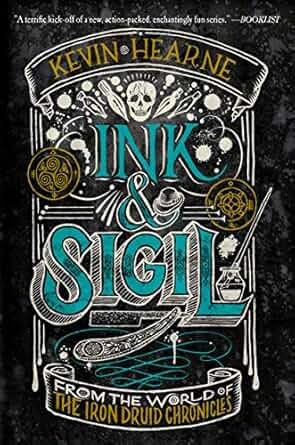
Lydia – I absolutely love Mitch Albom, his books are so moving, especially The Stranger In the Lifeboat. I’ve recently discovered Kevin Hearne’s Ink and Sigil which was a hilarious mix of wizards, detectives, and magical creatures. The Ruth Galloway series by Elly Griffiths is great, too, easy-to-read crime novels about a detective and an archeologist. Can I add a 4th author? My co-host Lucy’s books are awesome too, and I am so excited about her up-and-coming Jack the Ripper-inspired novel, EtherStone!
Lucy – Right back at you, Lydia–for anyone reading, check out the lovely Lydia’s books if you want compelling, interesting characters and complex worldbuilding.
Darci – A fantastic list, you two. Thanks for sharing. I added a couple to my TBR. I’ve wanted to get the Ink and Sigil series just for its awesome covers, and Ruth Galloway captured my attention. I love that you’re not only friends but fans of each other’s work!
Thank you so much, Lucy and Lydia, for visiting my Guest Spotlight! What parting advice do you have for those who want to pursue writing?
Lydia – Keep writing—there will be ups and downs as with anything, but don’t let it stop you. Writing can be lonely, so make some author friends, join writer’s groups, and come chat with us at Introverted Indies—anything where you are with like-minded people. That support is invaluable. One last thing, draft without editing—just write. Get it down and leave yourself notes if you get stuck and then move on to the next scene. Once you’ve got the bones down, you can go back and add the meat!
Lucy – You took the words right out of my mouth (keyboard?), Lydia. No first draft is going to be perfect. I’m personally a pantser, so I jump into writing without planning. Even if you like to plan, I highly recommend giving it a try—have your idea, open a new document, and start writing. See what comes out. You don’t need to have all the answers immediately, you can come back and fill in any holes later. Just get it out of your head and onto paper.
Lucy was my Spotlight Guest in 2023, and I enjoyed an interview with Lucy on the Introverted Indies channel earlier this month. A written chat will be coming soon.
A pair of UK fantasy writers, Lydia Baker, and Lucy McLaren, decided to get together and give indie authors a platform for conversation. I was Lucy’s guest this week!
You’ll also find authors reading from their books and they do written interviews. Check out their channel to help them share and give fledgling authors a voice. Follow them on Instagram and learn how you can participate.
Lucy and I had technical issues and some of our conversation got lost in the ether. Stay tuned for more in an upcoming Introverted Indies Blog.
I hope you enjoy these tidbits shared in this month’s email newsletter.
Never once have I failed to find the education I’m looking for on YouTube. I wanted to know more about Norse magic and runes and came across YouTuber and professor Dr. Jackson Crawford who teaches that very subject. Here is the first video I stumbled upon in my search about Seiðr Magic and Gender:
Dr. Crawford has an entire course on runes.
That led me to rune song, which led to compiling a playlist of reinvented primitive music… pulsing, haunting, magical shaman stuff, great for fantasy inspiration. The first is an album by Munknörr. The second is a performance by Heilung.
Heilung’s music is described as “Viking metal,” in this charming article in a New Jersey high school newspaper. Heilung uses traditional instruments from around the world, including a horse skin drum, a Hindu ritual bell, and a buffalo horn rattle. They also sing in multiple languages, primarily Old Norse, Old English, and Old Saxon. This song, Krigsgaldr, translates roughly to battle magic.
I’ll finish this piece with two Chronicle documentaries that are lengthy but well worth watching. The first is the history of the Celts. You might be surprised by their origins and insights into a complex, creative culture built upon salt trading.
The second documentary is a history of the Dark Ages told through the art left behind. One major takeaway from both documentaries is the skewed writings of the historians, namely the Romans, who had no compunction about spinning history in their favor.
Art tells a different truth.
So, if you got this far, you might still be wondering about the real meaning of barbarian. It’s covered quite well in the video above, and you probably already know it refers to uncivilized people. Simply, it means other; those who don’t speak like us (according to the “civilized” Romans, it was everyone who lived outside of the Roman Empire).
I’ll link you to the Oxford Classical Dictionary, which goes into the definition at length. and says in part: The term was a social designation rather than a legal status, but could inform institutions and actions and, within certain contexts, the differential treatment of groups, in which case it can be appropriately described as racial thinking.
I hope you enjoy these tidbits shared in this month’s email newsletter.
As you might imagine, magic systems are an important literary device in fantasy writing. Choosing the right level on the High to Low Magic spectrum is crucial to shaping the plot and driving the characters whether the system features big in the plot, or is merely a gossamer thread. Check out 7 Ways to Create a Spectacular Magic System For Your Novel at Writers Write.
Click to Subscribe. Unsubscribe anytime.
Hard and Soft Magic is another way to look at it as my go-to fantasy writing guru, Richie Billing, brings out. He explains how Hard Magic requires detailing the system’s complexity and all its nuanced rules, whereas soft magic lacks clarity and leaves more to the imagination.
The Starlight Chronicles falls on the lower end of this spectrum, which is typical for writers with romance as their overarching genre. But even we must be serious about our magic system as we develop the plot, flesh out the logical details, and strive to make our fantasy elements vibrant no matter that the bulk of the magic is left unsaid. It still comes through. Readers must have enough believable substance to become immersed as much as they need captivating settings and compelling characters.
I want to nudge my current work in progress (my spinoff story for dragon shifter Michael Elliott) higher up the scale. Elliott’s dragon will be a major character and Onyx needs a backstory. To that end, after creating my antagonist and giving Spero his opening scene, I’ve taken a break from writing and turned to research.
Spero hails from a long line of Nordic witches who use rune magic. The runes are etched into his skin as a means to access and control their power. That’s both a painful handicap and a super strength, which will come out in interesting ways in the story. Suddenly, my mage’s backstory became paramount and needed much more work.
This epiphany led me down fascinating historical paths involving runes, the sagas written in them, their use in incantations, their songs. So, I pulled out long-neglected knitting and crocheting projects and stitched away while watching YouTube videos on Norse Mythology, Viking history, and the Dark Ages, including nuggets like the real meaning of the word barbarian. I also learned the surprising origins of the Celts and how they spread through Europe and competed with the Roman Empire in art, culture, and wow, even chariot racing!
My guests this month are writers who have played a huge role in my growth as an author practically from the beginning but in a whole new way over this last year. We formed a writing group to share and discuss our works in progress. Our goal is to improve our writing by helping each other be a better writer through feedback–a simple concept, but it really works!
In this discussion, we will share the benefits gleaned from our focused group feedback on this amazing journey as well as our writer’s life, goals, and processes.
The Writers
Isa Ottoni
Isa began her journey as an avid fantasy reader who often wondered if, one day, she could write a book herself. It turned out that she could.
For Isa, the lens of fantasy helps her understand the world; the good and the bad, the whimsical and the dark. Much more than a form of escapism, she believes that speculative fiction has the potential to show a better future for ourselves, to take us on new adventures.
Besides writing and reading, Isa enjoys long runs through local parks, watering her plants with her adoring husband, and obsessing over the fanart of her favorite fantasy protagonists. You can find Isa on Instagram and Substack for her newsletter and published works.
Dylan
Dylan has never written a bio before and, as such, made this one in five minutes and hopes it doesn’t show.
For Dylan, his love of fantasy, morally grey characters, and dark humour led to him writing his very first story – It didn’t make the light of day and is currently locked in an undisclosed cupboard – It did however show him that he could and he would write.
Currently, Dylan is working on a fantasy novel set in 18th-century Scotland filled with Jacobean Sorcerers and mythological creatures he is proud of and one day hopes to share with others.
Outside of reading, writing, and generally feeling sorry for himself, Dylan enjoys Brazilian Jiu-Jitsu (BJJ) and runs through his local dams.
Dylan hopes you have enjoyed hearing about him in the third person…
D. L. Lewellyn
D. L. Lewellyn is an independent author writing fantasy romance every chance she gets. A passion for writing took her by surprise in 2021 following a summer of voracious pandemic-induced reading in a new favorite genre, paranormal romance. Her latest publication, Les Romances des Trois, features three enchanting ménage à trois romances.
Besides self-publishing her novels, her stories have found homes in anthology publications, and many more are in the works. Ask anyone who knows her, and they’ll tell you she’s a dedicated multi-crafter.
She also enjoys blogging, chatting with authors and other creators on her monthly Sunday Spotlight, and classic cinema nights with her husband, dogs, and a big bowl of popcorn.
The Group
Thank you for joining us today! It’s great to have this opportunity to share how beneficial and fun it has been to participate as a group with these talented writers on Zoom. I’ll start with how we got together.
Isa and I have shared beta reads since meeting on Richie Billing’s Discord channel in 2022. Because we love the same genres and Isa is a voracious and insightful reader, it has been a hugely fun and much-appreciated collaboration. Isa was one of my first Spotlight Guests. I met Dylan on Richie’s channel that same year and we have chatted regularly ever since. Dylan’s insights have often been game-changers. When Isa asked about forming a writing group, Dylan was the first person I thought of. The progress we have made over the last year has more than met my expectations.
We have another member who is taking a break. We hope Dan can return because we enjoy his writing tremendously and are dying to get to that next chapter! Besides being so awesome with sharing feedback, all three group members are much younger than me and live in different countries. Their unique perspectives have been phenomenal and multi-layered and why I encourage writers to reach wide to find a community.
Let’s Get Started
Can you share who or what inspired you to be a writer and your favorite genres, books, or authors? What makes them your favorite?
Isa. It is so hard to pick favorites, especially because my answer will vary according to the last book I’ve read. But I’ll say that I’ve read fantasy since I can remember, and magic is what draws me into the stories. I love whimsical tales with a dash of darkness, compelling characters, and romantic subplots.
Marion Zimmer Bradley was/is a huge influence. The Mists of Avalon was one of my first contacts with feminist retellings and made me realize how powerful stories can be. I’m also a huge fan of Susanna Clarke, Suzanne Collins, and Anne Rice. Now, as an adult, I’ve discovered wonderful writers who inspire me every day. R.K. Ashwick, Ella Mcleod, Aiden Thomas, D.N. Bryn, A.J. White, T. J. Klune, to name a few.
And of course, the friends I made along the way. You, Darci, have been a great source of inspiration—I adore your stories and your feedback!
The indie community is stunning, and it opens a world of opportunities to us. So I kept thinking, maybe I could do this too. I gave it a shot, and it worked. I’ll have my debut novel published with a small press next year, and it is honestly a dream come true.
Dylan. I was first inspired when I played the video game God of War (several years after its release.) I found myself immersed in the world that the Santa Monica studio created and loved their storytelling, but the thing that really caught my attention was how they mixed gods from different pantheons (Greek with the Norse) so seamlessly into one narrative. After this, I bought two books on writing, (Techniques of the Selling Writer, and Save the Cat! Writes a Novel). I read both in their entirety, scrolling notes across their pages, and creating my own notes of actionable points. Then I wrote the worst book I have ever written and loved it. Why? Because I had done what I had set out to do and learned so much along the way to help with my future projects.
As my above answer may suggest, I value storytelling above “writing” per se. A lot of my knowledge/instinct comes from different media outside of novels. I love playing video games, reading their scripts, and love comics/graphic novels.
The Last of Us gripped me from the get-go with the father and “daughter” story at its heart whilst they encounter a cast of characters that would live in this post-apocalyptic world. The Teenage Mutant Ninja Turtles and Blacksad comics have also been influential to me as well. I believe both have isolated how dialogue can carry the story and have great character arcs over words and pictures.
But all of this does not make up for the fact that a novel writer must read novels. The top three, in no particular order I would read on a desert island until the pages fade away, are; The Lies of Locke Lamora, The Ballad of Songbirds and Snakes, and The Night Circus. All of which I have chosen because of the vivid experience I had whilst reading, the wide cast of characters, and the dark tale each of them tells.
Isa. I LOVE The Lies of Locke Lamora too! Such a great book.
Darci. Wow! Thank you both. It is so hard to pick favorites, but you two nailed the what and the why. Dylan, I love your take on the storytelling aspect. It comes through in our group time and again. And your three top faves are on my list. Isa, what a treat to know you love one of my all-time favorites, Mists of Avalon. Now, I know why we love each other’s stories so much. This link is to Thriftbooks in case anyone wants a paper or hardback. The book left images in my mind for years after reading it. I had the hardcopy edition on my bookshelf for so long and wish I still did so I could absorb it again as an author. I might have to buy it again.
I just remembered a framed print I had in the 80s of Waterhouse’s The Lady of Shalott inspired by Tennyson’s poem. I bought it because of the book like so many fans did back then.
Can you share an overview of your current projects and writing goals? If we came back a year from now, what would you want most to have accomplished? Five years from now?
Isa. I’m working on my second novel and sharing my writing with our group. In the meantime, I’ll be editing and marketing my debut—a colossal task. I hope readers will enjoy my book, and be as excited about it as I am. I hope I can find my readership and grow a community. I hope I don’t make a fool out of myself on social media, but given the number of silly videos I post, that ship might have already sailed.
Five years from now… Maybe I’ll be a full-time author? That’s the dream, isn’t it?
Dylan. Currently, I am writing a fantasy novel set in 18th-century Scotland with kilt-wearing whisky drunk sorcerers. Mythical beings aplenty, and a dark tale at its core. My number one writing goal is to continue fine-tuning this current draft month to month from the feedback I receive from this writing group. In a year from now, I want to have a polished story I can show to potential agents or publishers.
Five years? Hopefully a lot! I want to have written “What happens” next to my current novel (I have it outlined.) Redraft a horror Christmas novel I have a first draft of. And last but certainly not least I have written the first 8 issues of a comic set in the UK which is a mix of “The Walking Dead” and Disney’s “Zootropolis”. I would love to bring this to life with a talented comic artist, but those are all battles for different times.
Just now my focus is on the present and that means getting the best version of my first novel.
Darci. I’m super glad I get to be around to see all these wonderful goals in the works and the ones coming to fruition. And your IG is so fun, Isa! You’ve got a lively vibe. Keep up the good work.
I have seven novels started and two are my focus for 2025. I hope to publish one of those by the end of next year. Five years from now, it would be lovely to have two to three more published, but that means I need to speed up my process! There’s so much more work involved with self-publishing than the writing part, and I had no idea. Marketing can be a fun creative outlet, and I enjoy reaching out to readers and connecting with writers and all of it takes a lot of time. I’m constantly feeling like I’m missing opportunities, while I find others. Whiplash! It’s a matter of finding the right balance. Nearly four years in, and I’m figuring some of that out.
How do you fit writing into your busy work schedules and lives, and how important is it to make it happen? If you could manage it, would writing be your primary occupation?
Isa. Yes! I love my day job, I really do, but writing is what makes me the most happy, what gives me purpose. So I write whenever I can, in the mornings, weekends, and days off. When I can’t write, I think about it, make up scenes in my mind, and plan what I’ll write next.
I try to organize my time but also let it be flexible. For instance, I’ll usually work first, make sure all the “official” demands are met, and then I move on to writing. I plan my week out so it is easy to see which days are more open, and which days are not. But also, since I love writing, I’ll often do it anyway, even if I’m tired or busy. Sometimes, just a couple of lines, or a paragraph is enough. I’m writing and that’s enough.
Dylan. I have an excel sheet I update whenever I need to. I use it as a weekly schedule of my non-negotiables (Work hours, exercise, and family time.) After this I see where my “free time” is and plan in my writing. Typically, this means I have 1-2 hours of writing a day Sunday – Thursday. And a minimum of an hour Friday and Saturday. I do, however, always tend to “accidentally” write a little longer.
And I don’t know if I would make writing my main occupation. For me, it is an escape. I work in the science sector. In a job that I worked hard to get. I would like to add to my life with writing, but I would not want to choose one in place of the other. Besides, I feel writing benefits from having daily interactions in the real world. I feel if I became a full-time writer I would be more isolated from others. A lot of my idea’s on characters come from my interactions with others.
DLL. So, I would say you both make writing a priority because it’s a joy for you. Me too! And I’m envious of your organizational discipline! Of course, you have an Excel sheet Dylan.😄 And you make a good point. Isolation is a very real hazard. I retired early to write, and I can say I am officially a recluse. I’m sure I’ll just disappear one day and someone will find my bones piled up by my dilapidated computer. Thank goodness for both of you keeping me planted in the real world at least a couple of times a month.
Can you share your top highlights from our writing group engagement?
Isa. Community; Support; Learning; Accountability. Having a writing group is a game changer, and I would not be where I am right now without it. Having author friends gives us a sense of community and that is precious. Writing can be such a solitary endeavor, but knowing there are people out there excited about your story makes it so much easier. The support we get from a group is everything. We learn a lot — and I mean A LOT — from sharing what we write. We are sometimes blind to our own work, so having more people look at it makes all the difference. Giving and receiving feedback is such a formative thing; I learn as much from critiquing other people’s work as I do having my work critiqued. Finally, scheduled meetings mean we must meet the deadlines, and it gives us that extra boost to actually sit down and write.
Dylan. Darci, Isa, and Dan are all excellent writers with their own distinct styles, voice, and different strengths in their storytelling that always has me asking, “And then what?”
Through the course of our engagements, it has shown me that my writing problems are not unique. All of us at one stage or another of our stories come across similar problems in our writing but having this group means that instead of us individually hitting our heads against the wall until we break through we can discuss a solution that others have found that works for them. And even if it doesn’t work for me it at the least highlights the problem, giving me a direction to look.
Outside of this, I find having group submissions gives me a deadline that wouldn’t exist otherwise. It’s a cheesy saying that “pressure makes diamonds.” But I genuinely feel without this group, most of my ideas would still be carbon deposits (Not coal! Inner science nerd.)
Darci. Absolutely fantastic takeaways and all things I would list too. I would just add as I did at the outset that, having begun writing so late in life and writing to a younger, diverse audience, it has been invaluable to have the insights and perspectives of significantly younger, well-read, focused writers who also have varied cultural and world views. My writing has a better chance of appealing to a wider audience.
I used to tell Dylan I worried I was too old-fashioned, and I think I said the same to you, Isa. These days, thanks to bridging gaps during our sessions, I’m feeling much better about that, and hopefully, you both have gained from sharing your writing with an elderly person. 😁
We have a lot of fun discussing our process–the techniques or methods we’ve discovered along our journeys. The ideas and examples we exchange during our video meetings have often been huge motivators and eye-opening moments. I’ve found it interesting how our techniques evolve, giving way to completely different approaches and sometimes circling back to earlier methods. What are some of your best practices that have stuck with you and why?
Isa. I tend to rush my plot; I get excited about certain scenes and I skim over the connecting bits. I learnt that I do that with the group. It is funny how we don’t see the problem until someone else points it out. So now, as I draft, I pay much more attention to the details, taking my time to set the scene, to flesh out characters, to show beats where I’d otherwise use a montage. I’m a sucker for montages, but I must use them sparingly.
I listen to feedback and use it in my next session, without exception. That’s how I learn, always trying to improve, to make my thoughts clear on the page.
Dylan. Great question! My early drafts play out like a film with all my scenes, settings, and characters interacting but I tend to lack emotional depth in the form of indirect and direct internal dialogue where it matters. This has been highlighted in my submissions and now on completion of my draft, I go back through my piece and highlight all the points as I read where I feel if I was in my character’s position I would react. I also have trigger point characters where my character should always feel some deep emotions whenever they are mentioned so I search my drafts for their names/places/times and always make sure it’s a significant moment when they are mentioned (Otherwise delete them as why am I mentioning them?)
Darci. I can totally relate to rushing when those ideas hit! I still find spots where I leaped too fast between scenes in my published books! And we know how Isa loves her montages, so here’s a little Team America for you, Isa.
Along with the previous question, are you a pantser, a plotter, or somewhere in between? How do you get your plot and character ideas? How do you build on them?
Isa. I began as a pantser, which works great for short stories, but not so much for full-length books. So I’m trying to improve my plotting skills, and right now, I’m somewhere in between. My brain does not enjoy plotting, bullet points suck the life out of my story, so I’ve discovered a way to trick myself into plotting, making it fun as I go.
I start with vibes. A scene, and characters, an arc. Then, what I do is this:
My draft zero is an interview with my characters. That’s not for the reader, just for me. I know their end game, but I’m not sure how we get there, so I sit them down and ask.
For my current WIP, it looks something like this:
Hey, [name redacted], how did you become the consort of two immortal vampires?
Or
Hey, [names redacted], how did you two become vampires?
Then, I let them speak, in a monologue, I let them tell me their story. It sounds crazy, but I swear it works. I’m pantsing, brainstorming, and learning their voices as I go. Whatever comes out of it will have my plot, the scenes I must write, and a blueprint of my story.
Then, I draft. The first draft is messy, and honestly the most fun. I don’t stop until I reach the end, and that means NO EDITING. It’s hard, the urge to edit is strong, but I’ve learnt to control it.
The second draft is development editing and making it readable, and that is the draft I show people (my writing group and critique partner).
The third draft is applying the feedback, making it better. Still not polished, but the story and characters will be much stronger. That’s the draft I’ll show the editor. A couple of drafts afterwards and I’ll have a book!
Dylan. It all starts with the seed of an idea. Sometimes it’s a character, sometimes it’s a plot, sometimes it’s a conversation. I scribble these all on Word documents and then come back to them from time to time. If after some time has passed and I still feel the excitement for the initial idea and it’s longer than a short story, I purchase a nice notepad and expand on my starting idea and just write the longest mess possible, over a weekend at most. I then ask myself questions. Not limited to these but just a few examples:
What do I like about my story?
What don’t I like?
Is my current main character the correct POV to follow for this story?
What is the throughline of my story?
What arc will my character have?
After this I tend to have a bit of distance from the story but keep the notepad, sprinkling in any ideas, I have over the course of a week to a month. Then I make an outline for my story without looking at anything I have written (I hope the good ideas will have stayed with me.)
After I have this outline I sit down and write my zero draft of my book, treating the outline like train tracks to guide my story, but I welcome being derailed and following the train elsewhere.
When I’m finished with this draft, I give myself distance from the story. Then when I return it’s a lot of discovering if what I originally thought my story was about is still the case.
If not, what is it about now? Find this answer and make an outline for my next draft to make sure everything in this draft serves this purpose.
After this draft, it’s all about fine-tuning the story and that is what I am currently doing. As a newer writer, I have had less experience at these last steps. They are definitely the most rewarding and painstakingly difficult.
P.S. If anyone has an easier way, please tell me!
Darci. I just had the most fun diving into both of your processes! I can’t wait to sit down for an interview with my dragon shifter, Michael Elliott, and Onyx, his dragon. He’s one of the three MMCs in my series and getting his own book, hopefully this year. I might know him well but not well enough! My heart a swinging by the seat of my pants every step of the way. I have no patience for mapping things out because I just want that story to come out. Four years later, I am employing a bit more organization and development as I go.
How I think of Isa working on her magical stories…
Isa. Okay, this is spot on! LOVE IT!
And Dylan, gotta love your notebooks! They work and they’re easy to hoard.
This is how I always picture Dylan at work on his plots.
If you haven’t visited Heart Breathings on YouTube, you might enjoy author Sarra Cannon’s channel. She has a notebook challenge every year and it’s coming up. It’s just one of her writing challenges and tips she shares with her huge following. I followed her before I started writing, back when I was a planner geek.
I told you I loved notebooks Dylan. I’m truly baffled that I don’t use them more for writing.
If you could share only one tip or resource for new writers, what would it be? Okay, so that might be tough to narrow down. Feel free to add a couple more.
Isa. Brandon Sanderson’s lectures on Youtube are a must watch. Even if you’re not into his books like me (I know, what a sacrilege, but it is what it is), his lessons are GREAT for baby writers. I’ve learnt a lot from him.
But I’ll also say that, if you want to write, you MUST READ. Not only crafting books, but books books, fiction within and outside your genre. Read and then think: Why did I like these books? Why didn’t I? What made me so invested in these characters, why am I grinning and kicking my feet, or why do I find this beat boring? This is the greatest exercise for writers in every stage of their craft. Read, read, read. Then write, write, write.
Dylan. I have two pieces of advice. One is to write what you want to read. There is no guarantee what you write is ever going to be successful (And in my opinion, it doesn’t have to be.) So why not write the story that you are proud of? I’m sure it will connect with someone who feels the same way and isn’t that what a story is all about?
And two. When it comes to the actual writing process, treat your first draft as your zero draft. By this I mean take all the pressure off yourself. Write with your initial plan, follow your instincts, don’t be afraid to bullet point parts you don’t fully know. Just get every ounce of that raw story on the page. After that comes the fun part. Look at that steaming pile of S…Story. And look for its strengths and weaknesses, make a plan you are comfortable with, and then work on your first proper draft. This draft is what you will edit. Otherwise, it is too easy to get hung up on getting it perfect the first time and for me personally, that is impossible. I need to fail before I can succeed.
Darci. I knew you both would have a wealth of great things to share on technique. I’ll just add how valuable I find writing analysis tools like Autocrit analyzers and Read Aloud on Word. Both trained me to recognize all those endless weird things you do when you first start writing… repetition, redundancy, overusing adverbs, passive voice, all things you overlook unless it’s reflected back to you audibly or statistically. Listen to your writing. Search for overused words like “this,” or those filter words Isa hates like… look, know, think, and feel. You might be shocked at the number of hits.
And really, this reflecting is what we give back to each other in our group participation.
Thanks so much! This has been a blast as well as inspirational. I can’t wait to see where we are at next year. In the meantime, happy writing!
Isa. Thank you so much for having us! Looking forward to seeing you in our next meeting!