Enjoy this lively chat packed full of great writing tips and resources on writing short stories with fellow northern Nevada writer, writing coach, and public speaker, Linda K. Hardie.
Linda led an engaging and informative short story workshop at a writing retreat I recently attended in Virginia City, Nevada, that truly inspired me to dive into my next small tale with a new perspective. Check out the highlights and photos of the retreat on my blog. That very day, I invited Linda to my Spotlight for a chat so that you can benefit too.
Let’s Meet the Author
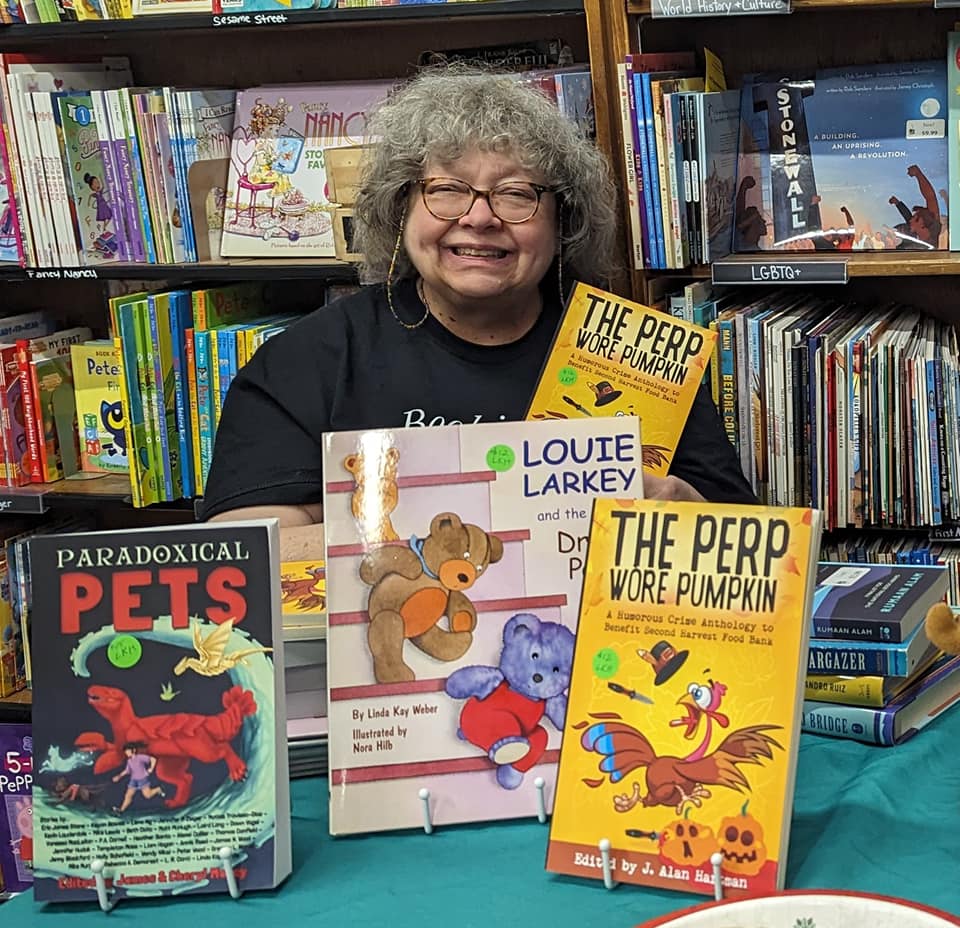
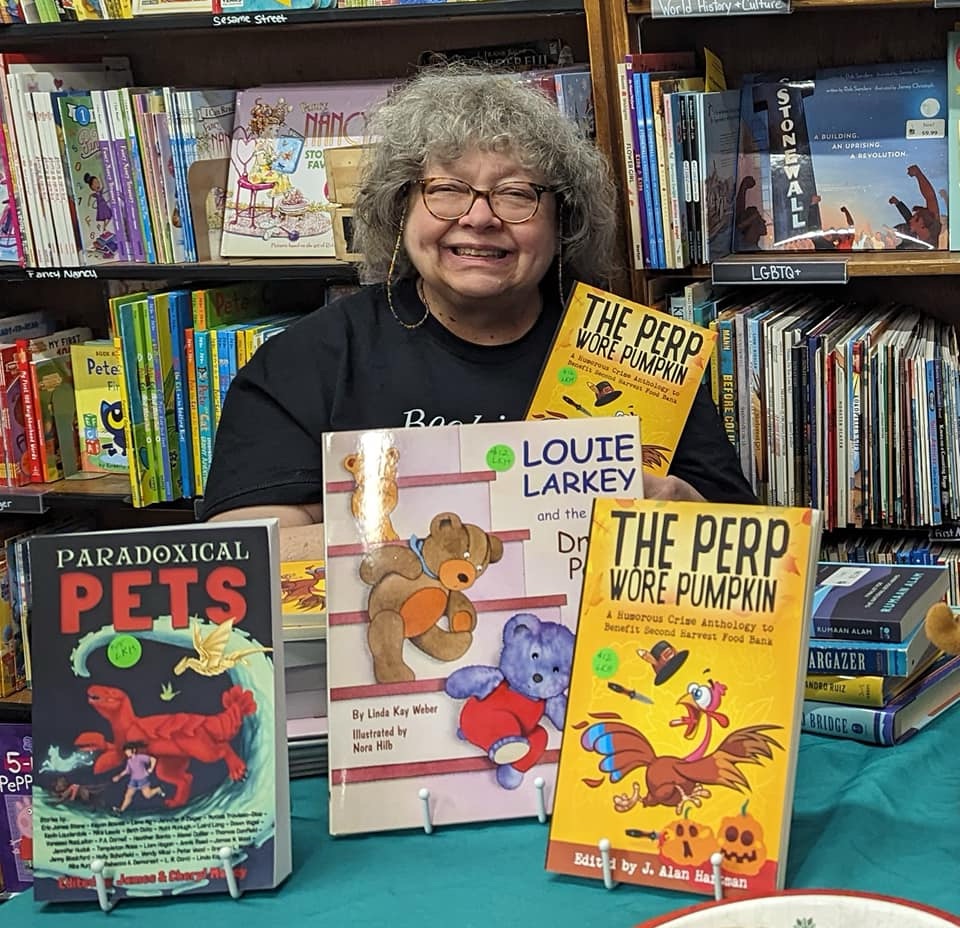
Linda Kay Hardie is a freelance writer in Reno, Nevada. She writes short stories in many genres, including horror, dark fantasy, and crime. She also writes recipes and is the reigning Spam champion for Nevada (yes, the tasty treat canned mystery meat).
Her writing has won awards dating back to fifth grade, with first place for an essay on fire safety. In 2022, she was honored with the Sierra Arts Foundation Literary Arts Award for fiction. Linda makes a living as a writer, writing coach, teddy bear builder, and as staff working for purebred rescue cats.
Let’s Get Started
Thank you so much for joining me on my Spotlight, Linda. How did you become a writer, and what or who was your biggest inspiration?
LKH: Books in general were my initial inspiration. I remember looking at books, seeing the little black squiggles that held the magic of the story, and being determined to figure out that mystery. I had to learn all the mysteries, and I was full of questions. When I was 4, I followed my mom around the house as she cared for my 2yo brother, asking her questions. She finally sent me to kindergarten (not very common in those days), where I bothered the teacher. We had coloring time, recess, nap time, and storytime. I couldn’t nap because I was too excited for storytime. Finally, the teacher taught me how to read and asked me to read quietly on my nap pad on the floor. I wrote my first story soon after that.
DLL: That is definitely the youngest budding writer story ever shared with me on my Spotlight. Fantastic!
How did you find your genre in Crime Fiction? What other genres do you like to write?
LKH: When I was a teenager back in the 1970s, I devoured science fiction. Those were the days of the US Apollo space missions, and science was huge. Science fiction took me to all sorts of amazing places. I’ve always read almost every genre, as long as the writing was good. I still read middle grade novels, and that’s one of my favorite genres. That’s the age when we’re beginning to realize we need to become our own person, to look beyond what we’ve grown up with, and to plan for the future.
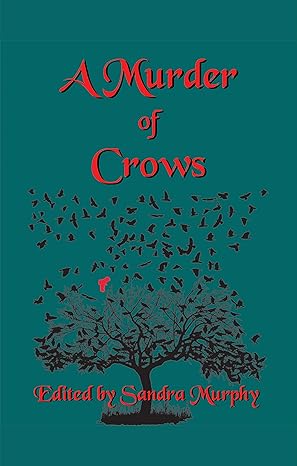
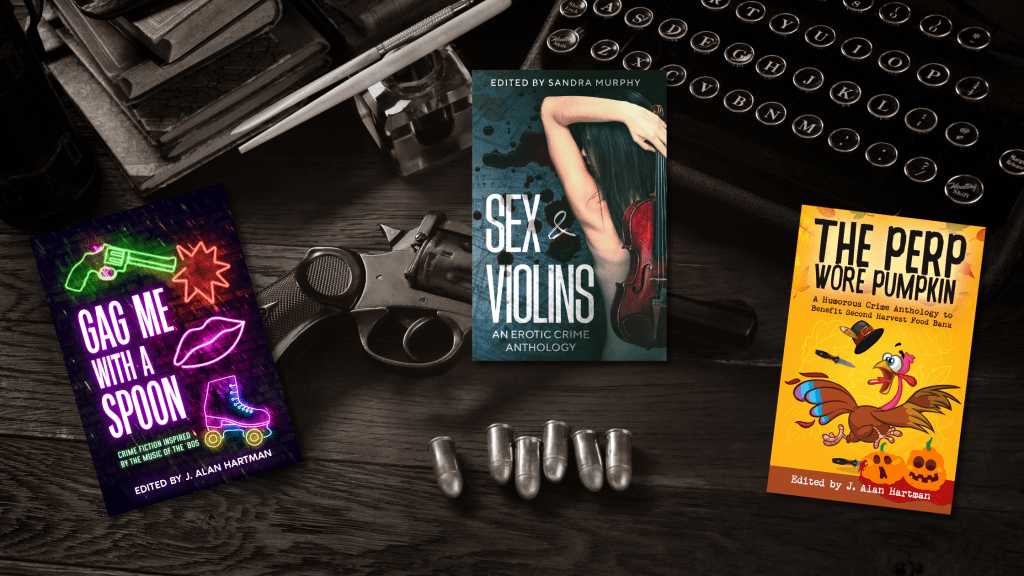
I discovered short crime fiction when I stumbled across a submission call for crime stories involving or inspired by collective nouns for animals. You know, like a gaggle of geese, a clowder of cats. Or a Murder of Crows, as the anthology was called, edited by Sandra Murphy.
I had just done research on what a group of jellyfish was called (that’s a long story involving a strange photo a friend posted on social media), and a crime story that used that research unfolded in my mind.
I also write horror, science fiction/fantasy, historical fiction, and literary fiction. I don’t write romance. I tried once, and everyone died. Tragic.
DLL: Haha. Death, for sure, puts the kibosh on the required Happily Ever After in a romance. Writing short stories is a great way to explore multiple genres. I’ve been able to experiment by participating in writing contests, where you don’t know what you’ll be called upon to write until the prompts are revealed. Writing Battle is the place to go for a wide range of genres and a fun competition. My favorites were ‘cannibal comedy’ and ‘inanimate romance.’
LKH: Ooo, that sounds very cool. A great challenge!
[You can meet the delightful creators of Writing Battle on my Sunday Spotlight.]
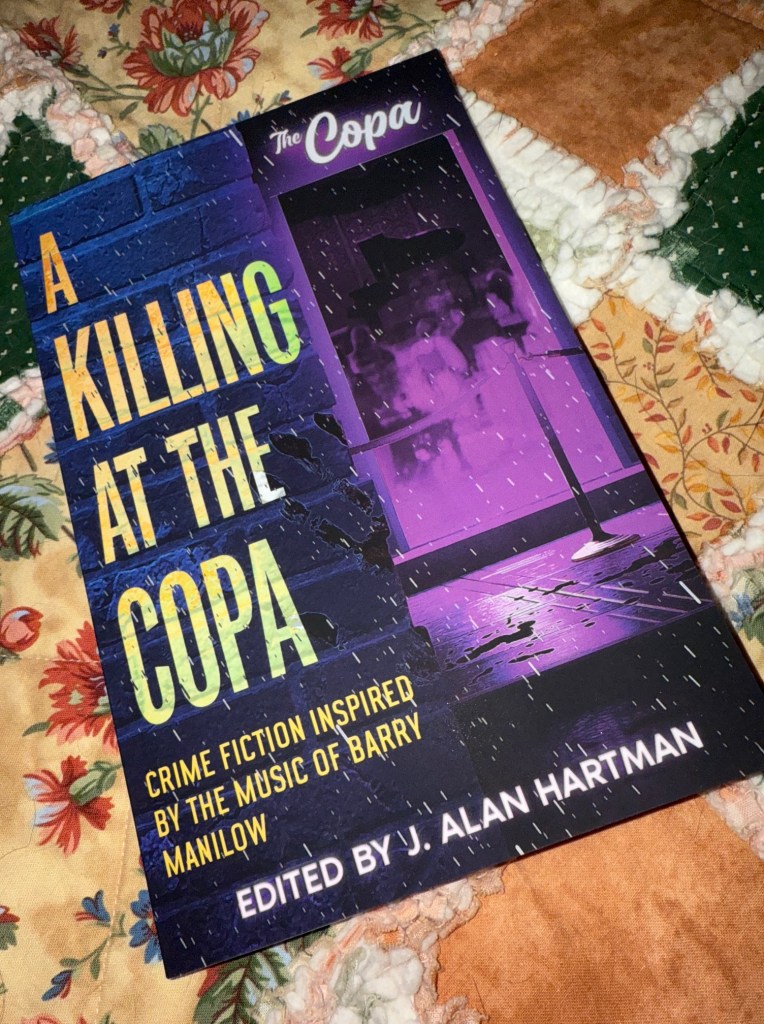
I thoroughly enjoyed your story in ‘A Killing at the Copa,’ stories inspired by Barry Manilow’s songs. ‘Rain as Cold as Ice’ (inspired by Mandy) drew me directly into the fascinating mind of the main character from the first paragraph, and as a local, I loved the downtown Reno setting. Even if I weren’t familiar with it, your world-building was incredible, and any reader could picture themselves on the streets of the seedy yet fascinating side of the Biggest Little City. Is writing local scenes your go-to?
LKH: Yes, I love to bring location into my stories as a character of sorts. In “Rain,” I was struggling with the story because (as I realized later) it wasn’t grounded anywhere. I mean, I had it set in a bus station, but it took me a while to see that I was writing a pair of “head on a stick” characters. My mentor, writer and former university professor Susan Palwick, calls it that when the writing is flat with just indistinct paper dolls saying words. The reader isn’t engaged because the writer is just lecturing and not showing a well-rounded story.
So, I knew what was wrong, but I couldn’t get a handle on how to flesh it out until I was in a workshop taught by my friend Suzanne Morgan Williams, who writes wonderful middle grade and young adult novels. This class–a part of Mark Twain Days in Carson City–focused on journeys to tie in with that author’s exploration of Nevada and the West.
In an exercise in the class, I was playing around with Suzy’s prompts, doing stream of consciousness writing to tease out my ideas. I take classes from Suzy every chance I get, because she’s a super teacher, and I always learn something new from her. She always pushes for writers to use more senses than just sight.
Here she’d asked us to think of five sensory words. I ended up with a long paragraph that became the beginning of “Rain as Cold as Ice.” The smell of the rain, the sound of bus brakes, the touch of the wind, the cursing of a drunk man. These specifics anchored my characters into a place and gave them room to be themselves.
DLL: I love hearing how stories get their start, and this is fantastic, especially how it speaks to that compelling opening. It looks like Mark Twain Days are coming up in October! [That’s my signed copy in the photo! Available on Amazon.]
You told us in class that writing short stories is a great way to excise those annoying thorns in life, a true catharsis, which gave me a whole new perspective on developing story ideas. I sensed the axe being wielded in ‘Rain as Cold as Ice.’ Are we seeing parts of you come through? Can you share how real-life inspiration enhances your short story writing and how we can experience catharsis more directly in this format compared to our novel projects?
LKH: Writers are always told we should “write what you know.” As a journalist, I found many flaws in that cliche, mainly because my job was writing about stuff I DIDN’T know about and communicating these new ideas and situations to my readers and listeners. (I worked in newspaper and radio news for many years. My undergrad degree is in journalism from the University of Oregon.)
I came to realize that the admonition could better be written as “write what you emotionally know.” The answer to your question about whether you and other readers are seeing parts of me in my writing is “absolutely, yes.” Not necessarily the physical details, but definitely the emotional ones. For example, I haven’t been in a physically abusive relationship, but I’ve been in emotionally and verbally abusive ones, so I know the emotional blueprints.
None of my characters are ever me. First, I’m a born storyteller, and I go where the story needs to go. I get this quality from my dad, who loved telling great anecdotes about events and people. He always embellished the stories with exaggerated details and often stretched the truth because these flourishes made the story better. “Never let the facts get in the way of a good story,” Dad always said. That’s become my motto, too.
Of course, Dad never actually said that, but that just makes the anecdote more emotionally truthful. Besides, “Never let truth get in the way of a good story” is attributed to Mark Twain, who famously and wonderfully wrote that way.
So I mine bits of me and my emotions, digging for the precious gems that will make a character sparkle and come alive for the reader. Of course, the first reader is me, and I’m picky and hard to please when I’m reading.
DLL: I love this advice and your dad’s inspiration, and of course, Mr. Twain’s. “Write what you emotionally know” is getting tacked up on my pegboard. I hope I’m doing that, tapping into my emotions, as I get to know my characters. You can feel the magic when it happens.
I enjoy writing short stories that come out of those contests I mentioned, but I’ve had a hard time finding places to submit them once they’re released back to me. When I do, they often get rejected, which many of us cope with until we find the right fit. I eventually published them in a collection, and I offer many for free on my website. That’s two ways to get them out there. But the anthologies where your stories are accepted are so appealing in their design, clever themes, and content that they must attract a wonderful audience and just seem fun to write for. Tell us about the path you took to find the right publisher(s) and about writing stories that fit those engaging anthologies.
LKH: I think I fell into a couple of good opportunities by luck. I first got into writing for anthologies, as I mentioned above, with a crime story inspired by the name for a group of jellyfish. Since that anthology, I’ve worked closely with editor Sandra Murphy on two others. No, wait. More. There’s another one coming out soon, and I’m sure I’m forgetting another one. While I don’t recall for sure how I found the call for stories for the collective animal group names book, it was probably through Erica Verrillo or Authors Publish.
I also keep an eye out for the small publishers that are popping up like mushrooms after a rain. And I use that analogy in a totally respectful way (being a lover of both fruiting bodies of certain fungi and delightful showers of precipitation). Writers and Publishers Network is a great resource for keeping up with this. I write columns, opinion pieces, and other articles for them occasionally. I was recruited by my favorite editor Sandy Murphy, who coordinates the newsletter and more of the writing on the site. Sandy is the editor of several anthologies that I’m in, and I continue to work closely with her.
One of my award-winning stories was initially rejected for the anthology whose call I’d written it for, but some time later I thought it fit a different anthology call with a similar post-apocalyptic theme. I was correct. The editors accepted it, and later I won an award for it.
DLL: Again, so much great stuff, Linda! I have been way too sheltered in my recluse writing world. My eyes have been opened! Thank you for all the resources. I found a fun interview with Sandy Murphy, our visitors might enjoy at cam-writes.com
Can you also talk about building those publisher relationships and the awards you’ve won?
LKH: Yes! I have stories in four of the five volumes of From the Yonder: A Collection of Horror From Around the World, published by War Monkey Publications, a small publisher based in Utah. (I missed the deadline for Volume 5 because I was too busy writing other stories.) I enjoyed working with publisher/editor Joshua Sorensen. I got to meet with him when he came through Reno on vacation with family members. At that meeting, he helped me zone in on the story I was creating for Volume 3.
I met Sandy Murphy when she edited the collective animal names anthology for one small publisher, and I followed her over to another small publisher with another project, an anthology of stories inspired by songs of the 1960s, then to Misti Media, a new small publishing company, home of White City Press, which published my most recent stories. I work a lot with publisher and editor Jay Hartman, and he has invited me to contribute to some of his anthologies. It’s an honor to be invited to submit because it means the editor likes your writing style and feels they can count on you to submit something publication-ready. And they know you’re someone they can work with. That’s always important, because word gets around about writers who criticize every single comma that’s edited in their “perfect” work and refuse to do any promotion of the finished book. Many anthologies are invitation-only.
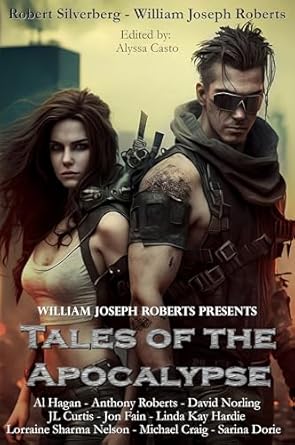
Last year (2024), I won a certificate of excellence from the Cat Writers Association for my SF/mystery story “Grenade Blows Up,” which is in Tales of the Apocalypse from Three Ravens Publishing. (Cats feature significantly in the story.)
My writing awards date back to fifth grade, when I won first place for fifth graders for an essay about fire safety that I wrote on my first day in a new school. My military dad had been transferred, and I walked into the classroom late, just as the teacher was explaining the writing assignment. I received a trophy, and the fire chief treated me and the other first-place winners to lunch and all the penny candy we wanted. In 2022, I was honored with the Sierra Arts Foundation’s Literary Arts Award for fiction here in Reno. That came only with a check. No candy.
DLL: Darn, candy always makes a great prize. Way to go, Linda. Truly inspiring.
You have stories published in 19 anthologies. Who is your favorite character you’ve written so far, the one you still think about the most?
LKH: Ooo. That’s a hard one. I’m not sure it’s even fair. Do you ask parents which is their favorite child? I like the narrator of “Smack” because I love her determination and kind heart. Then there’s Grenade (nee Renee) in “Grenade Blows Up,” who’s doing her best to get by after the apocalypse. Also, the narrator in “Rain as Cold as Ice” touches me deeply because she’s trying to survive in a harsh world, the best way she can.
I think Sarah and Sally, my married main characters in the story in the upcoming anthology edited by Sandy Murphy, might be the answer to your question. I had trouble getting into that story, so I did a lot of stream-of-consciousness freewriting about who these two older women are, why they were in Reno, how they reacted and thought, and why they were the best ones to solve this particular crime. Then, when I was having trouble with a novella I’d been invited to write, I realized that Sarah and Sally were exactly the people to fix my problems there. (Sorry that I can’t yet reveal any details about these projects.)
DLL: You did great with my zinger question. I love hearing the glow when authors talk about their children, um, I mean their characters.
I noticed that some of the anthologies edited by J. Alan Hartman benefit charities. Can you talk about that?
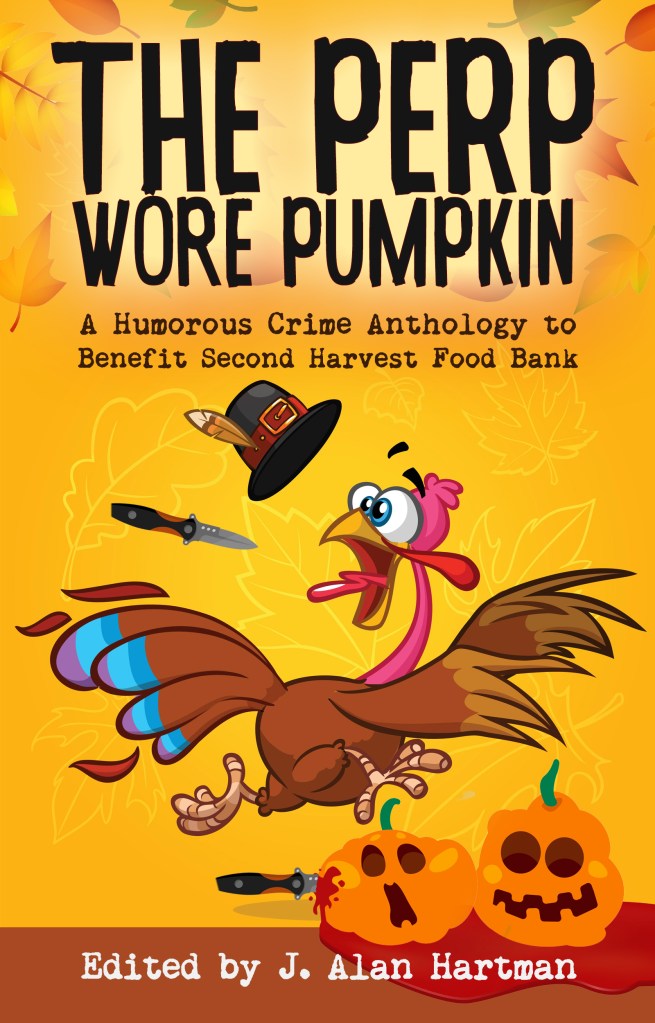
LKH: Definitely! At a previous small publishing company, Jay created and edited a series of Thanksgiving-related humorous crime anthologies, and when he formed Misti Media, he couldn’t use those ideas, so he created The Perp Wore Pumpkin, which carries on the spirit.
Proceeds from the editor and authors go to Second Harvest Food Bank locations. I turned in my story for volume 2 of this series a couple of weeks ago, and it will be released well before Thanksgiving this year to raise more money and awareness of food insecurity in America.
Plus there’s my poem in Under Her Eye: a Women in Poetry Showcase, vol. II, from Black Spot Books. Edited by Lindy Ryan and Lee Murray, this anthology partnered with The Pixel Project, a global non-profit organization focused on ending violence against women worldwide.
DLL: Fantastic organizations to support, and a fun way to support them!
Can you share your tips and techniques on staying productive and keeping that creativity flowing? Where is your favorite place to write? What’s your writing schedule like? Do you journal ideas as they come to mind, or do you otherwise note them down?
LKH: I journal every day, and I write about anything and everything. I write ideas or the seeds of ideas, often freewriting until my subconscious informs me there’s some great potential there, and then I copy and paste that into its own story file. I write diary-type stuff where I take a deep dive into my emotions and figure out why something made me feel and/or react how it did. I’ll write anywhere and everywhere. I even journal while riding the bus, typing emails to myself with a stylus into my phone.
I strongly believe that you need to write as much and as often as is possible for yourself in order to keep your skills healthy and ready. For me, that’s daily and usually many times each day. It’s often 1,000 words in a day. This does NOT have to be polished writing – it doesn’t even have to make sense! I play around with words. I mean that literally. But also figuratively. I’m a kid squishing the clay to see what it can look like, or coloring outside the lines because why should the coloring book artist get to have ALL the fun? Dancing and singing with the words.
DLL: My smile is huge right now. I love this! Great advice.
What are your writing goals? Do you have any novels in the works?
LKH: Yes. I’m trying to write a mystery novel. I’ve got so much of the idea work done on it, but I need to make time for the writing work. Plus the novella I alluded to earlier. I do have two finished middle grade novels, one of which is making the rounds on submission.
DLL: Your volume of work is truly inspiring, Linda.
Any other best practices for writing in the crime fiction genre, and/or writing short stories?
LKH: Don’t try to follow a trend. I would rather write what I love and let others follow me.
DLL: Ooh, yes! Learning about market trends proved to be a hitch in my stride. I started writing without any prior experience (other than legal writing in my career), learning as I went, including the publishing process and all the business behind it. In the beginning, my writing was raw, but my voice came through, my characters engaging (according to my readers). I was uninhibited, you might say. But in all that learning, I got caught up in all the endless rules (some I liked, some I discarded) and the admonitions about writing to market trends, even if it’s not the story you want to tell. Yuck! I love my readers, and I don’t think they need catering to.
LKH: Exactly!
DLL: It stymied me for a time, but I’m back to focusing on reading and hearing my favorite and newly discovered authors’ voices, honing my writing skills, and listening to my own writer’s voice. That, in turn, helps me find my audience, a small but growing one of which I am very grateful to have now. Thank you, Linda, for the great advice!
What is your parting advice for aspiring writers?
LKH: Write all the time. Whatever that means to you. Don’t follow anyone else’s advice unless your heart says, “Hey, that’s a good idea.” And read in your genre. That’s absolutely essential. When I was part of an annual writers conference in Fresno, I used to have wannabe writers show me their children’s book manuscripts for advice. I would read it. Most of the time, it was awful, with no sense of who their audience was. “What’s your genre?” I would ask. “I don’t know. I think everyone will love it,” they invariably answered. “What genre do you read?” I would follow up with. “Oh, I’m too busy writing. I don’t read,” they would answer. That’s when I would paste a fake smile on my face (anyone who has ever worked in retail knows this one) and make vague but helpful-sounding noises about their project. Because I knew they were never going to get published. Of course, that was decades ago, and now those people run off and self-publish.
That’s not to say self-publishing is not a valid way to go these days. I know many people who publish their own books, market them, and along the way, they work with professional editors and artists to make the books the best they can be. These writers get their work out to readers. But if the only thing you want is to be published and you don’t want to learn or to pay for professional editors and artists to make your work great, that’s fine for you! I want to be read. I want to touch people’s lives. That means I want to work with talented people who can help me improve.
DLL:Beautiful! Thanks again, Linda, for dropping by and sharing your inspiration, as well as all the fabulous tips and resources!
Let’s conclude by sharing where we can find you and your works. What events can we attend to hear you speak in person, book signings, or other ways to get out and meet you and our fabulous local authors?
LKH: I attend most of the monthly meetings of the Sierra Arts Literary Community, also called SALC. [Find Linda here] It’s generally the first Sunday of each month at the Sierra Arts Foundation’s Riverside Gallery on Virginia Street in downtown Reno. Feel free to approach me and say hi if you come! I’m always glad to meet new writers, prepublished authors, and other writers. No membership needed (although there are resources available to people who are artist members of Sierra Arts).
When I speak in person or have book signings, I publicize them on the Northern Nevada Writers group on Facebook, as well as on my own social media feeds [Facebook], plus on White City Press’s website.
I’m working on possibly having some writing classes through Sierra Arts Foundation, which is a great supporter of all arts, including literary ones.
DLL:The Sierra Arts Literary Community sounds wonderful. I would love to see you there, catch one of your classes. Thank you!
Here are links where you can buy the anthologies featuring Linda’s stories directly from the publisher.
I am thrilled I was able to participate in the fifth annual Virginia City Writing Retreat. I have wanted to try it out for several years and meet some local writers. Registration is now open for next year. Our hardworking host, Kim Harnes, reports that the June 2026 retreat is already two-thirds full, so if you live in Northern Nevada, don’t miss checking it out.
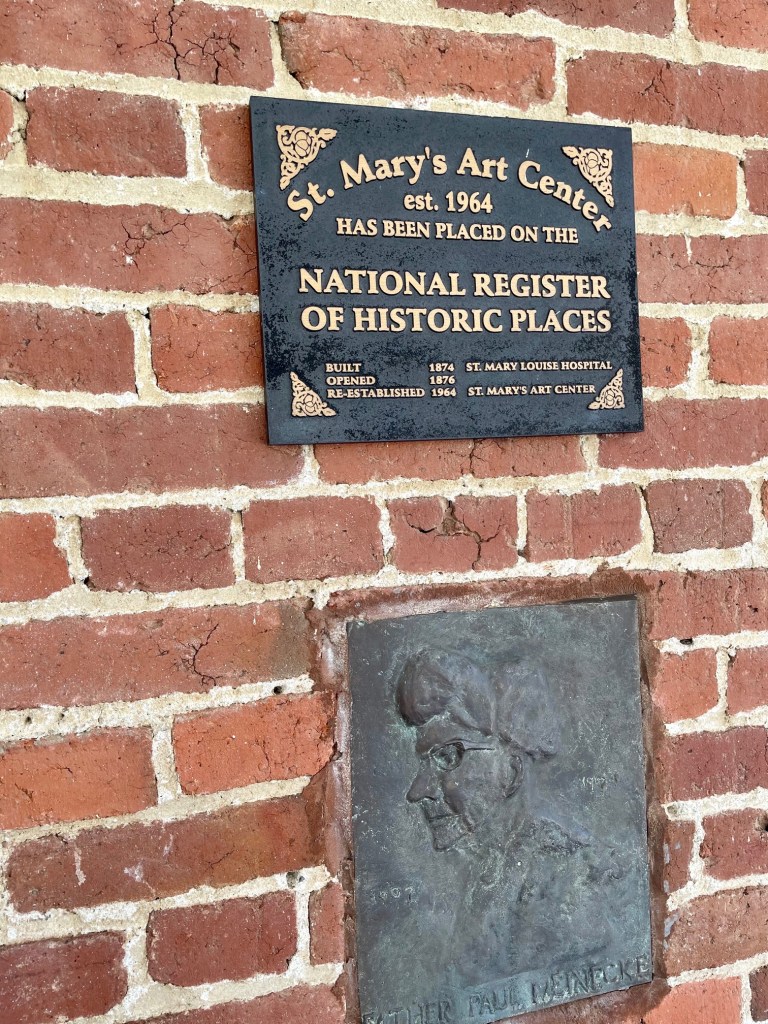
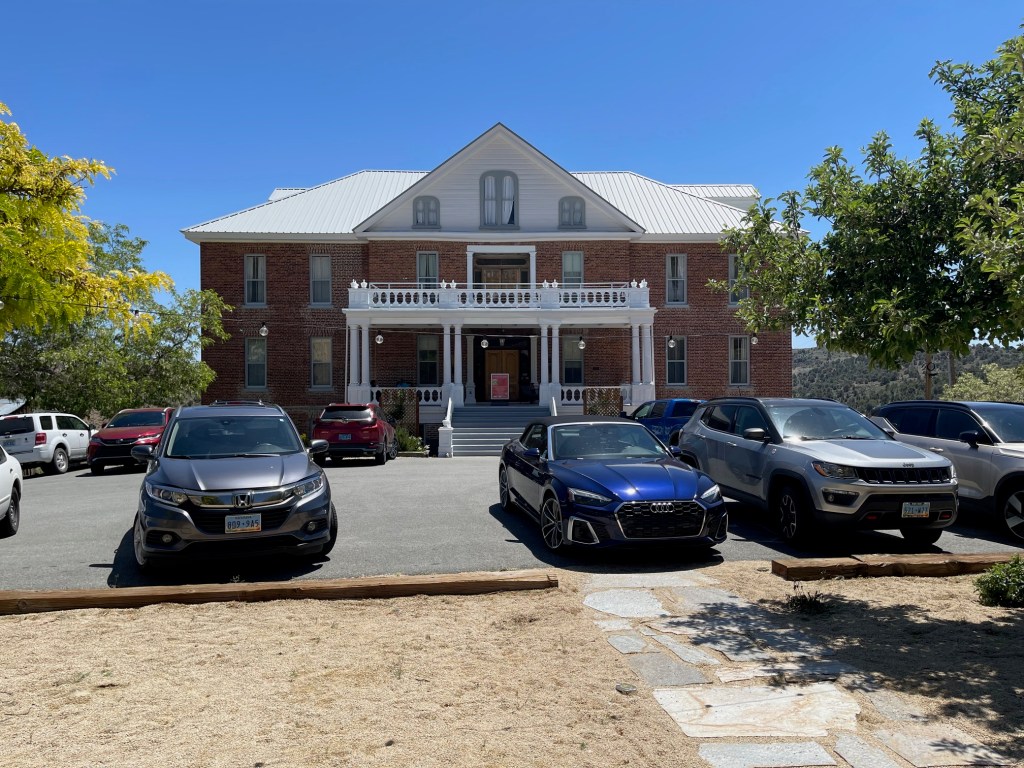
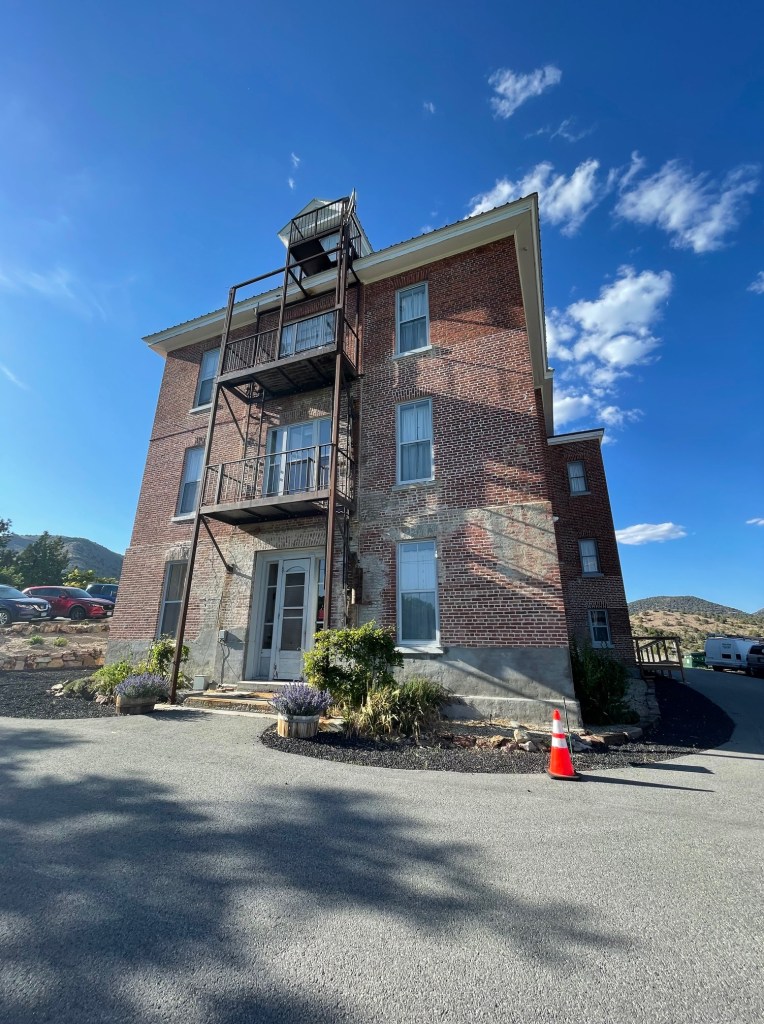
Here are my top five reasons why this wonderful Victorian-era hospital turned art center in Virginia City, Nevada makes a great retreat:
St. Mary’s Art Center is part of a fantastic pioneer town that, despite its 2 million visitors a year, retains its historic, out-of-the-way charm.
The creativity vibes are off the chart.
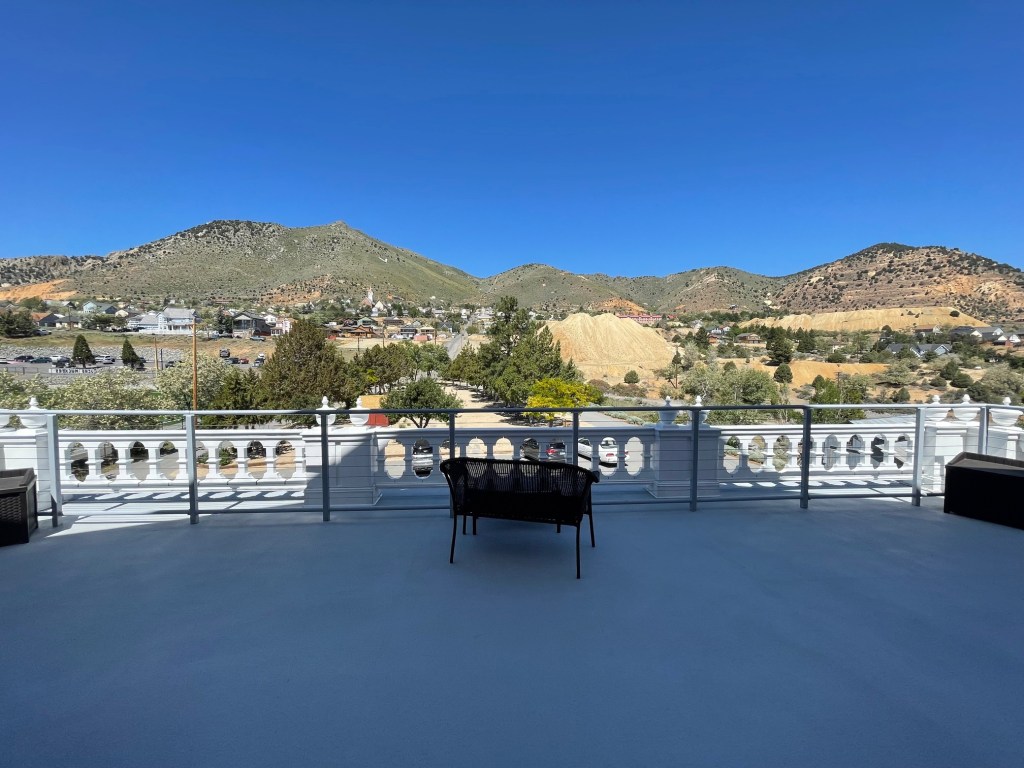
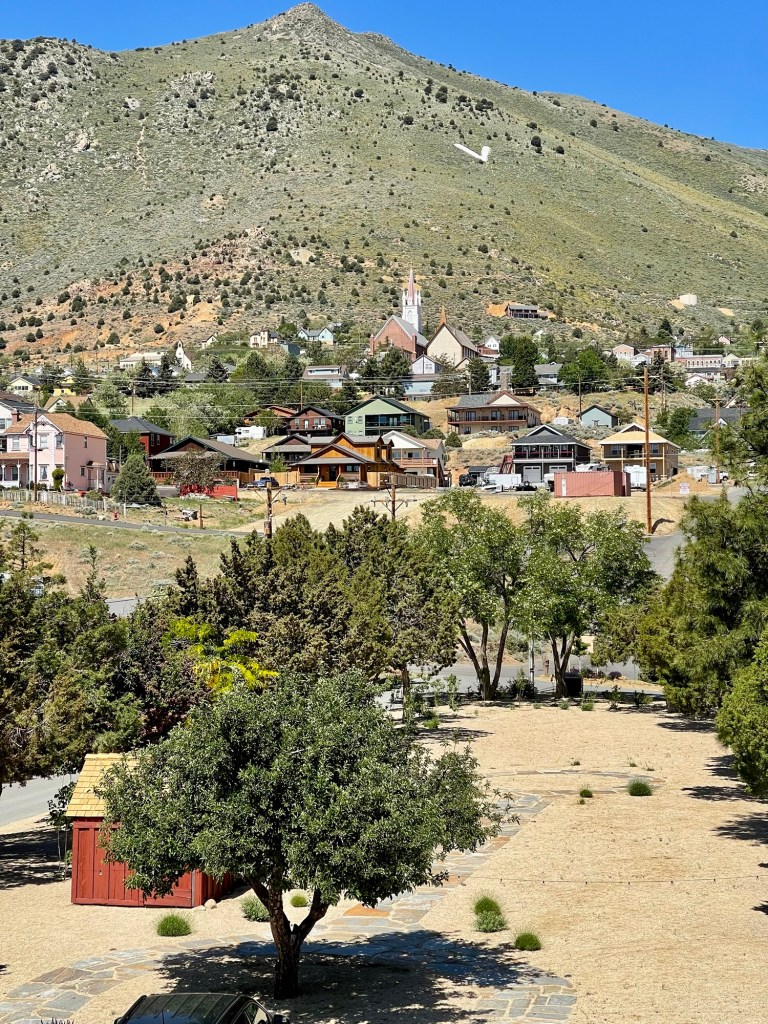
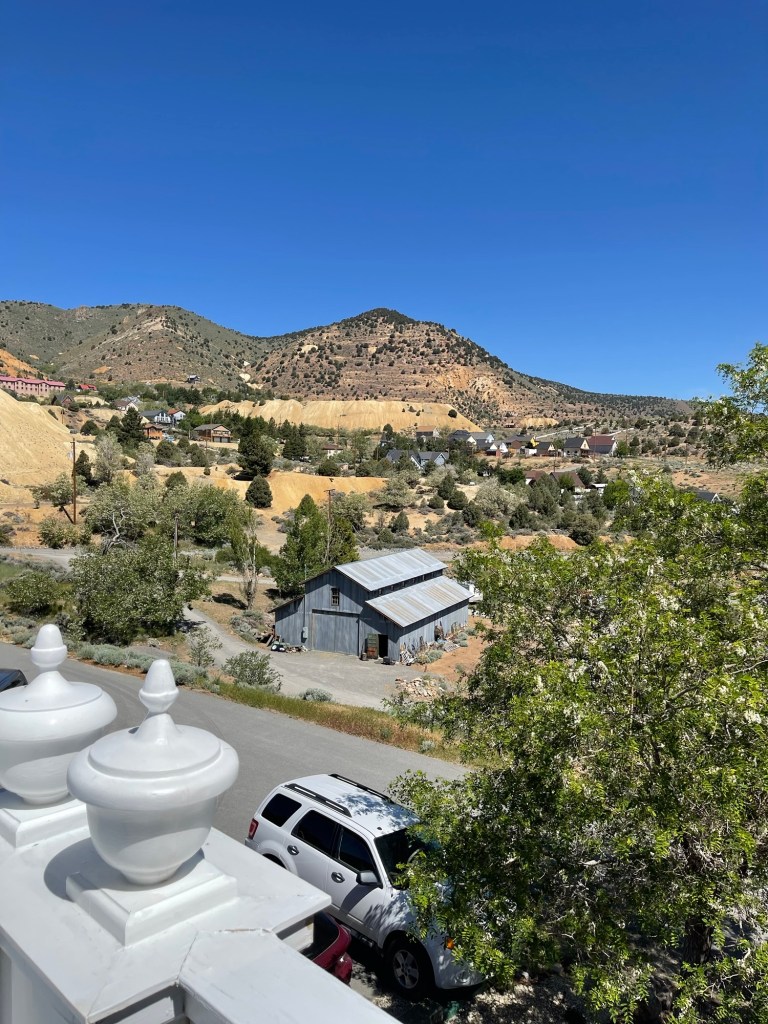
It is set against a fantastic backdrop and beautiful surroundings.
It provides just the right accommodations for an intimate gathering of strangers and friends eager to engage in creativity.
It’s haunted, yep, as in ghosts.
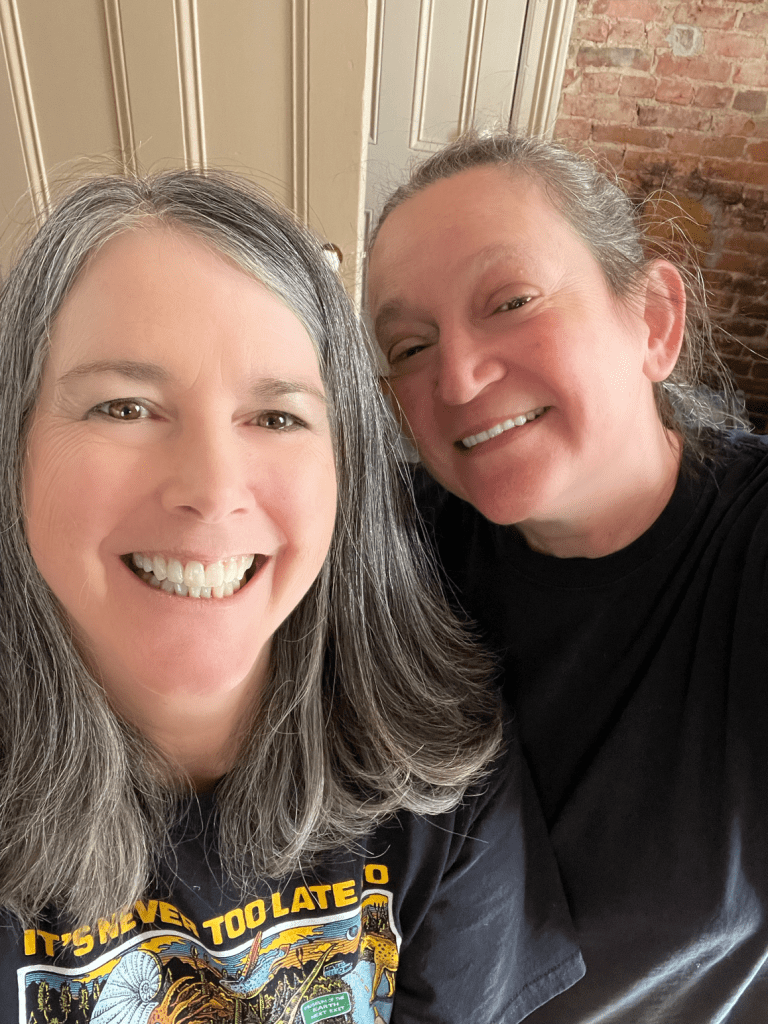
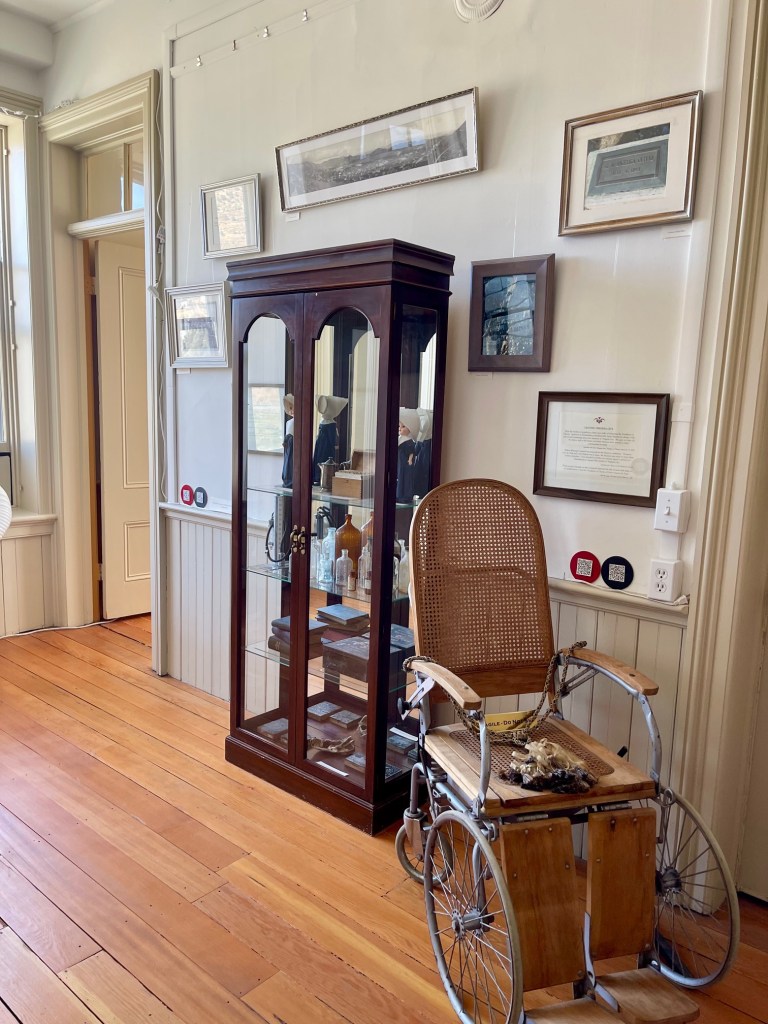
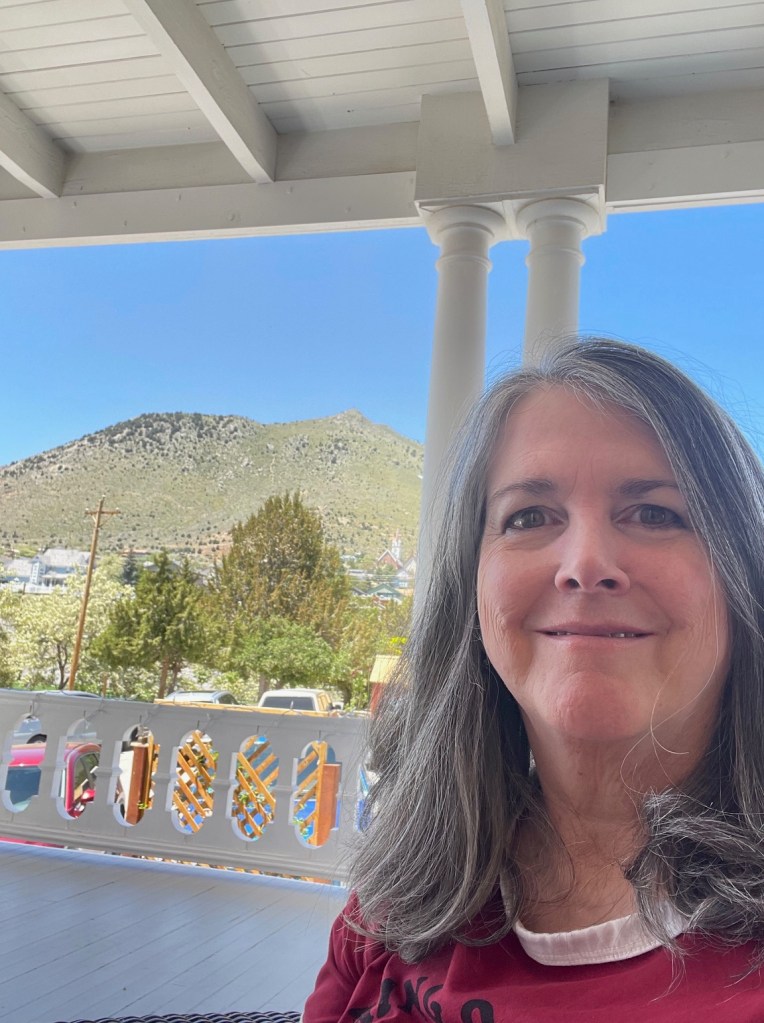
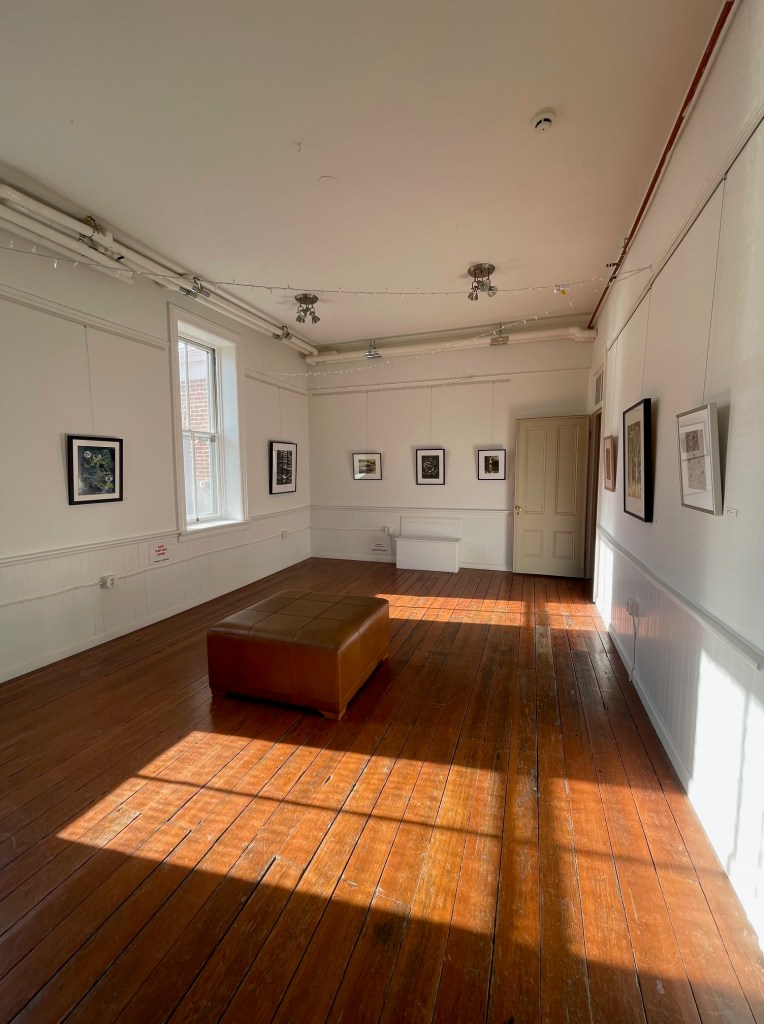
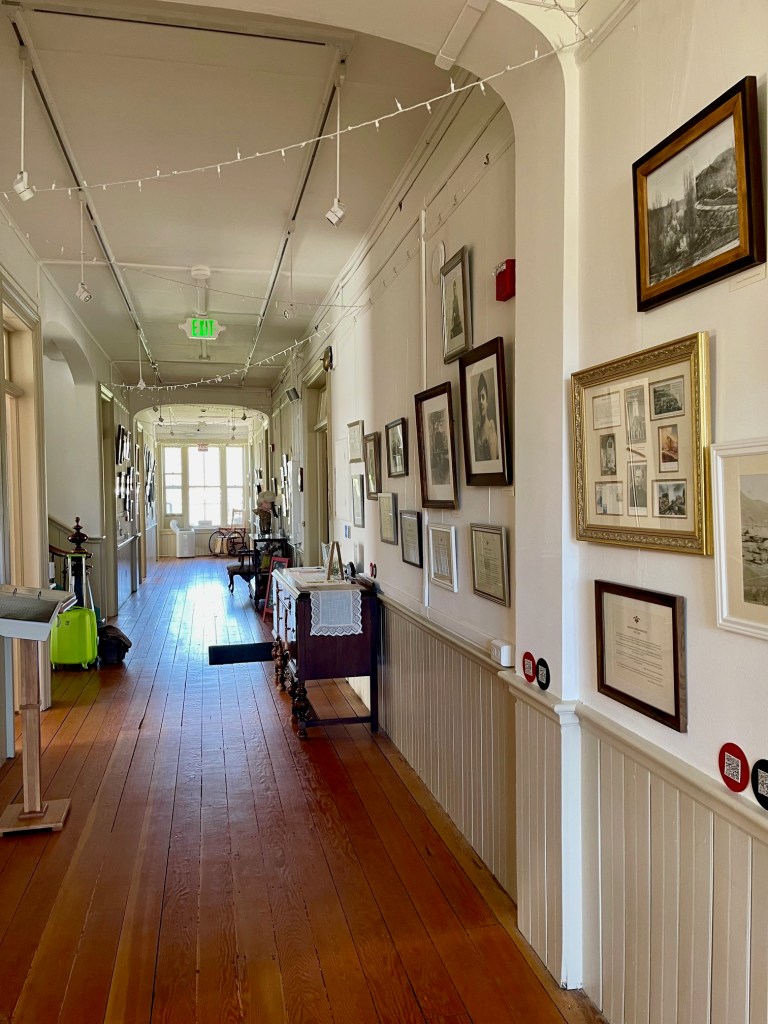
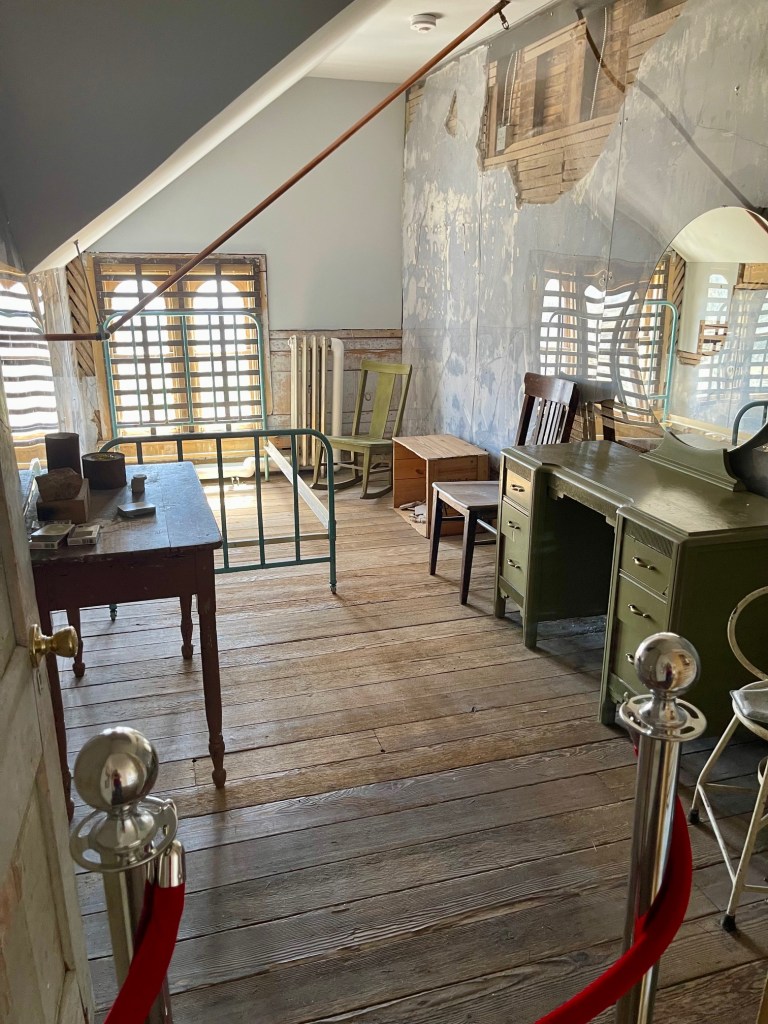
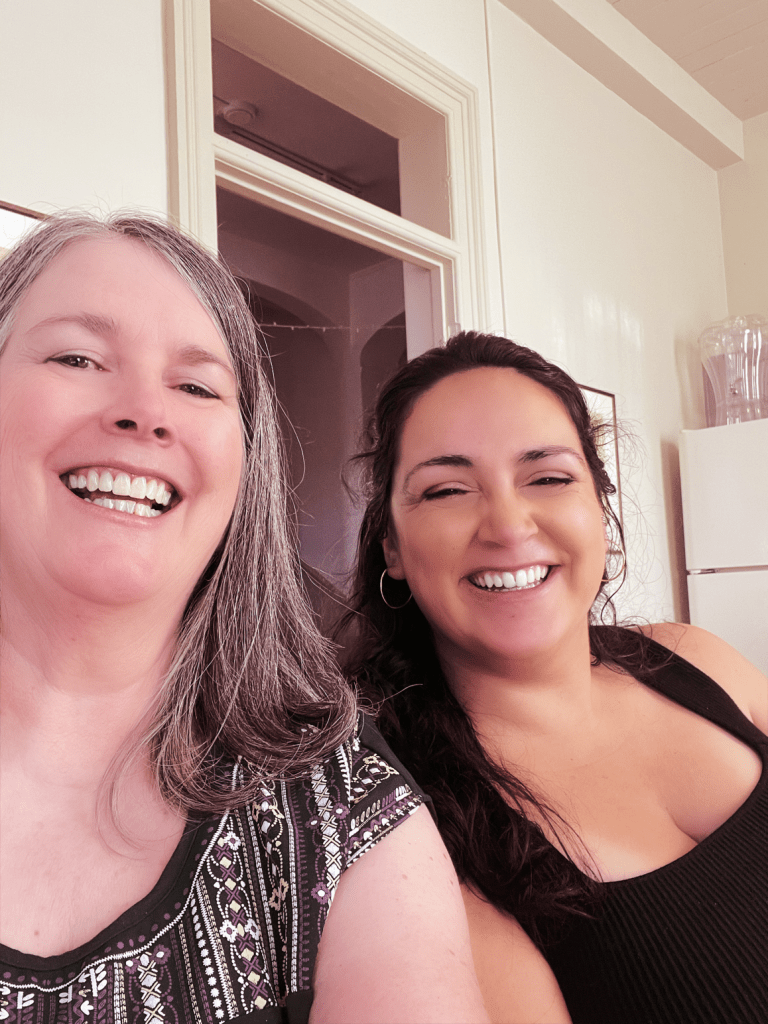
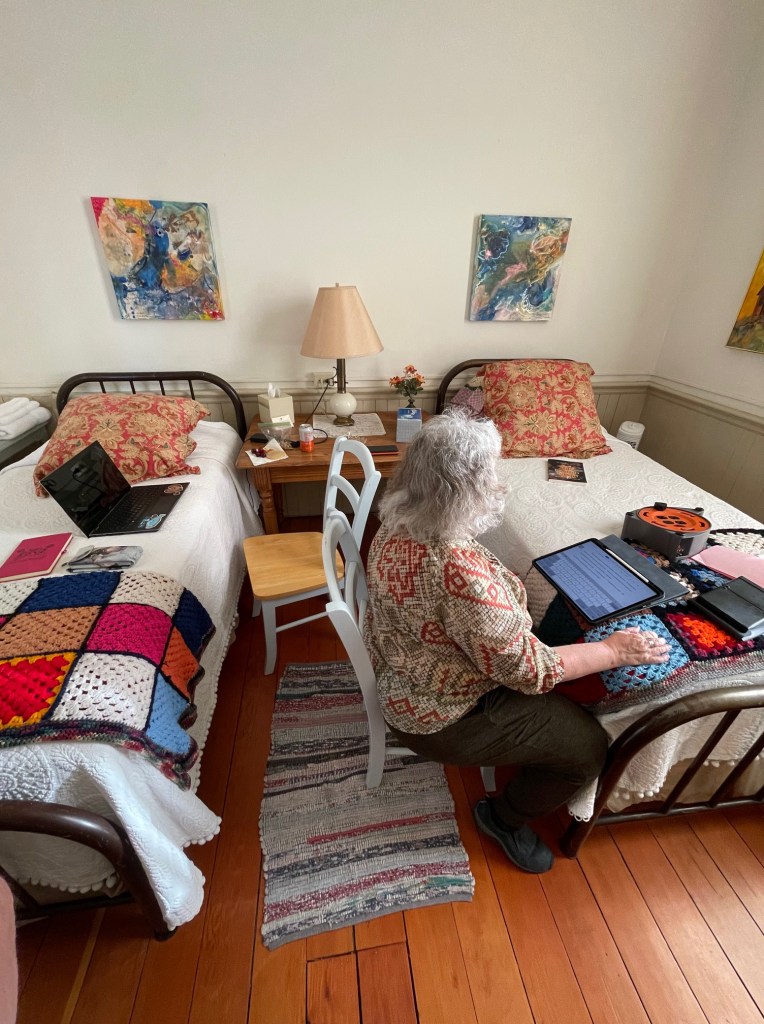
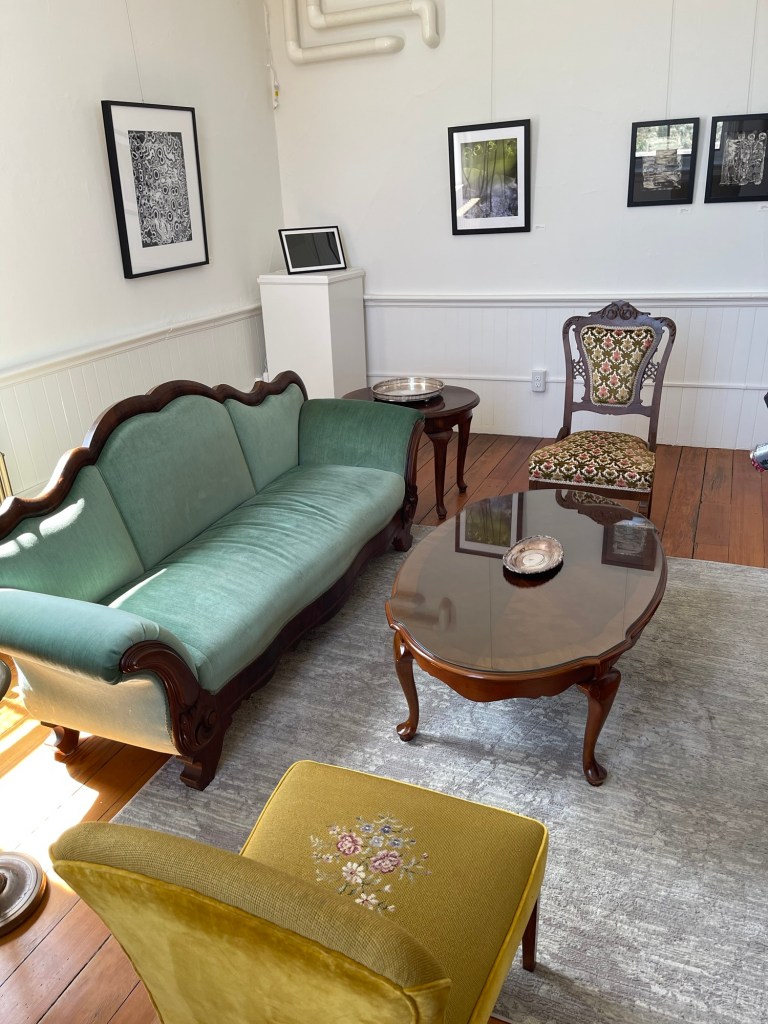
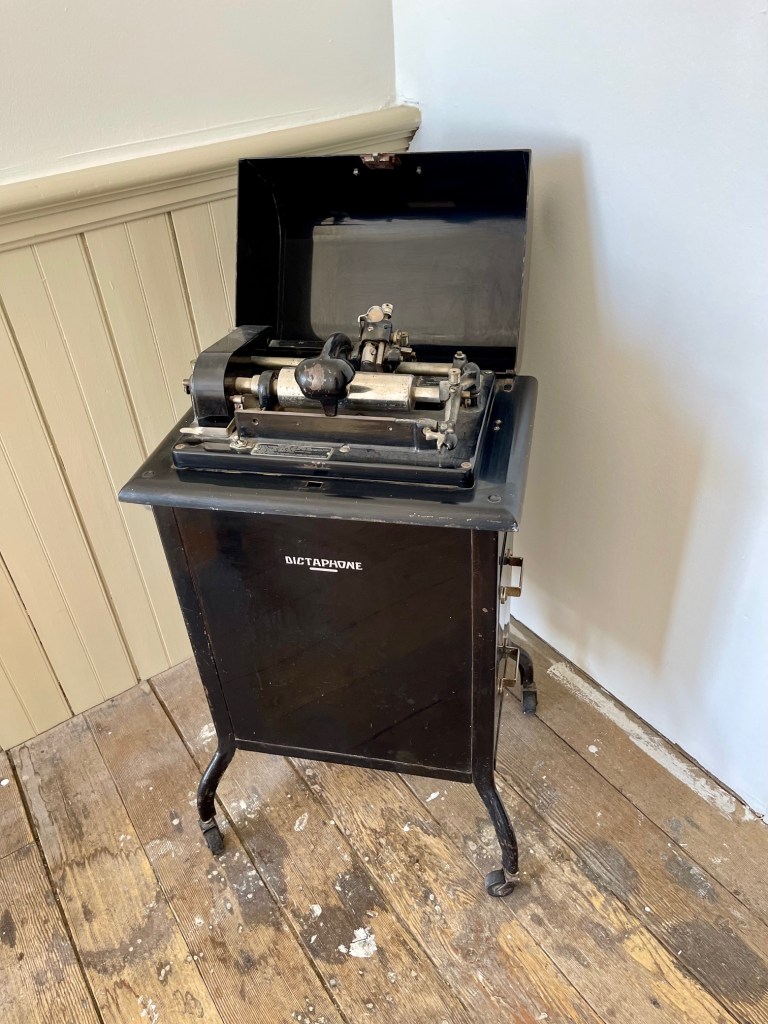
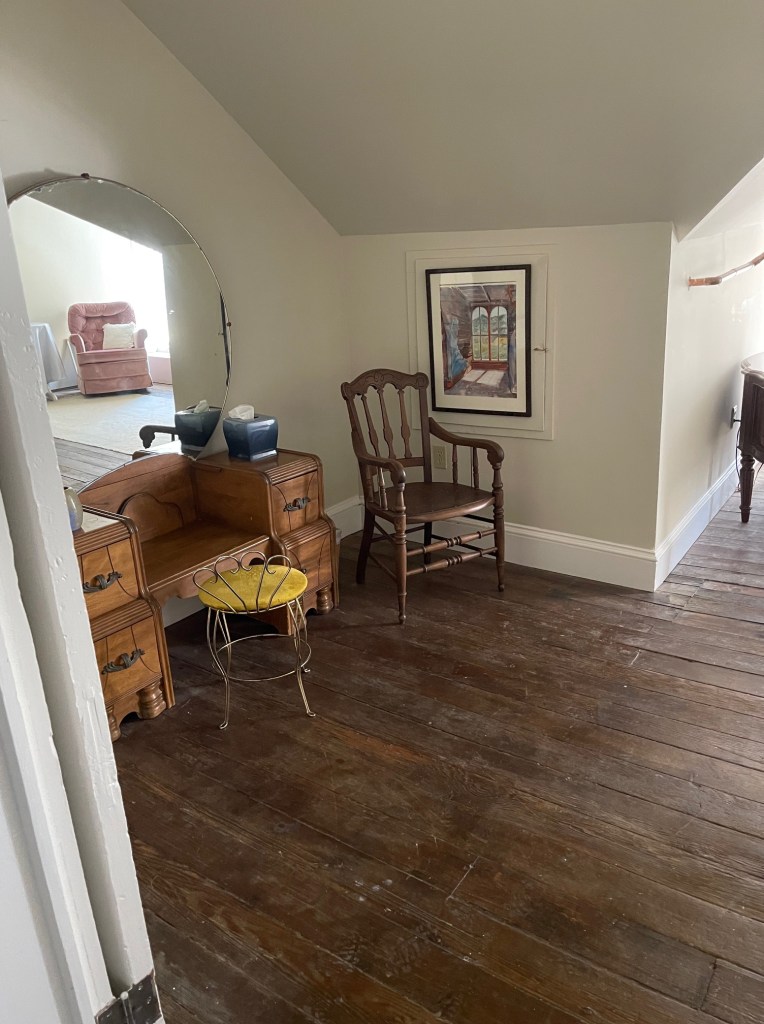
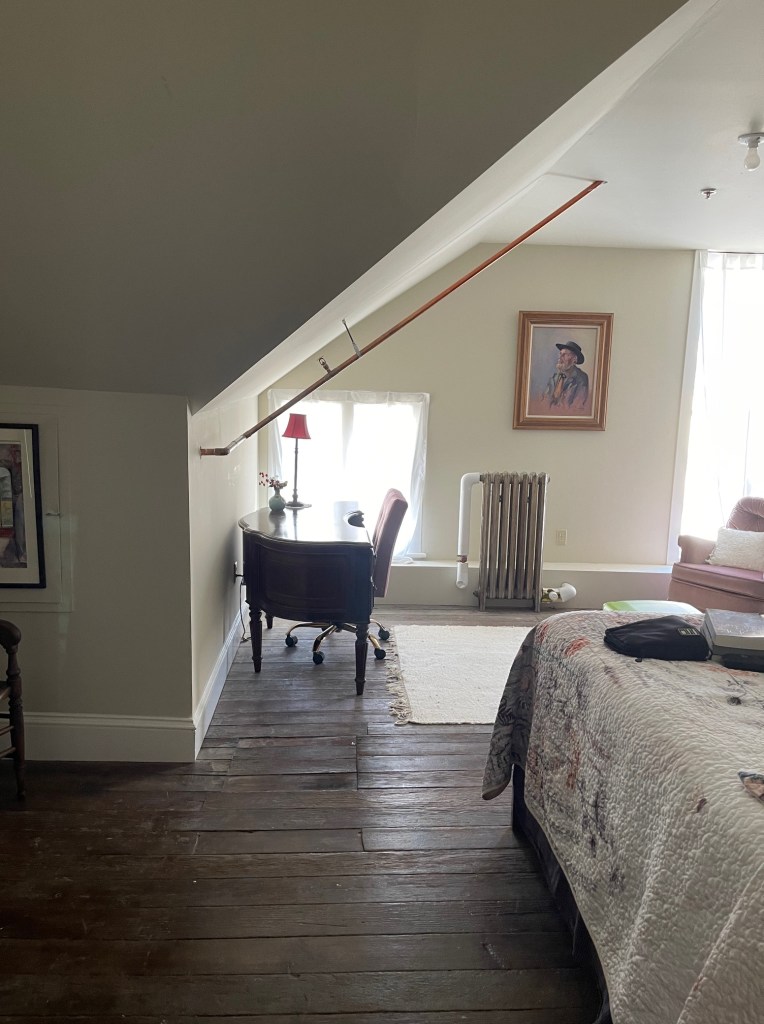
Here I am with our excellent host, Kim Harnes. Check out the comfortable, historical surroundings. You’ll notice many features and artifacts from the original Victorian hospital. Imagine how the rooms were once used for surgical and other treatments, or part of the recovery wards, and then add art. What a great combination.
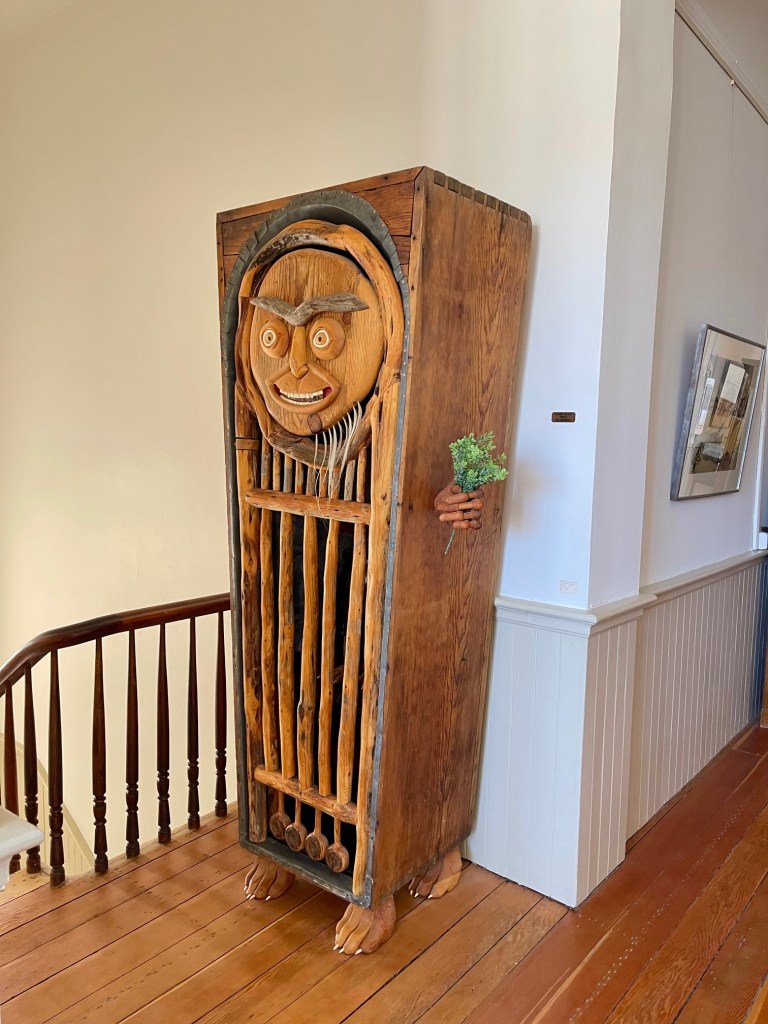
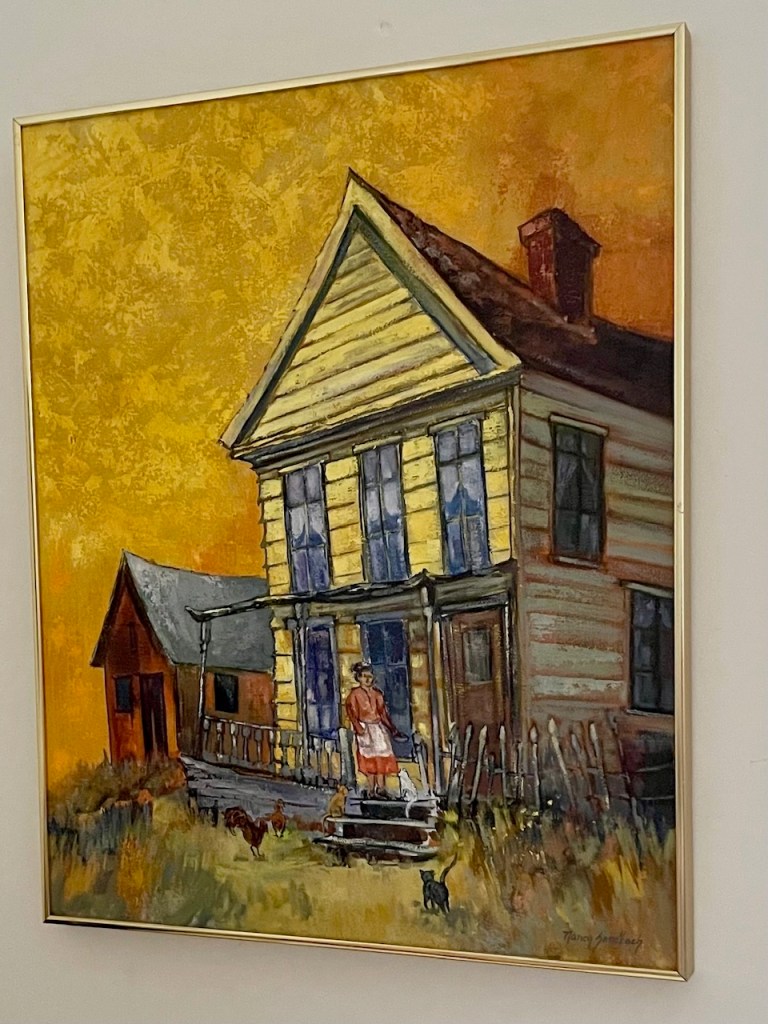
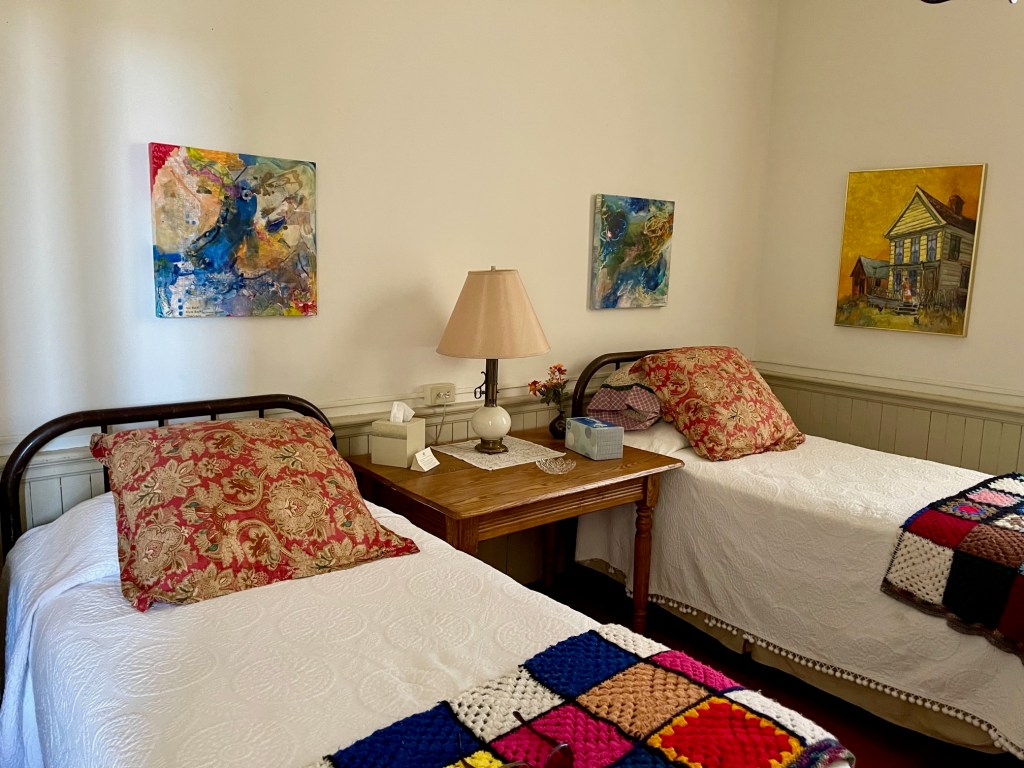
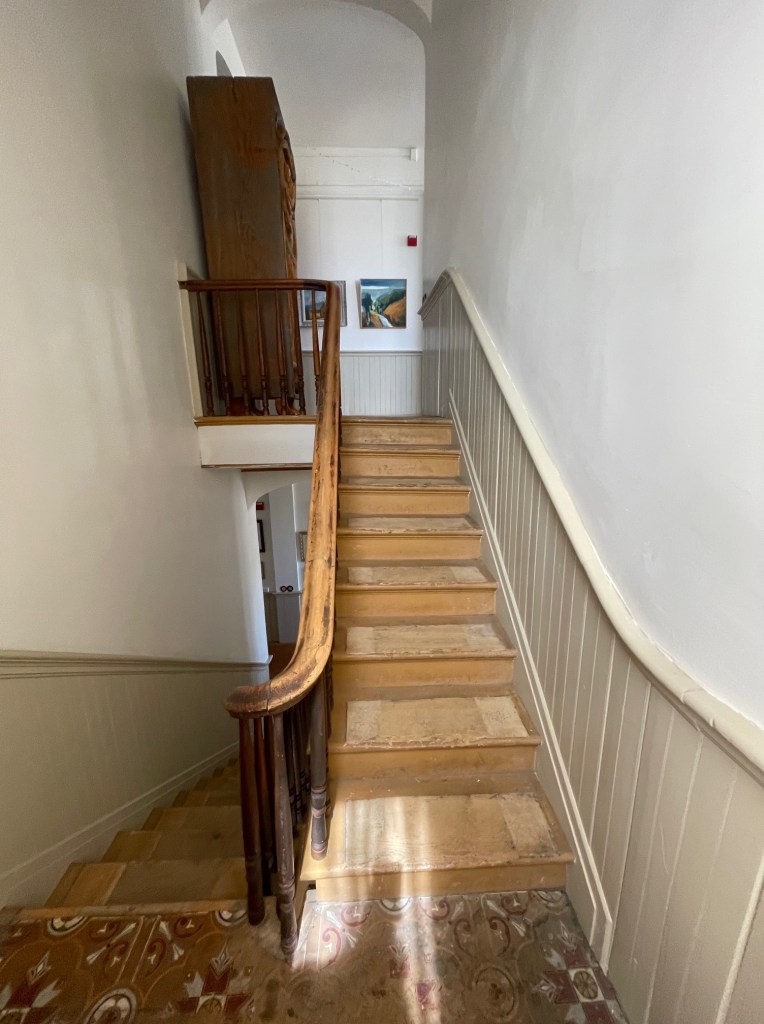
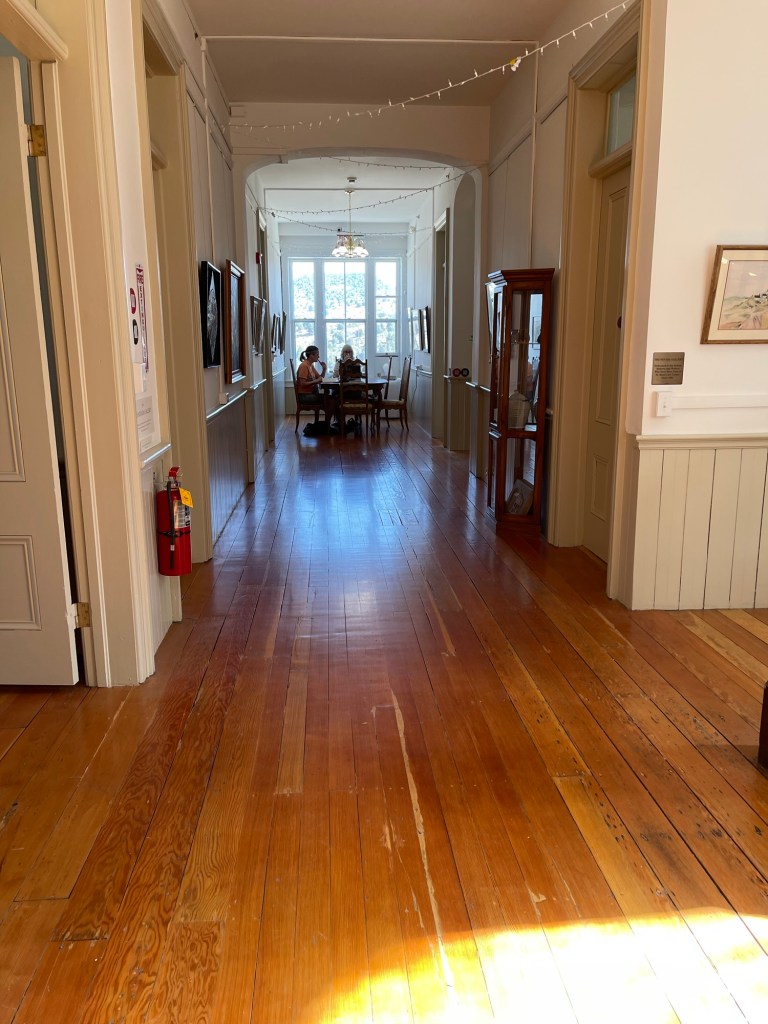
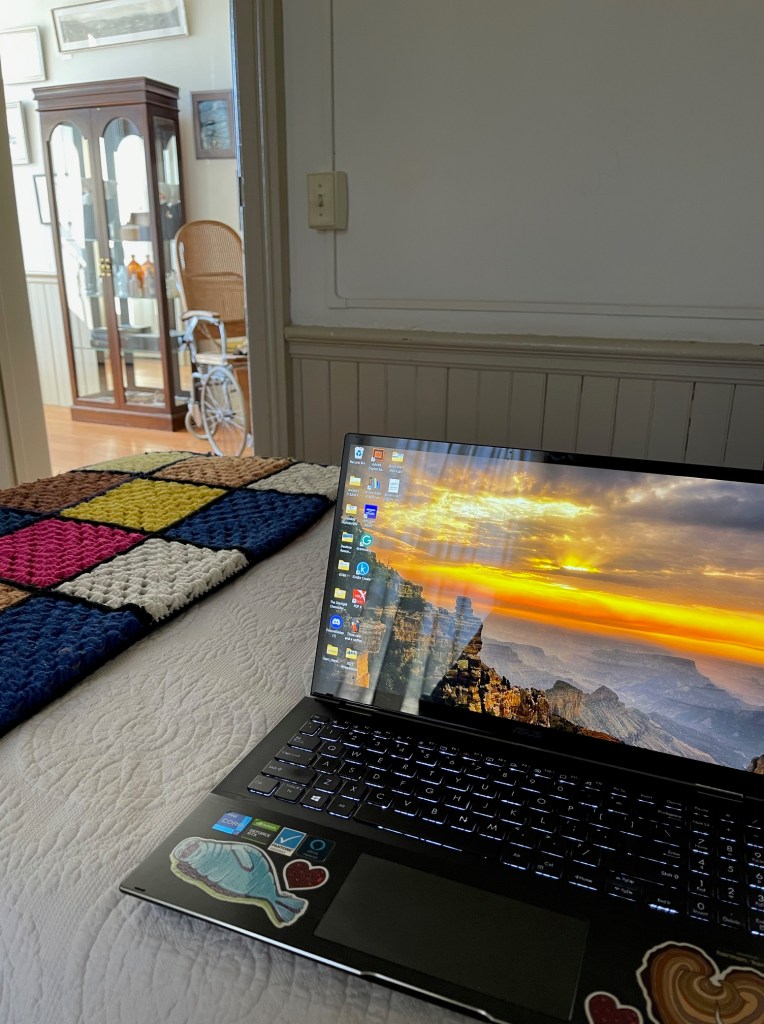
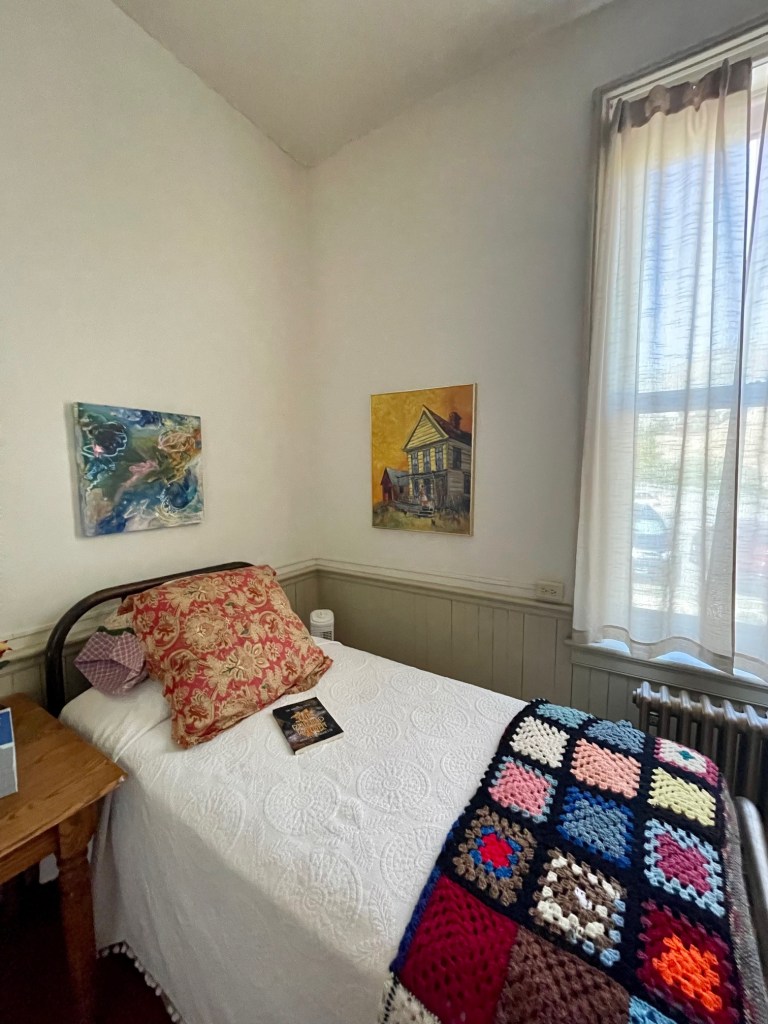
Second floor veranda, and the entranceThird floor balconyshows top three floors, entrance at 2nd floorlocal artThe art center’s side view showing first floorlocal artOur cozy room.I addition to the grand staircase, is this well-trodden utilitarian nurse’s accessA lovely gallery featuring local artThe long hallway on our 2nd floor. So much to see on each floor.A view to a preserved historical office
Besides meeting many amazing local writers and learning about their journeys with my friend Dee, the retreat offered several highlights. One of them was an insightful presentation on writing short stories by author Linda K. Hardie. Linda demonstrated how completing a short story can serve as an excellent catharsis for repressed emotions, such as killing off that annoying ex or the small press publisher who fails to honor contracts.
Linda writes humorous and delightful, yet eerily dark crime stories published in a variety of anthologies.
I loved her story set in downtown Reno in a glimpse of homeless life among the tourists and gambling enthusiasts in A killing at the Copa, crime fiction inspired by the songs of Barry Manilow.
To ensure you can benefit from her wisdom, I invited Linda to be my Spotlight Guest in July.
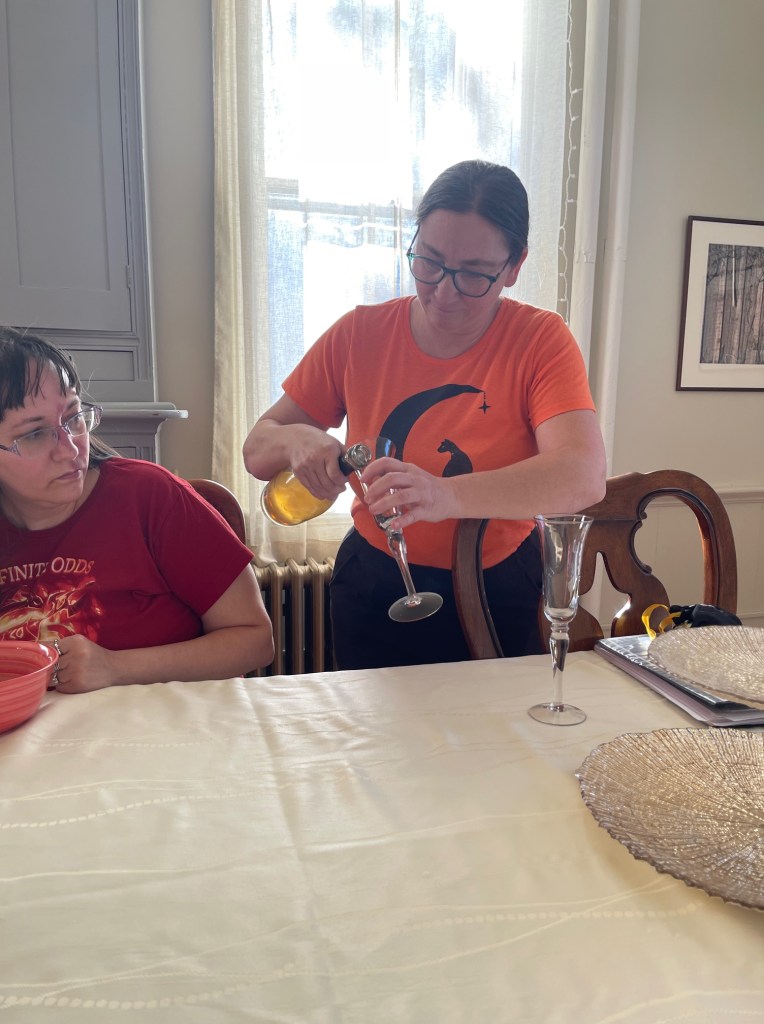
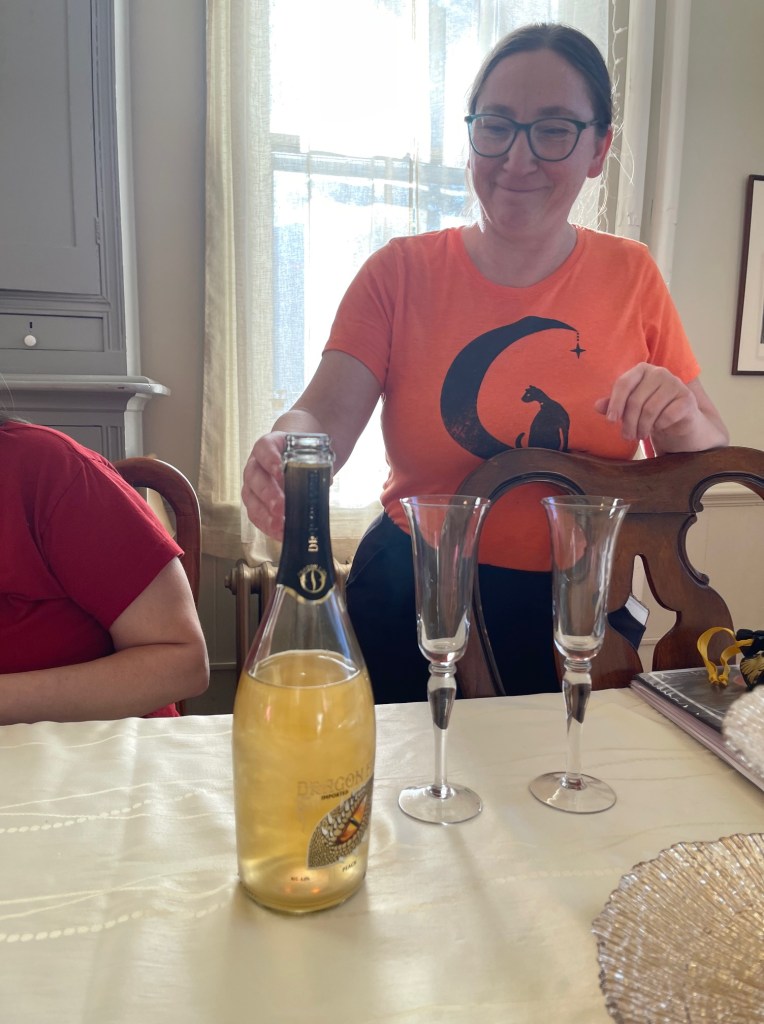
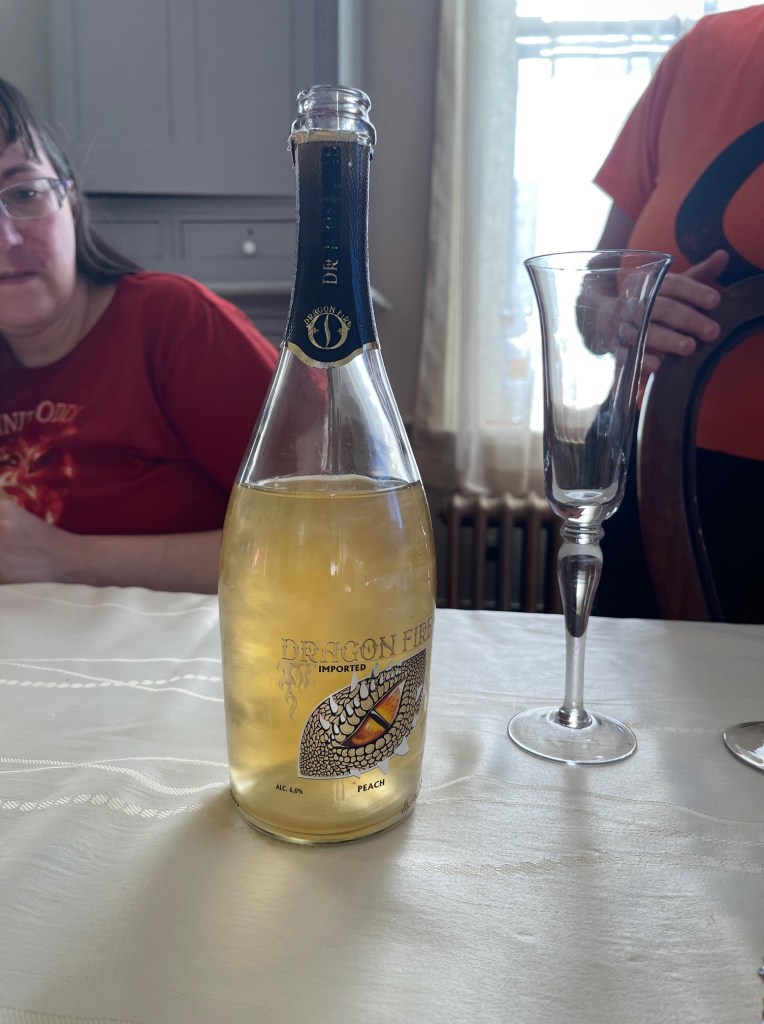
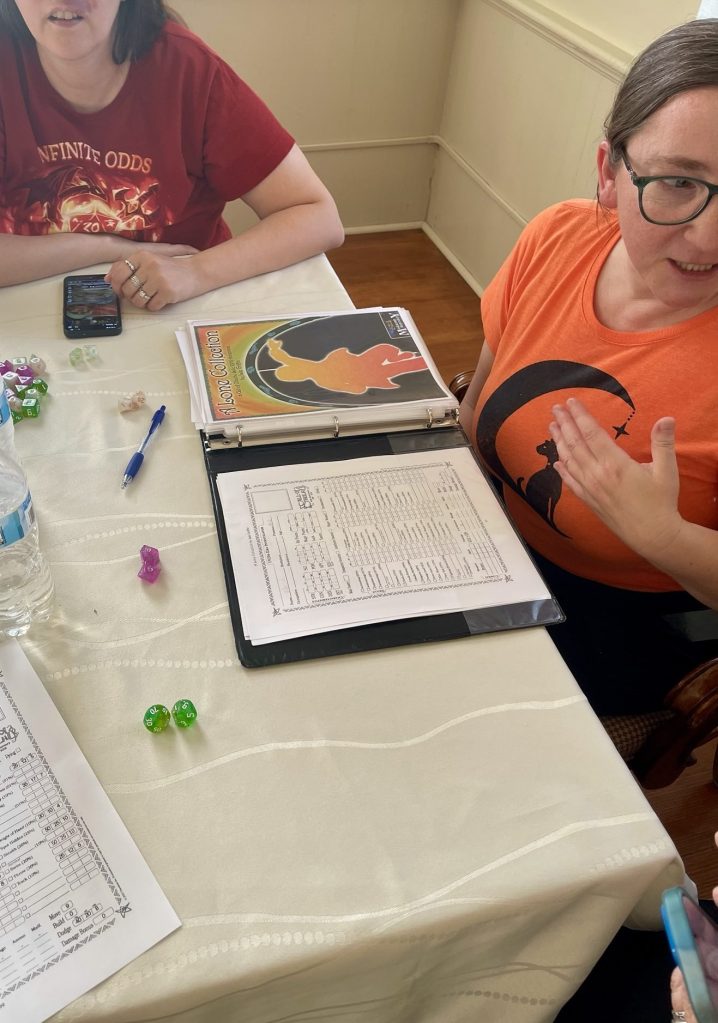
An unexpected highlight was the opportunity to play my first TTRPG! Author Jade Griffin writes companion novels to the Call of Cthulhu RPG series Amor Fati, which act as both a player handout and minor mythos tome. Dee and I got a beginner’s crash course as Mr. Wabash in 1896 Chicago. I’ve always wanted to play a tabletop role playing game, and it was way more fun than I even imagined, thanks in no small part to Jade’s excellent story. Jade will visit my Spotlight in September.
By the way, Dee will visit my Spotlight in August to discuss writing fan fiction, particularly stories that feature characters from the classic TV show, Bonanza. Virginia City was the stomping ground of the Cartwrights, and Dee wrote a story set in this very hospital. Stay tuned for more!
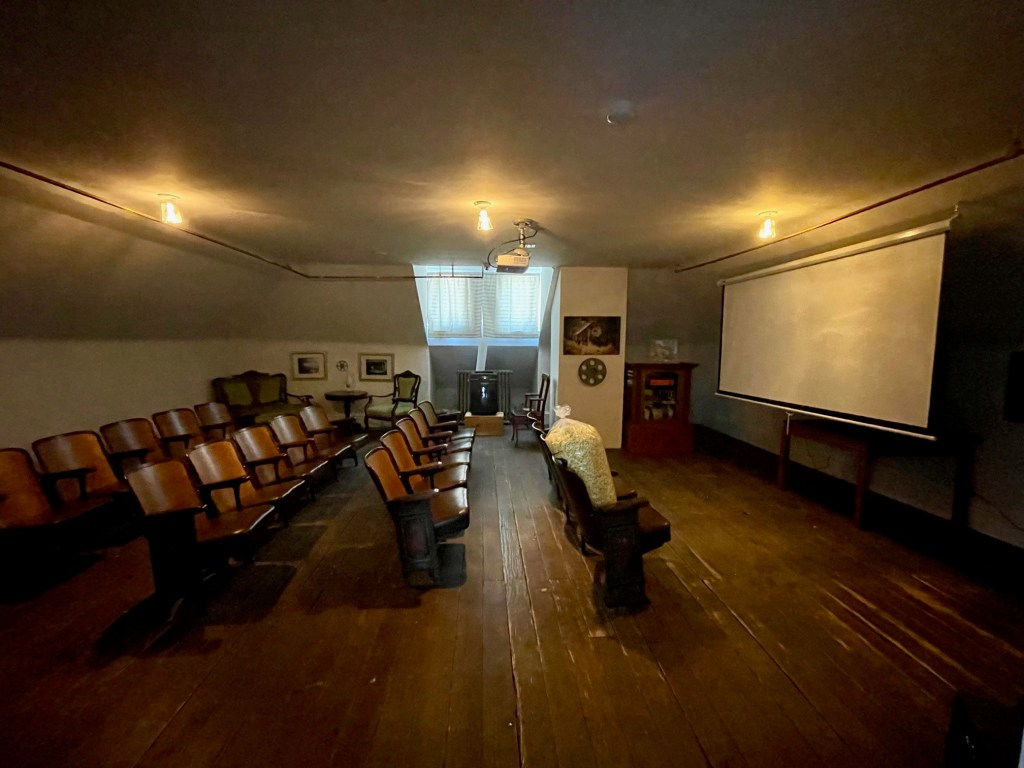
Then, there was “movie night” in the charming little theater on the haunted 4th floor, where we enjoyed popcorn and candy while watching “Old Henry,” a dark, twisty Western flick that was fitting for our stay in a historical Western town.
Meeting agent Hannah Andrade from Bradford Literary Agency was another excellent perk. I learned a great deal from her critique of the first ten pages of my novel-in-progress, as well as how to effectively pitch it to an agent.
Many attendees retreated into their rooms and cozy niches on every floor to write for much of the time, which was the main purpose of the retreat. As for me, I was too busy and anxious preparing my pitch. Next time, I’ll focus more on writing. Besides the overnight guests (since there are only a limited number of rooms available), quite a few came for the day on both Friday and Saturday.
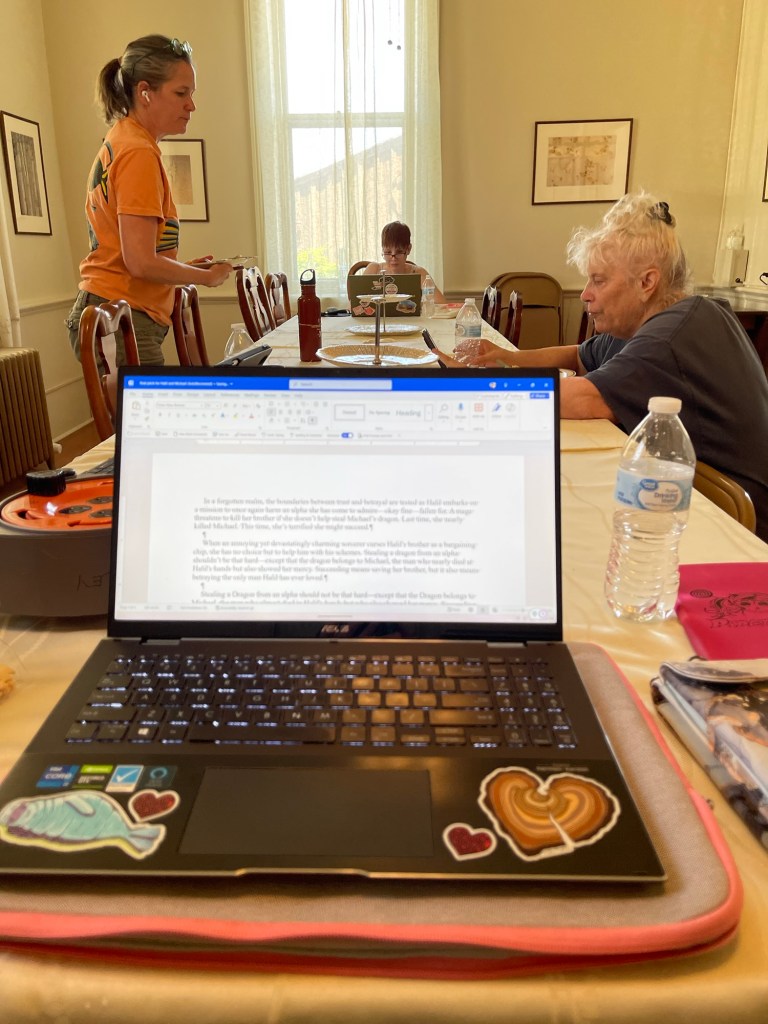
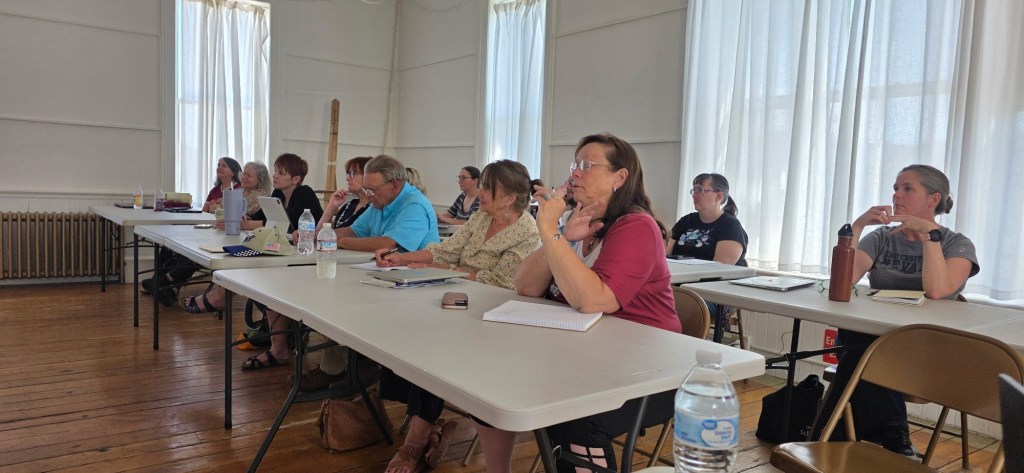
The dining roomA writing niche on the 3rd floor hallwayDee and I did get some writing done in our roomClass time. Taken by Kim, Dee and I at the far end of front row.
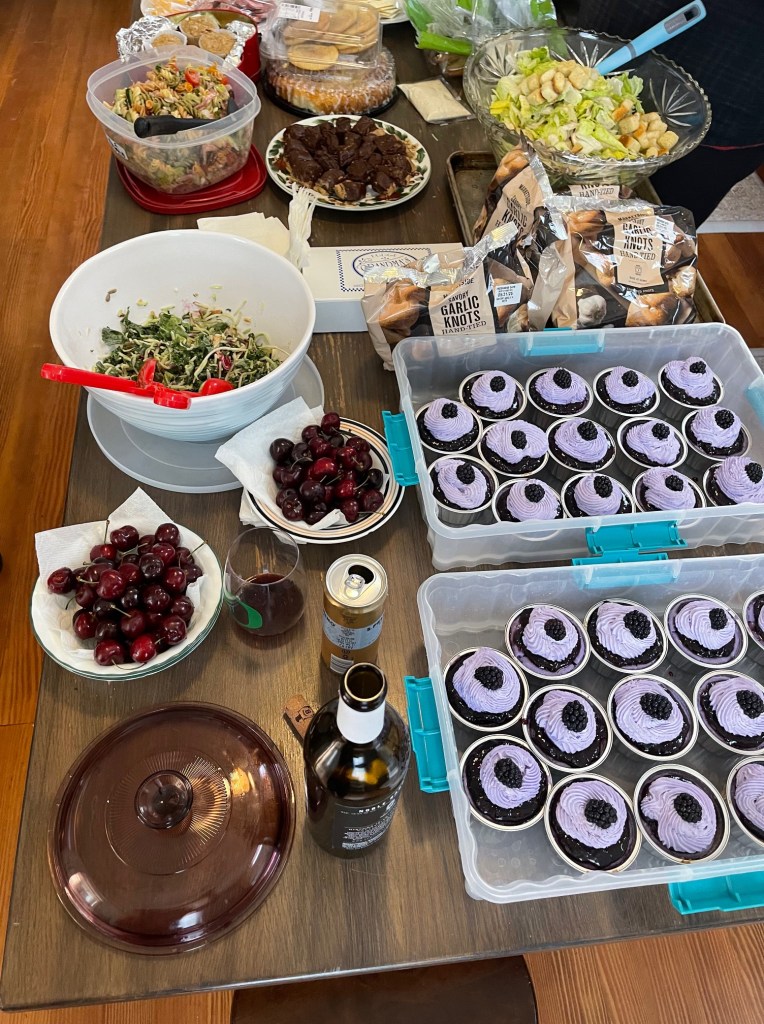
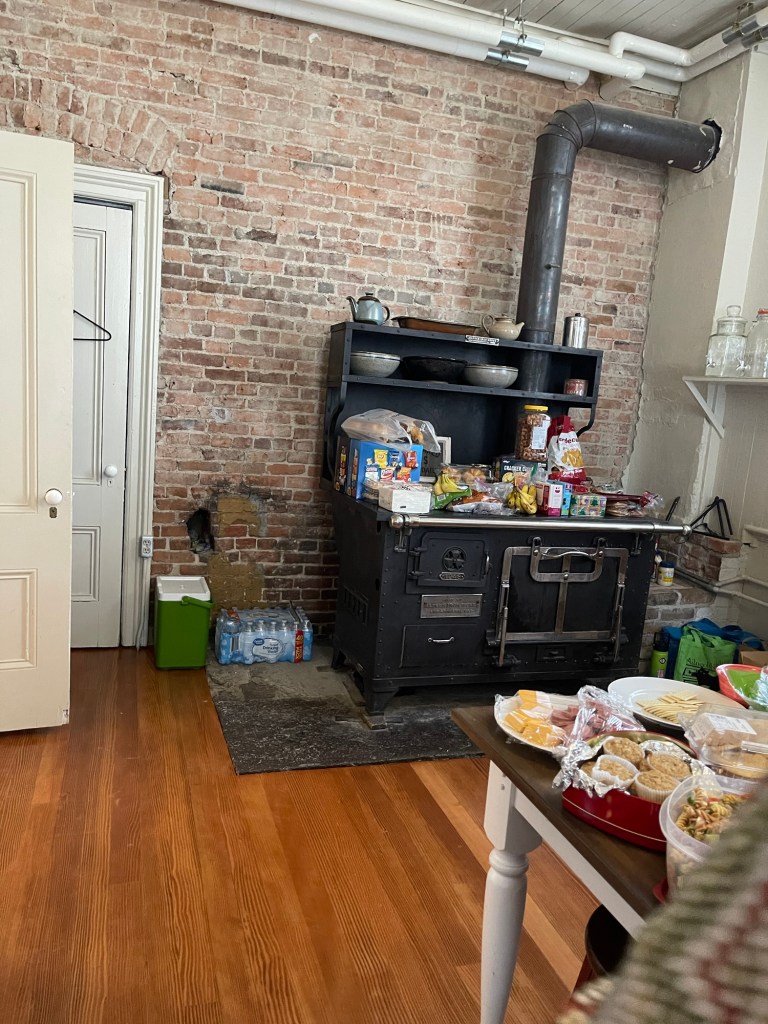
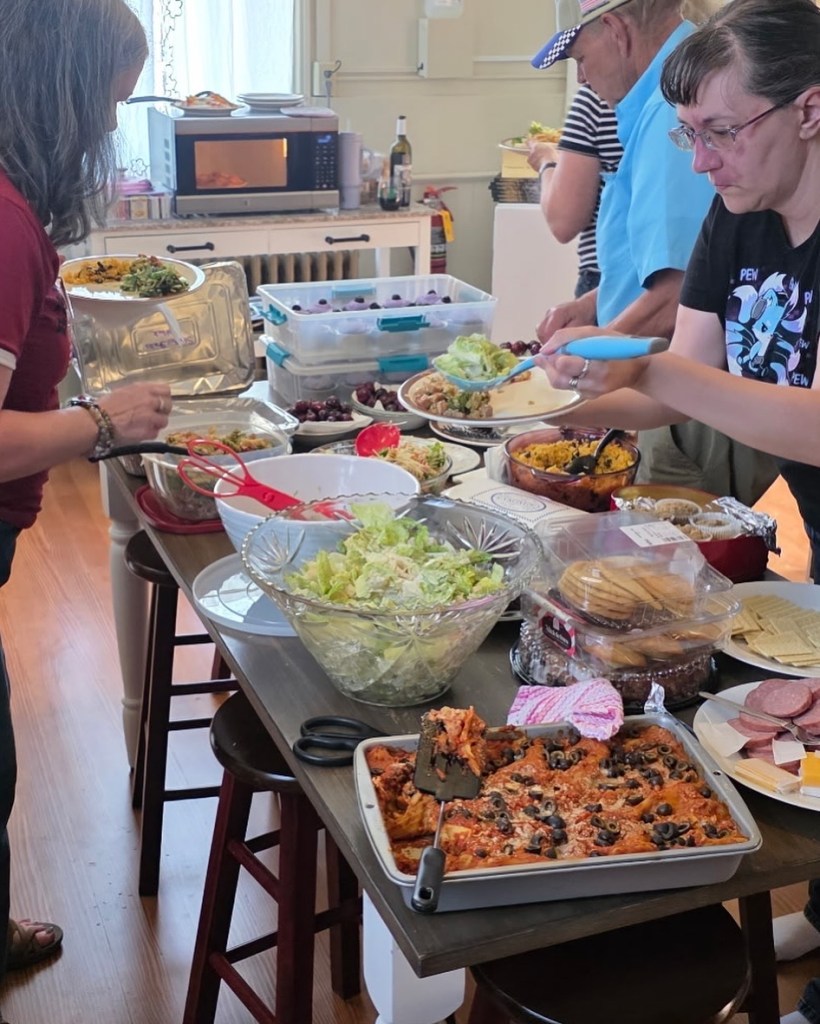
I’ll conclude by bringing things full circle—the socializing. The Art Center has two kitchens on the first floor: one features a large dining table for gatherings, and the other contains a massive iron cooking stove that, unfortunately, can no longer be used due to safety issues, but it is a sight to behold. Kim ensured there was plenty of excellent food and beverages. We all contributed dishes for the Friday night potluck, which provided delicious leftovers for our lively mealtime conversations throughout the entire weekend.
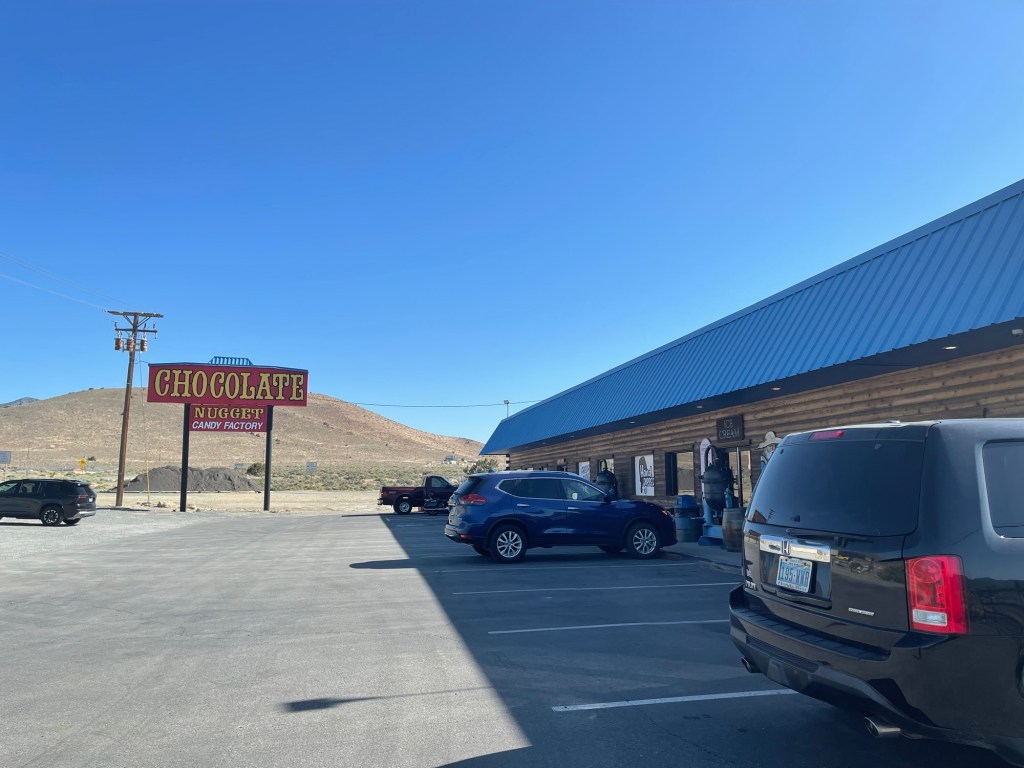
The wonderful Chocolate Nugget Candy Factory, Mound House, on the way up to Virginia City, where I got fudge for the potluck.View from the Art Center, which sits on its own hill east of town.A parlor across from dining room, where we played Jade’s TTRPG.One of the larger rooms, 3rd floor.
The tale of a revolution against a corrupt government, set in an immersive fantasy world…
I love it when a writing friend launches a new book. And who doesn’t love a good revolution?
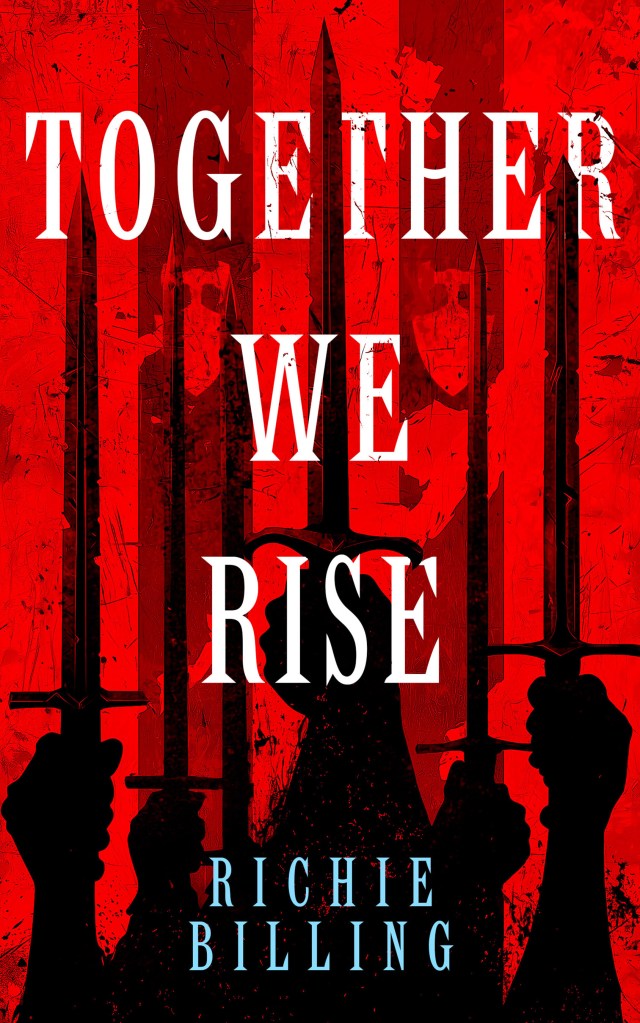
Check out this cover reveal for Together We Rise by Richie Billing.
Together We Rise is a new fantasy novella by Richie Billing about a people’s revolution against a corrupt government. It features an original soundtrack integrated into the story. It comes out on 22nd March, and you can find out more here.
You can also read the first chapter on Richie’s Patreon.
Description:
In the crumbling city of Pietalos, where corruption and poverty reign, the fires of revolution burn hotter each day. An oppressive government has bled its people dry for the benefit of the elite, but the citizens have had enough. Eight lives—each scarred by loss, betrayal, and violence—intertwine as they fight for their futures and that of the city.
Dhijs, a weary healer, joins forces with Tillia, a woman seeking both liberation for the people and personal revenge against her abusive husband. Captain Vaso. Zia, a factory worker turned reluctant leader, ignites the workers’ rebellion, transforming protest into full-blown revolution. In the shadows, the cynical drug pusher King is forced to rethink his loyalties as riots consume the streets, while his rebellious young messenger Mal feeds critical information to the revolutionaries.
Meanwhile, Kishto, a guard disillusioned by the brutality of his comrades, defects to the cause after witnessing a brutal act of violence against a woman and child. General Leo, a former war hero haunted by guilt, secretly aids the rebellion. And Mydela, a scarred yet skilled assassin, takes on the city’s ultimate enemy—Canterbury, who hides a dark secret as a member of a malevolent race that seeks to subjugate the people.
As Pietalos teeters on the edge of a new era, these eight individuals must fight for justice, revenge, and redemption. But in a city where violence and betrayal lurk behind every corner, will their efforts be enough to topple the corrupt regime?
Together We Rise is a political fantasy story of revolution, vengeance, and hope, where the fate of a city rests on the courage of those willing to defy the odds and reclaim their future.
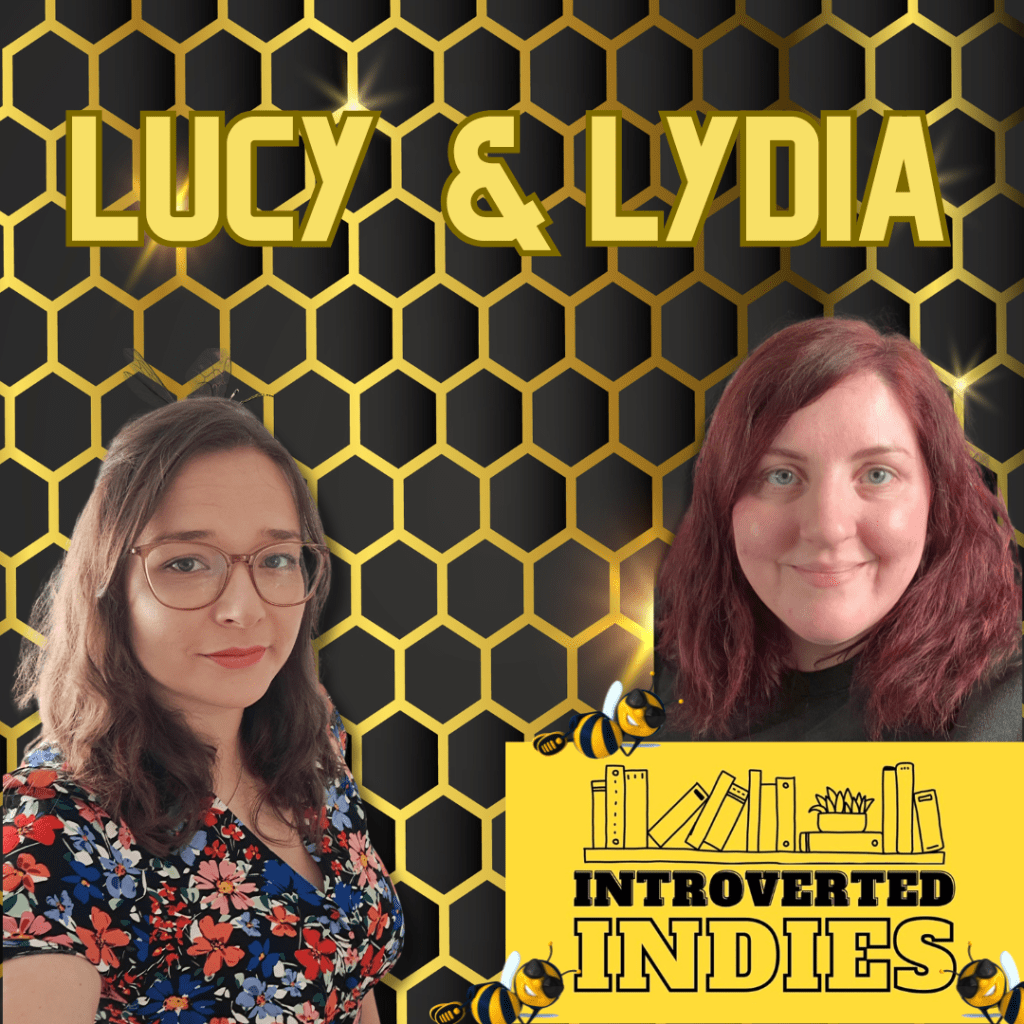
UK fantasy writers, Lydia Baker and Lucy McLaren decided to get together and give indie authors a platform for conversation. Check out their channel to help them share. You will meet amazing authors as they chat with the hosts, and you can enjoy author readings.
Read on to meet the hosts and learn about Introverted Indies’ purpose and goals.
The Hosts
My name’s Lucy and I write fantasy stories that focus on the light of human connection in dark, oppressive societies.
For as long as I can remember, I’ve been drawn to the magic of storytelling, whether via books, video games, TV shows, or films.
Fantasy has always been my genre of choice (though I do love a good horror, psychological thriller, or murder mystery). There is something inherently captivating about journeying into another world with a character—though I find myself most drawn to fantasy stories, characters, and worlds that aren’t so different from our own.
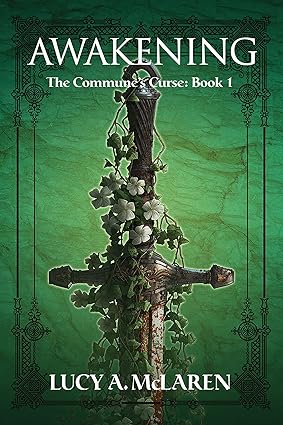
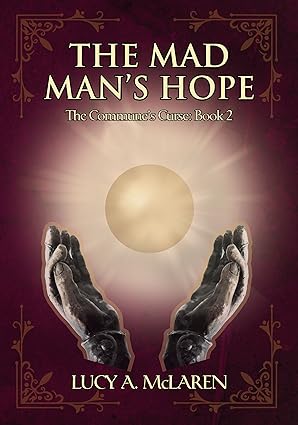
I am currently working on a fantasy trilogy called The Commune’s Curse. The first and second books in this series, Awakening, and The Mad Man’s Hope are available now. In addition to this, my gothic fantasy book, EtherStone (working title), will be releasing in 2025 from Owl Talyn Press. I also enjoy writing short stories as they provide the opportunity to dip into new characters and settings without the commitment of a full-length novel.
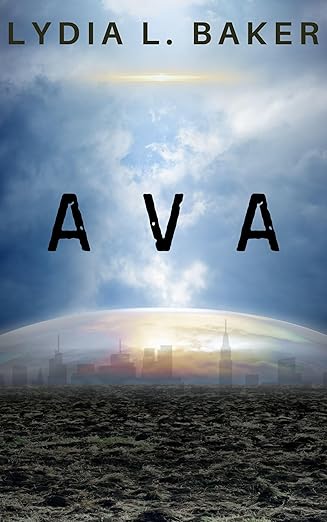
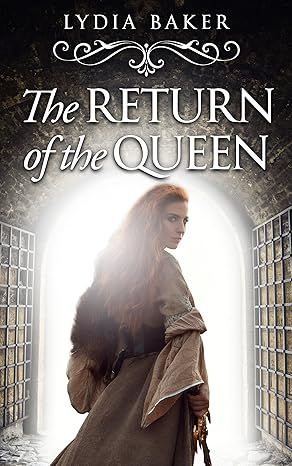
Hi, I’m Lydia and I live in the UK with my husband and four children. I’m the author of romantasy novel, The Return of the Queen, and scifi-dystopian novel, AVA. I’m currently working on a crime novel. When I’m not writing, I enjoy crocheting, gaming, and being outdoors in the woods.
Let’s Get Started
It has been amazing watching this platform take off since you launched the signup form last September. What brought you two together in this Introverted Indies endeavor? Tell us about the name.
Lydia – Lucy and I first met through our joint experience with small press publishers just over a year ago, and our friendship has blossomed from there. We had been talking for a while, sharing the highs and lows of writing and helping each other out with our WIPs, when I broached the idea of making our own platform to support indie authors.
As I am sure Lucy will tell you, we have both had our fair share of difficulties with getting our books into the world, and we wanted to be able to help other indie authors in the same position as ourselves. It also helps us as authors to get our name known in the authoring world!
As for the name, that was Lucy’s wonderful idea! I’ll let her explain more about that one.
Lucy – Thanks, Lydia! Well, the name Introverted Indies came from the fact that we are both introverts and so many of the other authors I know would label themselves the same. And of course, we’re aiming to support fellow indie authors (self or small press published) like ourselves.
Just to add to what Lydia said as well, our friendship has been really lovely and invaluable in terms of being able to connect with a fellow writer who understands the emotional rollercoaster of writing and querying/publishing a book. So another part of us forming Introverted Indies was about wanting to connect with other authors too, to build a community of sorts.
Have you had a chance to pause and think about what Introverted Indies has achieved so far? The above image lists your goals. Can you tell us more about those?
Lucy – We were actually very surprised with how many authors signed up to be interviewed by us when we first opened up. But it was also very exciting to have so much interest!
Lydia – The other day I was thinking about how many amazing authors Lucy and I have had the opportunity to chat with since we started Introverted Indies in September last year and it’s around 30! Personally, I find chatting with new people makes me feel a little anxious, so for me, it has pushed me out of my comfort zone and made me feel more confident, something that is great for all walks of life.
Lucy – Yes, I agree. I always get a little nervous before the interview recordings, but everyone has been so lovely and it really is fascinating learning about everyone’s creative processes and stories. My TBR pile has grown significantly since we started our chats, and it was already far too long!
Lydia – As far as what II has achieved, I really hope that we have managed to bring readers and authors together and that book sales have been made. But also, I hope that we are adding in a positive way to the indie author community and I am praying that we keep growing and reach more and more people so that indie authors can get their books seen. Our aim has always been to help indie authors and it will continue to be that.
Lucy – Yeah, absolutely. We want to have a positive impact, to help authors find their readers, as we know how tough that can be from personal experience. We have lots of ideas on how to grow Introverted Indies. This is really just the beginning!
Darci – Well it truly is astonishing and it’s great to see you’re meeting your objectives with flying colors and benefiting from widening out in the community.
Do you have any special Introverted Indie events planned for this year?
Lydia – We have just launched our sign-up for Author Discussion Panels and we have had a good amount of interest so far. Our video interview and written interview sign up will be opening soon as well. But Lucy and I are hoping to meet in person again this year to discuss other ways we can give authors a platform and events we can do. However, we both work and have families, as well as our own WIPs, so it’s making sure we have a good balance as it’s so easy to burnout.
Lucy – Yup, what Lydia said. We’re really excited to chat to authors on the panels about various topics, from authoring and parenting, to author mental health. We’ve had lots of interest so far, so those promise to be great. And we know a few people are waiting for the interview waiting list to reopen. We want to do as much as we can to help authors, but of course, like Lydia mentioned, we’re also juggling our own lives. Finding a balance is very important, but I think everyone we’ve interacted with so far understands that.
Darci – I look forward to seeing all the exciting things roll out.
Can you share a few of your favorite Author Top Tips? Do you have other highlights/insights from your interviews that you’d like to share here?
Lucy – Ahh, I’ve heard so many good tips and pieces of advice so far. I’m writing this after a full day of toddler parenting so I’ll let Lydia say hers while I try to pick my brain…
Lydia – I’ve found it so reassuring to know that all of the authors I’ve spoken to are in the same boat when it comes to marketing, imposter syndrome, publishing, drafting, etc. It’s been great to chat about those experiences. What I’ve found useful is some of the technology authors use to draft. One author uses Scrivener which I didn’t know anything about and actually it sounds like it would be really useful to how I like to draft a novel.
The biggest highlight for me is just how lovely everyone I’ve spoken to has been. Every single author has been kind, chatty, and fun to speak with.
Lucy – Yes! Agreed. Having all of those same struggles as authors shows why it’s so important to have an author community. We’re all in this together and can get through it together.
Lydia – The one thing every author keeps saying is to keep writing and keep investing in the author community and I think those two things are very important.
Lucy – Yeah, a lot of the authors I’ve spoken to have said the same thing. Just write, draft your idea, even if it’s complete garbage at first–write it. And having supportive author friends around you can really help to get you through that first draft (and beyond) too.
Darci – Great stuff! Thank you!
I’ve included your bios at the outset but tell us a little more about yourselves and your writing journeys.
Lucy – I always wanted to write and did dabble in it when I was a teenager, though self-doubt/anxiety/general teenage life soon stopped me from trying. I didn’t properly start writing again until I was in my late twenties and training to be a counsellor. I had a lightbulb moment that was like–wait, this is something I’ve always wanted to do… why aren’t I doing it? And so I set myself the goal of writing a book, and I did it! Ahh, to be a student again with so much free time. Anyway, that book turned out to be Awakening (my debut and the first in my dark fantasy series, The Commune’s Curse) which was signed with a small press in 2020 and released in 2022.
I’ve since taken the rights back to my series and self-published the second book, The Mad Man’s Hope, at the end of 2024–which was exciting and scary. I also have a gothic fantasy book coming out sometime in 2025 from Owl Talyn Press. Alongside that, I’m working on the third book in The Commune’s Curse series and two other WIPs.
As for my ‘real job,’ I’m a counsellor, which is where my passion for mental health comes from. I find it incredibly important to explore this in the stories I tell, and will always seek to delve into some darker themes and experiences as part of this.
When I’m not writing or counselling, I’m raising my toddler alongside my husband–which is a challenge of its own.
Lydia – So, I’ve always loved books and writing since I was small, but I penned my first fantasy novel when I was fifteen/sixteen (it was awful!) and forced it upon my English teacher back in the days when we used floppy disks. She was so encouraging that I kept writing.
I decided to venture into self-publishing when my daughter (and 4th child!) was around 6 months old. Probably not the best decision I’ve ever made, and self-publishing felt like a very different thing back in 2017. I know that sometimes people still look down on indie authors now, but when I published it was much more looked down on. I had some success but nothing major.
In 2022 I signed with a small press publisher, however, I made the decision to have the rights to my book returned to me this year so I could have control over my books and release other books in the series. While being with a publisher was an interesting and valuable experience, I felt that overall I could champion my books as well as they did, if not better.
Darci – Ooh, I appreciate that insight about your foray into small press publishing Lydia. We all struggle with the pros and cons. It is so encouraging to get a glimpse into your journeys with your super busy lives.
Tell us about your books, works in progress, and where we can find them.
Lucy – So currently available are Awakening (The Commune’s Curse: Book 1) and The Mad Man’s Hope (The Commune’s Curse: Book 2). The series is a multi-POV, character focused dark fantasy story about a kingdom ruled by an authoritarian government hunting down children born with powers. The blurb for Awakening is:
A desperate young woman, traumatised by her past, seeks to protect two children. A teenage boy comes to terms with the incredible and deadly powers revealed by his young sister. A commander doggedly hunts them down, bound by the orders of the man he loves.
I won’t share the blurb for The Mad Man’s Hope because… spoilers. If you want a character-focused, dark fantasy series with animal companions, chosen one with a twist, found family, mental health rep, and a realistic toxic relationship, do check them out!
As mentioned in my bio and above, I also have a gothic fantasy book (working title EtherStone) coming out in 2025. This book poses the question: What if Jack the Ripper had been controlled by a god? It’s very much inspired by that period of history, too, with a Victorian London kind of vibe. We follow noblewoman Beth and her Lady’s Companion El as they set out to unmask the ruthless killer stalking their city–and soon come to realise that the danger is far closer than they thought. This one’s very different from my other series (which has more of a medieval fantasy vibe), and I’m really excited for it to be out in the world!
Lydia – Currently, I have a romantasy, The Return of the Queen, and a sci-fi-dystopian novel, AVA, out in the world.
The Return of the Queen is a low-spice story of a woman who collapses and wakes up in another world with no memory of who she is. It turns out she is far more important than she ever realised and then there is the man haunting her dreams…
I’m terrible at tropes, but I’d say it includes ones such as a forgotten lover, he had to give her up to save her–royal family, evil rulers.
AVA is different altogether. I wanted to explore the idea of an oppressed society, and that the grass isn’t always greener on the other side. Ava is trapped under a Barrier that appeared at the same time as strange shapes in the sky when she was a child. The Barrier separates her and the city she lives in from the rest of the world. Oppressed and controlled by MTech, she is desperate to get out and see what has survived outside the Barrier. AVA is book 1 in the series.
Both novels are on Amazon and Kindle Unlimited.
Currently, I have a speculative fiction novel that I am trying to find a home for, and I have just sent out my crime novel, Earth and Bones, to my BETA readers so I’m awaiting feedback on that, which I am very excited about.
Lucy – And as one of those beta readers, let me tell you… Earth and Bones is brilliant.
Darci – Wow! Awesome works, and some great stories coming out soon for both of you! Thanks for sharing!
You’re both busy moms with busy lives. What are your best practices to stay creative, productive, and focused on your writing goals?
Lydia – With four kiddies and working four days a week, I have one day a week kid-free to work on writing. I try to keep that day sacred and not book anything in. That doesn’t always happen as I have to socialise sometimes! But most of the time I keep that day for writing. I also make a lot of notes. I use apps on my phone because it is usually nearby and make notes throughout the day about any book ideas, scenes, bits of dialogue I may have. Let’s put it this way, I have a lot of notes!
Lucy – I’m honestly in awe of Lydia and her ability to juggle her writing with her job and having four children. I struggle with one child!! She has been a powerhouse this past year in terms of writing output. My son is at nursery a couple of days a week, so I tend to try and write between counselling clients on those days. I am in the process of trying to re-establish my flow, having been editing for the last chunk of 2024 and early this year. I’ve turned to making hand-written notes for the WIP I’ll be working on next so that I can clear my head a bit and get back into the story, which I set aside quite a while ago at this point.
Generally, I try not to be too hard on myself if I don’t reach a certain word goal or whatever. I’ve found that actually tends to be counterproductive and adds on pressure, which has historically led to block for me. Now I just try to be far more laid back about it, though of course that doesn’t stop the guilt setting in when I feel like I haven’t been productive enough…
Darci – I’m in awe of both of you. I so appreciate your insights on staying organized.
Can you share your top takeaways from your experiences as indie authors, i.e., techniques, tools, and resources?
Lydia – I’ve found being part of the indie author community invaluable. For the most part, it is such a supportive and encouraging place. Other authors want to cheer you on, whether you’ve sold 3 books or 300, they are behind you rooting for you! It’s lovely.
But on the same note, don’t compare yourself to other authors. Everyone is different and on their own journey. Whether you write one book a year or ten, both are okay.
Lucy – Totally agree. That author community is amazing. We met on the FSF Writers Alliance Discord server, which is a free community for fantasy and sci-fi authors to join and is full of wonderful people. Highly recommend joining that if you want to meet other authors, share your work, or take part in story contests. We’re also starting a writer mentorship program this year which is worth checking out! And as much as I have a love/hate relationship with social media, it has been great for connecting with fellow writers. The writing community is generally lovely, I’ve found.
Lydia – I also invested in Grammarly last year and as much as I’d love to use a human editor, I simply can’t afford it, especially when I have multiple books I’d like to get out into the world. Also, Canva for covers; again I wish I could afford to pay one of the talented artists out there, but I can’t so stock images it is! I never use AI though.
I know Lucy has a few useful bits of software that really help when self-publishing too.
Lucy – Yes! I second using Canva, which is affordable and great for creating graphics as well as book covers (if you, like us, are on a budget and can’t afford to pay for a cover–and are staunchly against AI). In terms of other software, I also have Vellum which wasn’t cheap but meant I could format my book ready for self-publishing–and saved a whole load of pain trying to figure out how to do that on Word. Generally, I write my books using Word, which is probably a bit boring of me but it’s worked so far.
Darci – So many ways to share support and find resources. Thanks for sharing! The mentor program sounds fabulous. I adore Canva and I have to say, I also finally splurged on Grammarly Pro. I do all my own editing and it’s a time saver. I just need to learn to reject the suggestions when they obliterate my voice since it’s geared more toward business writers than fiction. But I am so bad with commas. I can’t afford not to use it. Watch for the sales. It was nearly half off over here for Black Friday.
What are your top three favorite books, or in the alternative, favorite authors?
Lucy – My favourite book of all time (which I count as one despite it being a trilogy) is His Dark Materialsby Philip Pullman. It’s just amazing. And then my favourite authors alongside that are Robin Hobb, Joe Abercrombie, Samantha Shannon… The list could go on, so I’ll stop there.
And I will add, I know those are all big-name authors. I am working on reading more indie authors–and running Introverted Indies means I’ll certainly be able to rectify that in the future! Some indie authors whose works you should definitely check out (off the top of my head–there are so many but my brain is depleted right now) are Trudie Skies and Linda Ling.
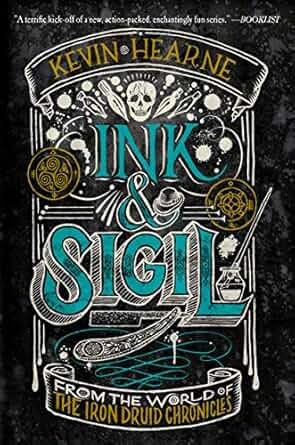
Lydia – I absolutely love Mitch Albom, his books are so moving, especially The Stranger In the Lifeboat. I’ve recently discovered Kevin Hearne’s Ink and Sigil which was a hilarious mix of wizards, detectives, and magical creatures. The Ruth Galloway series by Elly Griffiths is great, too, easy-to-read crime novels about a detective and an archeologist. Can I add a 4th author? My co-host Lucy’s books are awesome too, and I am so excited about her up-and-coming Jack the Ripper-inspired novel, EtherStone!
Lucy – Right back at you, Lydia–for anyone reading, check out the lovely Lydia’s books if you want compelling, interesting characters and complex worldbuilding.
Darci – A fantastic list, you two. Thanks for sharing. I added a couple to my TBR. I’ve wanted to get the Ink and Sigil series just for its awesome covers, and Ruth Galloway captured my attention. I love that you’re not only friends but fans of each other’s work!
Thank you so much, Lucy and Lydia, for visiting my Guest Spotlight! What parting advice do you have for those who want to pursue writing?
Lydia – Keep writing—there will be ups and downs as with anything, but don’t let it stop you. Writing can be lonely, so make some author friends, join writer’s groups, and come chat with us at Introverted Indies—anything where you are with like-minded people. That support is invaluable. One last thing, draft without editing—just write. Get it down and leave yourself notes if you get stuck and then move on to the next scene. Once you’ve got the bones down, you can go back and add the meat!
Lucy – You took the words right out of my mouth (keyboard?), Lydia. No first draft is going to be perfect. I’m personally a pantser, so I jump into writing without planning. Even if you like to plan, I highly recommend giving it a try—have your idea, open a new document, and start writing. See what comes out. You don’t need to have all the answers immediately, you can come back and fill in any holes later. Just get it out of your head and onto paper.
Lucy was my Spotlight Guest in 2023, and I enjoyed an interview with Lucy on the Introverted Indies channel earlier this month. A written chat will be coming soon.
A pair of UK fantasy writers, Lydia Baker, and Lucy McLaren, decided to get together and give indie authors a platform for conversation. I was Lucy’s guest this week!
You’ll also find authors reading from their books and they do written interviews. Check out their channel to help them share and give fledgling authors a voice. Follow them on Instagram and learn how you can participate.
Lucy and I had technical issues and some of our conversation got lost in the ether. Stay tuned for more in an upcoming Introverted Indies Blog.
My guests this month are writers who have played a huge role in my growth as an author practically from the beginning but in a whole new way over this last year. We formed a writing group to share and discuss our works in progress. Our goal is to improve our writing by helping each other be a better writer through feedback–a simple concept, but it really works!
In this discussion, we will share the benefits gleaned from our focused group feedback on this amazing journey as well as our writer’s life, goals, and processes.
The Writers
Isa Ottoni
Isa began her journey as an avid fantasy reader who often wondered if, one day, she could write a book herself. It turned out that she could.
For Isa, the lens of fantasy helps her understand the world; the good and the bad, the whimsical and the dark. Much more than a form of escapism, she believes that speculative fiction has the potential to show a better future for ourselves, to take us on new adventures.
Besides writing and reading, Isa enjoys long runs through local parks, watering her plants with her adoring husband, and obsessing over the fanart of her favorite fantasy protagonists. You can find Isa on Instagram and Substack for her newsletter and published works.
Dylan
Dylan has never written a bio before and, as such, made this one in five minutes and hopes it doesn’t show.
For Dylan, his love of fantasy, morally grey characters, and dark humour led to him writing his very first story – It didn’t make the light of day and is currently locked in an undisclosed cupboard – It did however show him that he could and he would write.
Currently, Dylan is working on a fantasy novel set in 18th-century Scotland filled with Jacobean Sorcerers and mythological creatures he is proud of and one day hopes to share with others.
Outside of reading, writing, and generally feeling sorry for himself, Dylan enjoys Brazilian Jiu-Jitsu (BJJ) and runs through his local dams.
Dylan hopes you have enjoyed hearing about him in the third person…
D. L. Lewellyn
D. L. Lewellyn is an independent author writing fantasy romance every chance she gets. A passion for writing took her by surprise in 2021 following a summer of voracious pandemic-induced reading in a new favorite genre, paranormal romance. Her latest publication, Les Romances des Trois, features three enchanting ménage à trois romances.
Besides self-publishing her novels, her stories have found homes in anthology publications, and many more are in the works. Ask anyone who knows her, and they’ll tell you she’s a dedicated multi-crafter.
She also enjoys blogging, chatting with authors and other creators on her monthly Sunday Spotlight, and classic cinema nights with her husband, dogs, and a big bowl of popcorn.
The Group
Thank you for joining us today! It’s great to have this opportunity to share how beneficial and fun it has been to participate as a group with these talented writers on Zoom. I’ll start with how we got together.
Isa and I have shared beta reads since meeting on Richie Billing’s Discord channel in 2022. Because we love the same genres and Isa is a voracious and insightful reader, it has been a hugely fun and much-appreciated collaboration. Isa was one of my first Spotlight Guests. I met Dylan on Richie’s channel that same year and we have chatted regularly ever since. Dylan’s insights have often been game-changers. When Isa asked about forming a writing group, Dylan was the first person I thought of. The progress we have made over the last year has more than met my expectations.
We have another member who is taking a break. We hope Dan can return because we enjoy his writing tremendously and are dying to get to that next chapter! Besides being so awesome with sharing feedback, all three group members are much younger than me and live in different countries. Their unique perspectives have been phenomenal and multi-layered and why I encourage writers to reach wide to find a community.
Let’s Get Started
Can you share who or what inspired you to be a writer and your favorite genres, books, or authors? What makes them your favorite?
Isa. It is so hard to pick favorites, especially because my answer will vary according to the last book I’ve read. But I’ll say that I’ve read fantasy since I can remember, and magic is what draws me into the stories. I love whimsical tales with a dash of darkness, compelling characters, and romantic subplots.
Marion Zimmer Bradley was/is a huge influence. The Mists of Avalon was one of my first contacts with feminist retellings and made me realize how powerful stories can be. I’m also a huge fan of Susanna Clarke, Suzanne Collins, and Anne Rice. Now, as an adult, I’ve discovered wonderful writers who inspire me every day. R.K. Ashwick, Ella Mcleod, Aiden Thomas, D.N. Bryn, A.J. White, T. J. Klune, to name a few.
And of course, the friends I made along the way. You, Darci, have been a great source of inspiration—I adore your stories and your feedback!
The indie community is stunning, and it opens a world of opportunities to us. So I kept thinking, maybe I could do this too. I gave it a shot, and it worked. I’ll have my debut novel published with a small press next year, and it is honestly a dream come true.
Dylan. I was first inspired when I played the video game God of War (several years after its release.) I found myself immersed in the world that the Santa Monica studio created and loved their storytelling, but the thing that really caught my attention was how they mixed gods from different pantheons (Greek with the Norse) so seamlessly into one narrative. After this, I bought two books on writing, (Techniques of the Selling Writer, and Save the Cat! Writes a Novel). I read both in their entirety, scrolling notes across their pages, and creating my own notes of actionable points. Then I wrote the worst book I have ever written and loved it. Why? Because I had done what I had set out to do and learned so much along the way to help with my future projects.
As my above answer may suggest, I value storytelling above “writing” per se. A lot of my knowledge/instinct comes from different media outside of novels. I love playing video games, reading their scripts, and love comics/graphic novels.
The Last of Us gripped me from the get-go with the father and “daughter” story at its heart whilst they encounter a cast of characters that would live in this post-apocalyptic world. The Teenage Mutant Ninja Turtles and Blacksad comics have also been influential to me as well. I believe both have isolated how dialogue can carry the story and have great character arcs over words and pictures.
But all of this does not make up for the fact that a novel writer must read novels. The top three, in no particular order I would read on a desert island until the pages fade away, are; The Lies of Locke Lamora, The Ballad of Songbirds and Snakes, and The Night Circus. All of which I have chosen because of the vivid experience I had whilst reading, the wide cast of characters, and the dark tale each of them tells.
Isa. I LOVE The Lies of Locke Lamora too! Such a great book.
Darci. Wow! Thank you both. It is so hard to pick favorites, but you two nailed the what and the why. Dylan, I love your take on the storytelling aspect. It comes through in our group time and again. And your three top faves are on my list. Isa, what a treat to know you love one of my all-time favorites, Mists of Avalon. Now, I know why we love each other’s stories so much. This link is to Thriftbooks in case anyone wants a paper or hardback. The book left images in my mind for years after reading it. I had the hardcopy edition on my bookshelf for so long and wish I still did so I could absorb it again as an author. I might have to buy it again.
I just remembered a framed print I had in the 80s of Waterhouse’s The Lady of Shalott inspired by Tennyson’s poem. I bought it because of the book like so many fans did back then.
Can you share an overview of your current projects and writing goals? If we came back a year from now, what would you want most to have accomplished? Five years from now?
Isa. I’m working on my second novel and sharing my writing with our group. In the meantime, I’ll be editing and marketing my debut—a colossal task. I hope readers will enjoy my book, and be as excited about it as I am. I hope I can find my readership and grow a community. I hope I don’t make a fool out of myself on social media, but given the number of silly videos I post, that ship might have already sailed.
Five years from now… Maybe I’ll be a full-time author? That’s the dream, isn’t it?
Dylan. Currently, I am writing a fantasy novel set in 18th-century Scotland with kilt-wearing whisky drunk sorcerers. Mythical beings aplenty, and a dark tale at its core. My number one writing goal is to continue fine-tuning this current draft month to month from the feedback I receive from this writing group. In a year from now, I want to have a polished story I can show to potential agents or publishers.
Five years? Hopefully a lot! I want to have written “What happens” next to my current novel (I have it outlined.) Redraft a horror Christmas novel I have a first draft of. And last but certainly not least I have written the first 8 issues of a comic set in the UK which is a mix of “The Walking Dead” and Disney’s “Zootropolis”. I would love to bring this to life with a talented comic artist, but those are all battles for different times.
Just now my focus is on the present and that means getting the best version of my first novel.
Darci. I’m super glad I get to be around to see all these wonderful goals in the works and the ones coming to fruition. And your IG is so fun, Isa! You’ve got a lively vibe. Keep up the good work.
I have seven novels started and two are my focus for 2025. I hope to publish one of those by the end of next year. Five years from now, it would be lovely to have two to three more published, but that means I need to speed up my process! There’s so much more work involved with self-publishing than the writing part, and I had no idea. Marketing can be a fun creative outlet, and I enjoy reaching out to readers and connecting with writers and all of it takes a lot of time. I’m constantly feeling like I’m missing opportunities, while I find others. Whiplash! It’s a matter of finding the right balance. Nearly four years in, and I’m figuring some of that out.
How do you fit writing into your busy work schedules and lives, and how important is it to make it happen? If you could manage it, would writing be your primary occupation?
Isa. Yes! I love my day job, I really do, but writing is what makes me the most happy, what gives me purpose. So I write whenever I can, in the mornings, weekends, and days off. When I can’t write, I think about it, make up scenes in my mind, and plan what I’ll write next.
I try to organize my time but also let it be flexible. For instance, I’ll usually work first, make sure all the “official” demands are met, and then I move on to writing. I plan my week out so it is easy to see which days are more open, and which days are not. But also, since I love writing, I’ll often do it anyway, even if I’m tired or busy. Sometimes, just a couple of lines, or a paragraph is enough. I’m writing and that’s enough.
Dylan. I have an excel sheet I update whenever I need to. I use it as a weekly schedule of my non-negotiables (Work hours, exercise, and family time.) After this I see where my “free time” is and plan in my writing. Typically, this means I have 1-2 hours of writing a day Sunday – Thursday. And a minimum of an hour Friday and Saturday. I do, however, always tend to “accidentally” write a little longer.
And I don’t know if I would make writing my main occupation. For me, it is an escape. I work in the science sector. In a job that I worked hard to get. I would like to add to my life with writing, but I would not want to choose one in place of the other. Besides, I feel writing benefits from having daily interactions in the real world. I feel if I became a full-time writer I would be more isolated from others. A lot of my idea’s on characters come from my interactions with others.
DLL. So, I would say you both make writing a priority because it’s a joy for you. Me too! And I’m envious of your organizational discipline! Of course, you have an Excel sheet Dylan.😄 And you make a good point. Isolation is a very real hazard. I retired early to write, and I can say I am officially a recluse. I’m sure I’ll just disappear one day and someone will find my bones piled up by my dilapidated computer. Thank goodness for both of you keeping me planted in the real world at least a couple of times a month.
Can you share your top highlights from our writing group engagement?
Isa. Community; Support; Learning; Accountability. Having a writing group is a game changer, and I would not be where I am right now without it. Having author friends gives us a sense of community and that is precious. Writing can be such a solitary endeavor, but knowing there are people out there excited about your story makes it so much easier. The support we get from a group is everything. We learn a lot — and I mean A LOT — from sharing what we write. We are sometimes blind to our own work, so having more people look at it makes all the difference. Giving and receiving feedback is such a formative thing; I learn as much from critiquing other people’s work as I do having my work critiqued. Finally, scheduled meetings mean we must meet the deadlines, and it gives us that extra boost to actually sit down and write.
Dylan. Darci, Isa, and Dan are all excellent writers with their own distinct styles, voice, and different strengths in their storytelling that always has me asking, “And then what?”
Through the course of our engagements, it has shown me that my writing problems are not unique. All of us at one stage or another of our stories come across similar problems in our writing but having this group means that instead of us individually hitting our heads against the wall until we break through we can discuss a solution that others have found that works for them. And even if it doesn’t work for me it at the least highlights the problem, giving me a direction to look.
Outside of this, I find having group submissions gives me a deadline that wouldn’t exist otherwise. It’s a cheesy saying that “pressure makes diamonds.” But I genuinely feel without this group, most of my ideas would still be carbon deposits (Not coal! Inner science nerd.)
Darci. Absolutely fantastic takeaways and all things I would list too. I would just add as I did at the outset that, having begun writing so late in life and writing to a younger, diverse audience, it has been invaluable to have the insights and perspectives of significantly younger, well-read, focused writers who also have varied cultural and world views. My writing has a better chance of appealing to a wider audience.
I used to tell Dylan I worried I was too old-fashioned, and I think I said the same to you, Isa. These days, thanks to bridging gaps during our sessions, I’m feeling much better about that, and hopefully, you both have gained from sharing your writing with an elderly person. 😁
We have a lot of fun discussing our process–the techniques or methods we’ve discovered along our journeys. The ideas and examples we exchange during our video meetings have often been huge motivators and eye-opening moments. I’ve found it interesting how our techniques evolve, giving way to completely different approaches and sometimes circling back to earlier methods. What are some of your best practices that have stuck with you and why?
Isa. I tend to rush my plot; I get excited about certain scenes and I skim over the connecting bits. I learnt that I do that with the group. It is funny how we don’t see the problem until someone else points it out. So now, as I draft, I pay much more attention to the details, taking my time to set the scene, to flesh out characters, to show beats where I’d otherwise use a montage. I’m a sucker for montages, but I must use them sparingly.
I listen to feedback and use it in my next session, without exception. That’s how I learn, always trying to improve, to make my thoughts clear on the page.
Dylan. Great question! My early drafts play out like a film with all my scenes, settings, and characters interacting but I tend to lack emotional depth in the form of indirect and direct internal dialogue where it matters. This has been highlighted in my submissions and now on completion of my draft, I go back through my piece and highlight all the points as I read where I feel if I was in my character’s position I would react. I also have trigger point characters where my character should always feel some deep emotions whenever they are mentioned so I search my drafts for their names/places/times and always make sure it’s a significant moment when they are mentioned (Otherwise delete them as why am I mentioning them?)
Darci. I can totally relate to rushing when those ideas hit! I still find spots where I leaped too fast between scenes in my published books! And we know how Isa loves her montages, so here’s a little Team America for you, Isa.
Along with the previous question, are you a pantser, a plotter, or somewhere in between? How do you get your plot and character ideas? How do you build on them?
Isa. I began as a pantser, which works great for short stories, but not so much for full-length books. So I’m trying to improve my plotting skills, and right now, I’m somewhere in between. My brain does not enjoy plotting, bullet points suck the life out of my story, so I’ve discovered a way to trick myself into plotting, making it fun as I go.
I start with vibes. A scene, and characters, an arc. Then, what I do is this:
My draft zero is an interview with my characters. That’s not for the reader, just for me. I know their end game, but I’m not sure how we get there, so I sit them down and ask.
For my current WIP, it looks something like this:
Hey, [name redacted], how did you become the consort of two immortal vampires?
Or
Hey, [names redacted], how did you two become vampires?
Then, I let them speak, in a monologue, I let them tell me their story. It sounds crazy, but I swear it works. I’m pantsing, brainstorming, and learning their voices as I go. Whatever comes out of it will have my plot, the scenes I must write, and a blueprint of my story.
Then, I draft. The first draft is messy, and honestly the most fun. I don’t stop until I reach the end, and that means NO EDITING. It’s hard, the urge to edit is strong, but I’ve learnt to control it.
The second draft is development editing and making it readable, and that is the draft I show people (my writing group and critique partner).
The third draft is applying the feedback, making it better. Still not polished, but the story and characters will be much stronger. That’s the draft I’ll show the editor. A couple of drafts afterwards and I’ll have a book!
Dylan. It all starts with the seed of an idea. Sometimes it’s a character, sometimes it’s a plot, sometimes it’s a conversation. I scribble these all on Word documents and then come back to them from time to time. If after some time has passed and I still feel the excitement for the initial idea and it’s longer than a short story, I purchase a nice notepad and expand on my starting idea and just write the longest mess possible, over a weekend at most. I then ask myself questions. Not limited to these but just a few examples:
What do I like about my story?
What don’t I like?
Is my current main character the correct POV to follow for this story?
What is the throughline of my story?
What arc will my character have?
After this I tend to have a bit of distance from the story but keep the notepad, sprinkling in any ideas, I have over the course of a week to a month. Then I make an outline for my story without looking at anything I have written (I hope the good ideas will have stayed with me.)
After I have this outline I sit down and write my zero draft of my book, treating the outline like train tracks to guide my story, but I welcome being derailed and following the train elsewhere.
When I’m finished with this draft, I give myself distance from the story. Then when I return it’s a lot of discovering if what I originally thought my story was about is still the case.
If not, what is it about now? Find this answer and make an outline for my next draft to make sure everything in this draft serves this purpose.
After this draft, it’s all about fine-tuning the story and that is what I am currently doing. As a newer writer, I have had less experience at these last steps. They are definitely the most rewarding and painstakingly difficult.
P.S. If anyone has an easier way, please tell me!
Darci. I just had the most fun diving into both of your processes! I can’t wait to sit down for an interview with my dragon shifter, Michael Elliott, and Onyx, his dragon. He’s one of the three MMCs in my series and getting his own book, hopefully this year. I might know him well but not well enough! My heart a swinging by the seat of my pants every step of the way. I have no patience for mapping things out because I just want that story to come out. Four years later, I am employing a bit more organization and development as I go.
How I think of Isa working on her magical stories…
Isa. Okay, this is spot on! LOVE IT!
And Dylan, gotta love your notebooks! They work and they’re easy to hoard.
This is how I always picture Dylan at work on his plots.
If you haven’t visited Heart Breathings on YouTube, you might enjoy author Sarra Cannon’s channel. She has a notebook challenge every year and it’s coming up. It’s just one of her writing challenges and tips she shares with her huge following. I followed her before I started writing, back when I was a planner geek.
I told you I loved notebooks Dylan. I’m truly baffled that I don’t use them more for writing.
If you could share only one tip or resource for new writers, what would it be? Okay, so that might be tough to narrow down. Feel free to add a couple more.
Isa. Brandon Sanderson’s lectures on Youtube are a must watch. Even if you’re not into his books like me (I know, what a sacrilege, but it is what it is), his lessons are GREAT for baby writers. I’ve learnt a lot from him.
But I’ll also say that, if you want to write, you MUST READ. Not only crafting books, but books books, fiction within and outside your genre. Read and then think: Why did I like these books? Why didn’t I? What made me so invested in these characters, why am I grinning and kicking my feet, or why do I find this beat boring? This is the greatest exercise for writers in every stage of their craft. Read, read, read. Then write, write, write.
Dylan. I have two pieces of advice. One is to write what you want to read. There is no guarantee what you write is ever going to be successful (And in my opinion, it doesn’t have to be.) So why not write the story that you are proud of? I’m sure it will connect with someone who feels the same way and isn’t that what a story is all about?
And two. When it comes to the actual writing process, treat your first draft as your zero draft. By this I mean take all the pressure off yourself. Write with your initial plan, follow your instincts, don’t be afraid to bullet point parts you don’t fully know. Just get every ounce of that raw story on the page. After that comes the fun part. Look at that steaming pile of S…Story. And look for its strengths and weaknesses, make a plan you are comfortable with, and then work on your first proper draft. This draft is what you will edit. Otherwise, it is too easy to get hung up on getting it perfect the first time and for me personally, that is impossible. I need to fail before I can succeed.
Darci. I knew you both would have a wealth of great things to share on technique. I’ll just add how valuable I find writing analysis tools like Autocrit analyzers and Read Aloud on Word. Both trained me to recognize all those endless weird things you do when you first start writing… repetition, redundancy, overusing adverbs, passive voice, all things you overlook unless it’s reflected back to you audibly or statistically. Listen to your writing. Search for overused words like “this,” or those filter words Isa hates like… look, know, think, and feel. You might be shocked at the number of hits.
And really, this reflecting is what we give back to each other in our group participation.
Thanks so much! This has been a blast as well as inspirational. I can’t wait to see where we are at next year. In the meantime, happy writing!
Isa. Thank you so much for having us! Looking forward to seeing you in our next meeting!
Today, we get to chat with an author who is launching her debut novel this month… like this week… like Wednesday to be exact! Awesome. But that’s not all. The book is being adapted into a feature film. So, sit back with a cup of tea, mulled cider, or whatever November beverage is your favorite, and enjoy.
Let’s Meet the Author
Nikki Brooke, a science fiction author and scriptwriter from Australia, champions bisexual representation in books and films. A proud bisexual herself, Nikki challenges stereotypes, drawing from her own journey of self-discovery. Refusing to be confined by societal expectations, Nikki embraces the complexity of her identity, breaking down misconceptions and defying conventional beliefs about bisexuality with each stroke of her pen.
Her writing talent has earned accolades, including finalist in the 7th Annual Launch Pad Prose Competition and semi-finalist in the ScreenCraft Cinematic Book Competition. Several of her short stories have found homes in anthologies from various publishers.
Nikki’s debut dystopian novel, “Plagued Lands,” is due for release November 2024 and a film adaption is in the works with Crow Knight Films. This dystopian masterpiece promises to captivate audiences with its stark portrayal of a future built on deception and greed. Through her work, Nikki endeavors to pave the way for a more inclusive and diverse literary and film landscape.
With her boundless creativity and unwavering commitment to authenticity, Nikki Brooke stands as a trailblazer in the world of storytelling, leaving an indelible mark on the hearts and minds of audiences everywhere.
Let’s Get Started
Thank you so much for joining me during your super busy month, Nikki! I’ve been looking forward to our chat.
First things first. I have to share this amazing cover for Plagued Lands.
Just stunning!
After following your debut rollout, I would have to say that your launch is the best planned, thorough, and most fun I’ve followed for any author. You’ve done a brilliant job engaging on Instagram. The story initially captured my attention.
Then came the announcement of the film adaptation and enticing invitation to follow the project through your beautiful website. And lastly, I was super impressed when the gorgeous cover and poster art appeared. You even have a nice swag package with character art to go with the purchase of your book. (There are still a couple days left to get in a preorder! I got my copy!!) And now you have a launch party in three days!
How does it feel to be on the cusp after this incredible journey?
NB. Wow! What an introduction! Thank you so much for your kind words. As you alluded to, a lot of work has gone into this launch. It’s my debut novel and a dream I’ve had since I was 8yo, so I wanted it to be a big deal. I feel a bit like I’m on the edge of a cliff, but whether there is water or rocks at the bottom is yet to be determined. It’s exhilarating and scary at the same time. But mostly, I’m really proud of what I’ve accomplished so far. It’s taken a lot of courage and I’ve had to overcome depression, anxiety and a lot of negative beliefs to be here today.
DLL. That is incredible! To fulfill a dream you’ve had since you were eight… I can only imagine the highs and lows, especially when struggling with the challenges of depression. I’ll go a little Aussie and say… Good on ya!
I couldn’t help tapping into my Aussie vibe with a bit of imagery. 😉 Can you share how you got started as a writer and who or what were your biggest inspirations?
NB. I wrote my first book at 8, it was a fantasy story about 5 pages long and illustrated which I bound myself. I still have it, haha. And since then, I’ve wanted to tell stories. However, I wouldn’t admit it then because I was such a slow reader and I was embarrassed. I read Bridge to Terabithia by Katherine Paterson which was the first story that made me cry (it still makes me cry) and from then on, I was a bookworm.
I got a diploma in Professional Writing in Editing after High School and thought I was on my way. But then crippling depression and anxiety stopped me from pursuing my dreams. It was only a few years ago after meeting a life coach that I started to believe in myself and my writing skills.
As a teen John Marsden, Sheryl Jordan, and R.L. Stine were my inspirations. Today lots of indie authors inspire me, like Alice Hanov, Nikky Lee, and Ash Oldfield, as well as traditionally published authors, Amie Kaufman, Jay Kristoff, and C.S. Pacat.
DLL. Thank you so much for sharing your journey. So inspiring. And thanks for the great additions to my TBR. I have not read any of these authors but Jay Kristoff. I still need to finish the very long Empire of the Vampire…
When did making the film come into play and how did that project roll into the novel debut? I find it fascinating how the two projects seem to be simultaneous, and it’s not often an author has such an exciting prospect for their very first novel, at least in my frame of reference. It also seems so monumental. I would love to hear the story.
NB. I was approached by a producer after my other novel (unpublished) was listed as a finalist in two different cinematic book competitions. He liked the concept of Plagued Lands better for a lower budget film so we decided to adapt it instead of the other book.
Of course, that meant it was best for me to hurry up and get the Plagued Lands book out, so I decided to self-publish. I founded Crow Knight Film & Publishing Realm to produce both the book and film.
Because it’s an independent film, I get a lot of creative input and it’s been wonderful going through the process of writing my very first feature film script! It’s been a whirlwind of ups and downs doing both the film and book together, and I haven’t had a lot of sleep this year, haha.
DLL. Wow! When would you have time to sleep? And who needs it when there are so many creative to-dos on your list. It’s awesome watching you check them off, which highlights again how momentous Wednesday will be.
What advice do you have for indie authors with the same aspirations?
NB. Because self-doubt was my biggest barrier, I will always encourage authors to believe in themselves and to believe their big dreams are achievable. Be brave and share your stories. And secondly, always continue to hone your craft. Read new releases in your genre so you know current readers’ expectations, but also read books in other genres and periods to find things you might want to experiment with. Take courses, go to conferences, get feedback on your writing, etc etc.
How did you find and build your connections/collaborations for the book and film? Can you tell us about Crow Knight Films? Has filming started and where will it be shot? Any other juicy details? 🙂
NB. The juicy news is that I dumped the original producer who approached me… let’s say due to ‘creative differences’ which I cannot elaborate on. I had already founded Crow Knight Films to produce alongside him, but now I am in talks with other producers and investors. So the project is still pushing forward. Although I don’t regret firing the producer, it has been a setback, so filming will still be a while off, unfortunately.
DLL. A great example of taking the bumpy risks that keep you in the driver’s seat and ending the ride where you need to be. I love it! I look forward to following you to the finish line.
I would love to hear about the artists who designed your covers, character art, and promotional materials. Can you share any tips or advice on seeking art collaborations?
NB. Oooh, I love my cover! It was designed by Alan and Ian at The Book Designers. They were fabulous to work with. They asked a lot of questions and got me to provide examples of covers I liked.
They provided several draft designs. I chose two and they worked on them further to whittle it down to one. This one became my favourite, and I asked for a few more changes to get it popping like it does now.
I found these designers by looking at other books with covers I love. The Book Designers also did The Head, the Heart, and the Heir by Alice Hanov which I adore! So it was a no-brainer to go with them. I suggest researching artists of covers you like and finding someone who can produce something similar within your budget.
For my character art, I found a digital artist on Fiverr. I liked the style of the work she displayed and she can draw from scratch without using AI. I started with a trial character but ended up commissioning her to do 9 different designs. I was really happy with the results.
And some of the designs in my promotional material I created myself using Canva. I also like to draw, so I’m hoping I can produce something good enough to give to people at a later stage.
DLL. I really like the color and lighting the artist uses for your characters. Thank you for these great tips.And I saw that The Book Designers features Plagued Lands on their home page. Awesome!
PersephoneNathanSebastianWillMother Jessica
Can you talk about the technical process for your debut? Now that you can look back, what are your best tips and what might you do differently or avoid next time?
NB. I learned a lot from my editor for this book. There’s not a lot I’d necessarily do differently, but thanks to her I’m more aware of the importance of high stakes than I was before writing Plagued Lands. I was a little too kind on my characters in the first draft. And each problem Martina faced was solved before she moved onto the next problem. Everything tied up nicely, but it meant it lacked tension and didn’t hold the readers’ attention. So there were some big rewrites, and I don’t think my future stories will require as much now I’ve learned that.
DLL. This is so great to share with new writers. It’s a common learning curve. Thank you!
Can you highlight the writing/publishing tools/resources you can’t live without, and how you discovered them?
NB.Scrivener!! I love it so much. I generally consider myself a fairly organised person, but I never felt it while using Word to draft with. Now I have Scrivener, it’s easy to find all my notes, research, and details. It’s easier to plot my novel due to the text and folder structure, plus the corkboard and outline views – oh and being able to label/categorise scenes. I also find it’s amazing for setting targets. And the cost is reasonable. There is a steep learning curve when you first start using it, but it’s worth it. In case you’re wondering, no I don’t work for Scrivener, haha, I’m just a big fan. I found out about it through another author mentioning it online, I think it was Victoria Aveyard.
Another one I can’t live without is The Emotion Thesaurus by Angela Ackerman & Becca Puglisi. It’s easy to get repetitive when describing emotions, and this book helps to mix it up a bit. It gives you a list of emotions, their physical signals, internal sensations, mental responses, and more.
DLL. Ooh. I’m getting that book! Thanks! I know how awesome Scrivner is supposed to be, but I’m so comfortable in MS Word. Still, Word is not the best for storyboarding or managing multiple parts of a project. I seem to live and breathe in my draft manuscripts, discovering the story as I write them, and I haven’t found that freedom in Scrivener, as ironic as that is since these platforms are meant to provide creative freedom. It’s clear you’ve discovered that. I keep wanting to try it again on the next project, especially when someone raves about how cool it is.
NB: I would say it’s probably not as useful for people who are pantsers or can keep all the details in their heads. I like to plot and have a terrible memory for details, which is why it works so well for me. If you feel comfortable in Word, then keep at it.
DLL. Lookie! I got my copy already…
This is awesome!
And I am a true pantser no matter how many other methods I experiment with. Flying by the seat of my pants is my creative zone.
Now, let’s talk about Plagued Lands. Elements of the plot remind me of a favorite classic movie, Logan’s Run. I do love a good dystopian tale! How would you describe Plagued Lands if someone stopped you on the street and wanted to know about your book?
NB. I absolutely love Logan’s Run!! What a classic! I’ve probably been subconsciously inspired by it. The Plagued Lands story and concept is completely different, but it does have a similar vibe in the sense that the people in charge are lying to the citizens and the main character has to figure out the truth.
I often compare it to The Hunger Games, because that’s the most famous comparable dystopian right now and it definitely influenced the writing style of Plagued Lands. And it’s a good benchmark because most people have heard of it, although it also has comparisons to Want by Cindy Pon and Legend by Marie Lu. But Plagued Lands does have a unique setting plus a bisexual main character.
Plagued Lands is a young adult dystopian. In the future, cities surrounded by glass bubbles promise safety from deadly diseases. But a resilient teen uncovers a dark secret kept from the people. Now she risks her health to expose the truth and save her little brother.
DLL. I’m always showing my age with my movie references. LOL. Though I love the Hunger Games Movies, too! I can’t wait to read Martina’s story.
NB. Seriously, I need to reiterate that I LOVE Logan’s Run!! It was one of my Dad’s favourite films and I remember watching it with him when I was little. It was true daddy-daughter bonding. That film, coupled with the original Star Wars, were the films that got me into Science Fiction.
DLL. I’m so happy to glean that precious nugget about you and growing up, Nikki!
(Had to share this image from the Amazon Prime Video thumbnail. It links to the movie)
What characters or character traits were the most compelling to write and why?
NB. Martina is just a touch gruff and I love that about her. She’s flawed and imperfect, which makes her more relatable.
She has a lot of self-doubt and I think that’s a reflection of how I felt when I was writing Plagued Lands because I was overcoming my own self-doubt. We both grew stronger and braver together. To clarify, she’s still her own character, she’s not a reflection of me, she just shares some traits.
DLL. Super compelling! All my characters channel some part of me, so I totally dig it when traits we relate to as authors spill into our characters, which in turn makes them relatable to readers.
That’s why I encourage people to try their hand at fiction, to experience life through a character’s surprising perspectives and watch in astonishment when they take flight on their own as a unique individual.
What inspired the setting and what elements were the most fun to get lost in?
NB. It’s set in a futuristic Texas. There are hints as to which city in the book, but a big hint is that I used to live in Austin. The bubble cities were inspired by a Sunday morning drive. Weird, I know. But I had to be up early on a Sunday, and the streets were empty, except for one guy who leisurely strolled across the road. It seemed out of place when the streets were so empty and it made me wonder in what other situation would it be strange to see someone outside. That’s when I came up with the concept of people living in semi-sterile bubble cities who don’t venture outside unless they’re wearing hazmat suits.
Many people have thought Plagued Lands was inspired by Covid, but in truth, this Sunday morning inspiration hit me several years before Covid was ever heard of. But I started writing it in 2020 because the pandemic felt like a sign this story should be written.
The most fun part is Martina experiencing things she never has before. I don’t want to give too much away but one thing that was fun was figuring out how to describe a lizard if you’ve never seen one before. And she has a few other innocent encounters with animals too. And the decontamination process for re-entering the city is fascinating. I love what I came up with.
DLL. The Texas choice is such a great story! And aren’t those quirky plot details the most joy during the writing process… all that amazing research put into action?
This is the start of the series. Can you share a glimpse into future installments? Will they also come to the screen?
NB. Yep, I’ve planned for Plagued Lands to be a trilogy. I’m writing book two now and have most of book three plotted out too. I certainly know how it all ends. Hopefully, we can make all three into films, however, it will depend on the success of the first film.
And some juicy gossip—which I haven’t officially announced yet, so you’re getting a scoop—is that I am also writing a prequel novella. It will have Martina’s backstory. I’m hoping to release it early next year.
DLL. Ooh. This is so exciting! Thank you for sharing your prequel on our Spotlight!
I love hearing about a writer’s daily life and how and where writing and creativity fit in. Can you share how you balance life with writing and the business of being an author?
NB. I’m not sure there is much balance, haha. Writing has to fit around my day job. Many people are surprised to hear I’m also a finance business partner (a type of accountant/analyst), so I’m both creative and analytical, which is rare. Although writing is my bigger passion, I still love my finance job, and it’s even better because I work for a wonderful charity. But it does mean my time is stretched between the two.
I find writing sprints work really well for drafting. In a twenty-minute sprint, I can write 300 to 500 words and I can usually find a few times a week to do that. This year it’s been harder because I’ve been more focussed on the business side of writing and publishing, which includes marketing and administration tasks. I don’t love that side of being an author, but it’s necessary for people to be able to find my book. That’s the goal and I love it when I hear Plagued Lands is now someone’s new favourite book (which one advanced reader told me, eeee!). But I’m sure now that I’ve published one book (or almost published) it will be easier going forward and I can focus more on writing again. Yay! I can’t wait to get stuck into the next Plagued Lands installment.
DLL. Awesome on the writing sprints! Those really add up. I’m wondering if being analytical is a beneficial trait to have when it comes to writing sci-fi. Hmmm.
Do you have a favorite work setting, a place you escape to that inspires your creativity?
NB. I have a desk at home, but I also use it for my finance job, so it gets a bit boring and can block creativity. Therefore, I love to go to cafes to write. Of course, I think I look like one of those mysterious authors in a dark corner of a cafe, but everyone does it these days, so it’s not so mysterious anymore, haha.
I like the happy vibes in cafes. It’s always best if it’s one with acoustics where you can’t really hear what people are saying too much, or else it interrupts my concentration. Although, I have heard listening in on people’s conversations can be a great way to learn writing dialogue and I have been guilty of that occasionally.
I also love traveling and feel inspired when I take a trip. I often take my computer with me, or at least a portable keyboard that allows me to write on my phone. I’m heading to Sri Lanka in a few weeks, so I’m sure to get a burst of inspiration there.
DLL. Fabulous! I can see how utilizing the day job location for writing might stifle creativity. This is why I enjoy asking about creative spaces–learning about so many fantastic ideas and processes. I love the coffee shop idea, and your super tip on listening into conversations for dialog ideas. And yes, there is so much to getting out in the “wild” for inspiration. Traveling is the bomb. That’s how you and I struck up our conversation. We’ve traveled (or in your case lived) in each other’s countries. I’ll say officially how much I love Australia… in case no one has picked up on that yet. 😉
I reached back into my 2018 photos and grabbed my favorite Melbourne shots. I stayed at a mini farm in a suburb called Hurstbridge, Nullimbuk Shire. We explored art at beautiful Montsalvat in Eltham and took a train into the city, naturally. I adored tea at the Hopetoun Tea Room and exploring the Bourke Street Mall.
What other travel experiences have inspired you?
NB. Yes!! That is how we connected which is so cool! It’s so nice to hear you enjoyed Australia. Obviously, Texas inspired me, hence setting my book there. I have taken a lot of inspiration from travelling through Egypt and Greece with all the rich history and mythology. But I think everywhere I’ve been has inspired me a little and even places I haven’t been to but want to go. One of my other books, The Huxian Fox, which I hope to release next year (not part of the Plagued Lands trilogy) has mythology from China and Greece throughout it, and I haven’t been to China yet. It’s a space opera where the characters visit lots of planets, and the descriptions of many of those places were inspired by real places I’ve visited, like the Wadi Rum desert, English pubs, Greek temples, Angkor Wat temples and even Melbourne when I grew up.
DLL. Fantastic! Is this another reveal? It sounds amazing and I can’t wait for more.
Can you share your favorite productivity techniques, tools, or resources?
NB. Like I said earlier, my biggest barrier is my mental health, so when it’s bad, I love to put on a guided meditation that boosts my energy (you’ll feel energised instead of relaxed by this meditation). It’s called, 6 Minutes of Courage, Confidence, and Positive Energy by Kenneth Soares and you can listen on Insight Timer which is free. It’s a great way to start the day or a writing sprint.
And writing sprints is the next one. Setting your timer for 20 minutes and you’re not allowed to do anything but write for that period. No looking at your phone. Anything that needs researching needs to wait until after (I make a note to come back to it in those instances). No using the thesaurus (again, make a note and move on). Just write. What I write might not be great sometimes, but it’s better than nothing, and it helps me to think up more ideas.
I also found that I work well with setting goals. It’s probably my analytical brain kicking in. Some people can write 10,000 words in a day. I know I’m not one of them. So I set goals more like 10,000 words in the month, or 40,000 in the month, depending on what else I have going on in that month. I did the 50k in a month for Nano one year, and it was hard. I don’t think I’ll stretch myself that much again, but I was glad I did it. Other potential goals are creating 4 social media posts and scheduling them, or something like that.
DLL. So many encouraging ideas! Thank you! And I’ll add my plug here on the benefits of meditation.
I’m trying for 50,000 words this National Novel Writing Month, but I’m running into so many obstacles with another really full schedule. Still, it’s early. I’ve got 7,000 words down and should pat myself on the back, eh?
NB. Well done on your 7k and best wishes for the rest of the month. It is tough but also feels amazing when you smash out 50,000 words!
This has been so much fun, Nikki! Thanks again for visiting my blog. Any last advice you would like to share?
NB. Thank you so much for having me!! It’s been a real pleasure and you’re an amazing interviewer! My last advice is to reiterate that writers need to believe in themselves and their dreams. You can do it!
DLL. Awe, thanks, Nikki! I can’t wait to check in with you a year from now and discover the latest on Plagued Lands.
In Part Four we will cover Writing Contests and what I’ve got in the works because Nicolas was kind enough to ask…
Let’s wrap up this amazing discussion with writing contests and the benefits and challenges. I’ve had so much fun participating with you in the Writing Battle Summer Nanofiction 250-word Contest we just finished where we navigated our way through the huge community and commented on each other’s stories.
I find I enjoy the shorter writing challenges when I’m in the middle of a busy writing period. You get all the benefits that Writing Battle offers the community, but the participation consumes less time with the nano-sized stories. But wow! The caliber of these little pocket fictions blew me away! Every story I read for the Duel and in the Debrief was exceptional. I did a little blog about the contest and my results here.
I also participated in a Fae vs. Punk Mashup competition with the Fantasy Sci-Fi Writers Alliance. My story was judged fifth out of nine so it didn’t make the anthology but I loved this story so much that I worked on it post competition and that’s what my readers are getting with my newsletters in parts through the end of the year. So, I guess my overall take on participating in contests is having opportunities to write more, in different genres, in shorter bites, and finding ways to share it.
I’ll turn the mic to you for your take.
The Writing Battle – What I loved
NL. I thought I’d break it down in a list…
Having a clear deadline to produce something outside of my ongoing projects. It’s super refreshing.
Reading ten great stories over one month, and a bunch more at the Debrief stage. Wow. They were all good, astounding and enriching, all in their individual, quirky, diverse, creative way. I stand amazed.
Commenting on other people’s stories. It’s a challenge, it’s a responsibility, it’s fascinating. Always easier to say what you liked about a story. More challenging to say something you think could make the story better, in a warm, understanding, respectful, constructive way.
Connecting with like-minded people eager to support and encourage and help.
Discovering so many great writers, and being introduced to their work.
Like you, I think it’s less involved, time-wise, to focus on the nano-fiction battles rather than the longer ones. I might try the long ones someday, but for now, having to read, and constructively comment on ten longer stories over one month, let’s say, each of them 2000 words long, however fun and captivating I’d have to do nothing else during all that time!
The Writing Battle – Questions I Have
It is fun; it is wonderful to connect with fellow writers and to read great stories, and dip my toes in constructive feedback, both given and received.
But one thing Simone Seol says is “If you don’t repel anyone, you can’t attract anyone either.” I’ve been mulling on that. It makes sense to me.
Hmmm. There is a risk when dealing with a lot of feedback from multiple people.
It’s a good thing to gather a lot of feedback, but how to use the feedback afterwards? If many people (let’s say more than three or four) tell me the same thing, and if it makes sense to me, then it’s probably a good tip to steer me into finding better ways of writing.
However, if I fall into the trap of trying to please everybody, then it can become counterproductive. If I tone myself down into trying to appeal to everyone, then I’m at risk of diluting my true self and writing something that may be somewhat acceptable to everyone, but not really appealing to anyone at the same time, even to myself.
The saddest thing about it is that the very people who might have loved my true, honest, sincere, creative work; they won’t even get a chance to see that I’m there.
If you don’t repel someone, you can’t attract someone either. I think it’s a life-changing notion, worth repeating.
If you quit being afraid of displeasing some, you have a better chance at pulling your true readers closer to you because they will see you when you show up in the world. The ones who will truly get and like everything you have to say or share, and who will love your work no matter what, because they’ve seen in you something that resonates deeply in them.
So who’s your ideal reader? Simone Seol says picking an ideal reader is BS. Don’t pick. Just imagine someone you really trust, someone who already loves what you do and believes in you. Someone who loves you unconditionally no matter what. Someone who drinks everything that you say and do and are. Write for that person, even if it’s just you; write for that person only. The others don’t matter. It’s not for them you’re doing this. Their opinion doesn’t matter. If there’s no one yet, just imagine them. Or be them. Be the first one. Start with yourself. How does your own work resonate with you? Be your own starting point.
But then, how do you improve your writing? Isn’t this a contradiction? How to find a balance?
I’d say, trust your instincts. Keep learning of course, but take your time choosing from whom you’re learning. Remember that any book you read, any course you take, any webinar or blog, or whatever you watch… is for you and for you only, to use at your own convenience, in your own time, with absolutely no strings attached, with nothing to prove to anyone and no reason to impress anyone either; with no other responsibility on your part than using whatever aspects serve you and your creativity, and help you grow into the true, sincere, wonderful, creative, honest, precious, human being that you already are.
DLL. These are awesome things to consider, Nicolas. I’ve had similar thoughts about the feedback and how to use it. In my previous work life, and I’m sure you will relate, it’s all about performance feedback and pleasing the boss, or the customer, or what have you. Writing is truly the opposite. Sometimes, old habits are hard to change.
It was interesting this round to read the feedback from those who didn’t get my story at all to those who raved about the power of the prose and emotion because they absolutely got what I was going for.
I’m in a writing group also and we critique each other’s work. I’ll be chatting with that group on my blog next month for my Spotlight. It’s been a real eye opener because I’ve had to have some serious talks with myself about utilizing the excellent feedback while maintaining my true voice. This speaks to the aspect I mention in my response to your questions – learning too much about writing! And how it feels like I’ve been stymied. I wrote much freer in the early days when I was ignorant. 🙂
While much of the feedback is consistent because it points to areas that everyone recognizes need work, a lot of it is very subjective and you can’t let subjective opinions mute your voice or color your efforts as you move forward. I feel like I’ve listened to too many people and tried to compensate (or compromise) much too often, and I need to pull myself out of the quagmire. I really like that idea about finding that one audience to write to even if it is just yourself. I also really appreciated something you said earlier about your rewrites of Seven Drifts. You love your story. I get teased sometimes about loving my own writing. Well, duh!! I wouldn’t be so dedicated to writing if I didn’t like what I wrote. We’re allowed to be our own worst critic and best fan, right?
NL. Absolutely. I believe we have too, in fact!
Darci, for the benefit of our lovely readers, what are you working on currently? What did you launch recently, and what are you about to release, mid term and long term?
In the Works
DLL.Thank you for asking! I’ve always been a multi-crafter with too many projects started at once and waiting to be finished even as many do get miraculously finished, so I guess I shouldn’t be surprised that my writing is the same. I would love to start jamming on all of them and stack them up on the publishing line, but I must be realistic. I’ve learned to work on what’s calling to me on any given day. Ah, those fickle characters…
I’m especially focused on listening to the passionate call as I struggle with that glut I mentioned.
Thankfully, it is currently a spinoff from The Starlight Chronicles (“TSC”), a contemporary paranormal romance series that is working for me. I’m committed to sticking with this one and publishing it next year. Crossing my fingers!! Michael Elliott is a dragon shifter, introduced in Ursus Borealis and featured in Drago Incendium, really a main character along with Selena Aires (human) and Andras Johns (a Kodiak bear shifter). Selena attracts both men to her cause and Elliott (as she calls him) comes to care for her as deeply as Andras does. Where the three end up takes us on a lot of twists and turns and concludes in Tigris Vetus.
It is important to me to follow my series with a standalone novel for Elliott. In TSC, we meet his dragon, Onyx, and are introduced, in tantalizing bits, to their backstory. Now I can flesh that out. Besides being the alpha of the Fire Star Pack with a territory that covers Oregon, Elliott has a medieval castle in the Scottish Highlands (due to his long history with Onyx). This will be the setting for his story where he gathers his friends from TSC and love and danger will find him there. The theme is trust and betrayal, and there will be lots of dragon lore and magic.
And thanks for asking about my latest release! It just so happens I have a volume of three fantasy romances on Presale in Les Romances des Trois. “The romances of threes,” (probably an awkward usage of French, so pardonne-moi, Nicolas! But it looked good for a title 🙂). It means we get three deeply romantic and adventurous fantasy stories in different settings and subgenres involving ménage à trois romances.
These threesome tales were previously published in anthologies, and I was dying to expand on them and offer them together because I love them so much. They average more than 20,000 words, so I’m calling them novellas. A short adult fairy tale is included as a bonus.
I have plot ideas for more spinoffs from TSC and I truly hope to get them out there in the next few years. I dream about a huge TSC world for readers to enjoy. The one I’m focusing on next is my vampire, Mortas. I left him on an awful cliffhanger and he is a fantastic character and deserves his story. He will be paired with a minor but important character from TSC, a witch named Ember. Their working title is Giving It Up for a Vampire.
The other TSC spinoff I’ve made huge inroads on is a historical fantasy romance, The Spanish Maiden Who Dreamt of a Bear. The main characters feature Andras Johns’ grandparents, Broderick Johns, and Elara Sofia Estrada de Luna. We dive into Andras’s family history when he shares his grandparents’ journals with Selena and their pack as they sail up the Inside Passage to Ketchikan on Elliott’s motorsailer – a scene in Drago Incendium.
This tale is set in a fascinating time in North American history, 1776 Alta California, when Spain competed for the Pacific Coast territory with Russia before the Spanish Crown gave it up to Mexico. I’m incorporating a historical expedition from Mexico to the Coast that established Monterey Bay and San Francisco. We will also explore early Alaska when Broderick and his father trek up the coast to Kodiak Island where Broderick takes on the first Kodiak bear spirit.
Other stories in the works outside of TSC that should go fast once I can get that mojo flowing again:
The Fourth Planet of Cinnamon Jones – a fantasy sci-fi romance that takes place in eastern Oregon and Portland and involves aliens from a nearby planetary system who have been visiting and inhabiting our planet for so long that they became the source of Earth’s elf mythology.
Caged Diamond – a sci-fi, cyberpunk, and mafia planet hybrid. My main female character is a retired MMA fighter who wants a peaceful life away from the UFC fight scene only to be kidnapped and taken to a fight ring on a mafia planet where she encounters many interesting characters including a towering barbarian warrior.
Can we say… “Three more lifetimes!” There’s more, but I’ll stop here… 😄
NL. Wow! Thanks for all this privileged, insider information about your TSC spinoffs and other projects!
About Les Romances des Trois, I love that you’ve chosen to use French in your writing, and from what I’ve been lucky to read already (from more insider information!), I can tell it is working beautifully.
I gotta say, I really dig your titles! Les Romances des Trois, Giving It Up For a Vampire, The Spanish Maiden Who Dreamt of a Bear, The Fourth Planet of Cinnamon Jones, Caged Diamond… I mean, come on! And not to mention, Ursus Borealis, Drago Incendium, Tigris Vetus… There is an art to finding great titles, and I believe you’ve mastered it.
DLL. Thank you, Nicolas! And I can say the same for Seven Drifts!
I Love Designing!
I will add that my writing process includes designing covers early on and coming up with working titles. Both steps inspire my storytelling and help me meet my publishing goals, effectively establishing a vision.
I design my covers with tools like Canva, DIY Covers, and Bookow, and with the help of a few generous friends. The paperback edition of Les Romances will feature my first wraparound cover using a free template by Bookow. I’m working on a new edition of my collection of short stories in Priss Starwillow & the Wolf, A Starlight Chronicles Short Story, and Other Stories to incorporate a wraparound cover. I’ve decided to get this volume into more stores like Les Romances. TSC is available only through Amazon and on Kindle Unlimited. Deciding to be exclusive to Amazon or going wide (other markets like Barnes and Noble, Apple Books, and Kobo) is a story for another day, and it’s been an endless headache.
NL. Each time I look at your work, I am delighted at how my eye is caught. I know that whatever tool you choose to use, you’ll always come up with something beautifully engaging to reflect the gems from the inside. I hope you find solutions for your headache! The choices are infinite and often painful but know you’re blasting a trail for others to follow, and we’re grateful for it.
DLL. Thank you Nicolas for your comments, support, and for letting me elaborate on my projects!
NL. Thank you Darci, for elaborating on them! It’s been such a blast!
And thank you to those who have sorted through our writer’s life discussion and taken away a few inspiring nuggets to add to your arsenals. This is it until Nicolas and I catch up again next year!
You’ve seen Part One and Part Two. In Part Three we will dive into the endless decisions indie writers must tackle in the branding arena. We’ll also sidestep into a discussion about fun collaborations.
I asked you recently about your insights on branding. We discussed what types of website platforms work best, whether to have a book sales platform separate from our author platform, and how it links up with our newsletter subscribers. We also talked about publishers’ marks and logos. Now that I can look back over four years of writing and creating my own marketing content, I wish I had given branding more consideration from the start for a consistent image. Still, I admit it has been a fascinating and fun journey creating all the content and seeing how it has advanced and improved to where I am now.
What are your goals for branding, Nicolas? What aspects of creating an author presence excite you most? What if any step seems like a necessary chore? Any favorite resources?
NL. I have barely started thinking about these presentation aspects of my indie business. I want to follow in your path eventually, but I admit I know nothing about logos and press marks, and creating an edition / publication company. I haven’t really given it any thought. I only know I should buy an ISBN number upon publishing a book, and grow my platform over time. I look forward to learning all about these details!
I’ve been thinking of domain names, though. For my website, I bought nicolaslemieux.com years ago, but I didn’t think of getting also the English version of my first name, with an “h”. Result: nicholaslemieux.com with an “h” is already taken. It’s a store with nothing in it (I saw a t-shirt at some point). It brags about being the “least profitable store on the Internet”. I offered them some money one time through my domain name registrar, but never got an answer. It might become available again because their site has gotten even worse since the last time I looked at it. So this was why I bought my .xyz extensions, both with “h” and without. Just try out and see: nicolaslemieux.xyz and nicholaslemieux.xyz.
I’m thinking of going more and more with book titles for my domain names, like sevendrifts.com and septaladerive.com, but I think I still want a website attached to my name. What do you think is best? One or the other? Or both? I could also get nicolaslemieuxauthor and nicholaslemieuxauthor, or something similar, but so far I haven’t fallen in love with another domain name. I’m not thinking of managing more than one website for the time being. I just redirect all my domain names, either to my only website or to my MailerLite landing page, as I do with the .xyz ones.
I may know next to nothing about branding, but I keep notes. The Creative Penn Podcast is a tremendous source of advice on the more technical aspects of writer marketing, so I guess I would rely on it when I get to that point. I know I’ll be able to rely on you as well, Darci, to answer some of the questions I will have. But with the limited time I have, I need to take those things one at a time.
Until I come closer to publishing, and I’m not there yet, I suspect I’ll want to play a bit with some ideas and questions before I can come up with anything like a brand.
Yes, I think branding may also be about presence, taking place in the world, being utterly and unapologetically ourselves, and finding our voices, not only as writers but also as marketers – maybe it’s the same. This comes with more questions. What do I give the hugest fuck about? What makes me mad, frustrated, sad, terrified? What is something I cannot bear to not act upon over the course of my life, or speak up about before I die? I want to find the most crucial questions and formulate them in a way that burns and drills down the murky depths of my soul. Everything will get more lively and interesting that way.
Darci, I love that you’re finding new avenues to share your work and grow your audience. I definitely believe the email list is a great move. You’ll own it forever, it is yours and yours only. The challenge is now to grow it. But time is on your side.
I followed Tim Grahl’s advice when I started building my writer platform and went for an email list from the get-go since he says it’s the most important part of it.
My first approach was to simply invite a lot of people to join my list, with just a simple DM, something short, nice, and respectful like “Hi, I’m sending out an email newsletter about my novel project. Would you mind if I added you to my list? Just tell me the best email for you.” I was thrilled at how positive the response was. About two out of twenty people I wrote to without any targeting joined my list. One out of two when I reached out for other writers. That’s 50%! I couldn’t believe it. And most people were so nice, and many gave me positive feedback on my free story Cradle. So I did this gradually, without spamming, without angering anyone, sending maybe ten or twenty messages per session, a little bit every day plus follow-ups – and there were many. Over 2021 and 2022, I built my list up to well over 2000 subscribers. I’ve kept it there since then.
Some would say my approach was flawed, not targeting the right audience. I say nah. I’m glad I reached out to so many fellow writers.
It was hard work, but oh my, was this rewarding! What it gave me, it’s priceless. It led me to connect with many new friends and acquaintances all over the planet. And now that we’re in touch, we can build upon those long-lasting relationships. Support each other. A good number of writers invited me to do interviews with them. This is how we met, Darci! So, yes, it was more than worth it.
But after a while, believe me, it can get old to keep sending the same kind of message over and over, no matter how rewarding it is. So my invitations trickled to a stop over time, probably sometime during 2022. But that’s okay. I have plenty on my hands already. It’s a good start, let’s say, and now I hope to grow my list all more organically.
How? I’m looking forward to creating my own podcast. It’s been a dream of mine for a while now. Podcasting… Will I really do it? When? Am I crapping my pants? Gotta think of finishing that book first…
After I publish Seven Drifts, I’ll want to crank up my collaborative project a couple of notches. I’ll want to do more of what we’re doing now. Or maybe, in a podcast version, audio or video or both, we’ll see. I love author interviews. I always derive so much from them. Again, it’s a matter of balance – I gotta write that book!
RomanceBookLovers.com – I like the concept. It sounds great. I’m intrigued. I’ll want to know more about it. Do they have the equivalent for science fiction? They probably do; I’ll want to spend some time researching that. Unless our awesome readers can help?
DLL. Thank you for breaking down your fantastic email list outreach. I love it! It seems pretty organic to me, which is awesome. I will definitely check out the Creative Penn Podcast and get back to Tim Grahl. You’ve talked about him before and he got lost in the shuffle. I predict when we come back next year for another chat, you’ll be on the finished side of publishing!
And aren’t those numbers mind-boggling? The first one back in February had me in a daze. The numbers kept going up by the hundreds every time I looked (which was often and I’m not ashamed to admit it 😁). The whole day seemed like a dream.
I discounted my Priss Starwillow short story collection to $.99 during the last one in July and got my first sales for that one too, 56 total! It made it to #4 on Amazon Best Sellers for Short Story Collections. I do believe there are similar blasts for sci-fi and fantasy without the romance component. But romance does seem to really take off with these kinds of collaborations. It’s those HEAs!
Something you are probably getting from me throughout this discussion is that other than the amazing help from my niece (recent editing and designing), readers, and fellow writers like you Nicolas, I have carried out every aspect of being an author on my own. I would love to hire services like editors, designers, audiobook narrators, etc., but I have no funds. I do have lots of determination to learn and for the most part it has all been a blast even if a ton of work I never anticipated engaging in post retirement. 😁
Here are my goals and progress in the branding arena:
Purchase a bundle of ISBNs for my upcoming paperback books so that I have more control over where to sell them, including developing a sales page on my website for signed copies (big goal – barely scratched the surface). I should say here though that I have had very nice experiences for the most part (a few little hiccups on occasion) with using the free ISBNs provided by Amazon and Draft2Digital. The print quality is excellent and the platforms are easy to use. It’s just that I end up with two versions of paperbacks out there with two ISBNs. It hasn’t killed me yet.
Create a publisher’s mark and name. I’m getting close and it will be added to my next paperback cover.
Decide whether to register the mark. (Decide whether to formally copyright my books for that matter… on my list but haven’t prioritized it yet.)
Learn to make wrap around cover in conjunction with displaying publisher’s mark. ✅ I’ve created my first wrap around with the help of another early connection and great friend, Lucky Noma. He referred me to a free resource, Bookow.com that provides a template service.
I considered designing a new logo recently but am sticking with the nice simple one I purchased for $30 using Fiverr’s logo design tool and have used since the beginning. The logo background color which is a deep purple is the brand color I incorporate into my newsletter, website, and other marketing graphics. I also try to stick with the same font. That is the extent of my branding so far. Any designs I create, I make sure to incorporate themes from my very first main female character and book, Selena Aires in Ursus Borealis. Her name means moon and she’s linked to the alpha of the North Star Pack. Moon and stars. I also created a logo on Canva specifically for The Starlight Chronicles covers.
I love collaborations!
NL. Speaking of collaborations… How did you come up with the delightful, very fluid format for your interviews? Did you have a lot of previous experience? The way you make them flow from one question to the next like a natural conversation, how you comment and answer each and every part of your interlocutor’s interventions; you transcend the Q&A format into a real conversation. I admit I am awed each time I read your Sunday Spotlight, and I marvel at the amount of work they must give you; but they are so masterfully done that I’d be sure not to be wrong if I say you’re having a blast doing them! Can you tell me a bit about how you started doing these great interviews?
DLL. Again, thank you so much for your comments and for appreciating what goes into creating my content! Q&As are fun AND a lot of work. I had to really think about how I went about this journey. For sure I did it in my typical pantser way like everything else. But I suppose I can point to my years of business correspondence for my style. When you want to communicate accurately and efficiently with a person who has no face but is important to getting the work done, you develop a writing style that is professional but also friendly and appealing, conversational.
I’ve always been thoughtful in my correspondence so that my message comes across cleanly and concisely and gets the results I need. That’s not to say I haven’t blundered or gotten wires crossed. Sometimes, I’m too hasty and that can lead to problems. It’s a delicate dance. The most enjoyable part of my interview sessions is responding to the answers because my guests never fail to inspire and spark more conversation
Learning As You Go…
NL. Now here’s another question I had in mind, Darci. You started writing your novels back in 2021 – at a time when I was already toiling away at the same draft of mine, I just finished only this year! You published an entire trilogy since then, and many wonderful short stories along the way, along with creating and tending to a beautiful, flourishing online platform. Watching you has been a great source of inspiration to me to be sure. I wonder, have you been learning everything as you went, or did you have prior experience or background that helped you get started so fast and so efficiently in both writing and marketing? What does your routine look like, what’s a typical writing/marketing day for you?
DLL. Thank you for your lovely comments, Nicolas! It is satisfying to put in the work to provide interesting, aesthetic, and hopefully helpful content on my website. To have someone appreciate not only the results but what goes into it is something to treasure. And to inspire someone… that’s always my hope. Thank you!
As for getting things published quickly, I have found after interviewing a multitude of authors, that each of us finds our own unique pace for every one of our stories. No two writers are alike, nor are any two stories. There are so many reasons for this that it is hard to distill into a simple answer. It comes down to deciding to let our baby go and what goes into that decision. I could very well have published mine too soon. Maybe the series would be better if I held on longer and did more rewrites. You’ll probably understand why I published when I did after reading more of my answers.
Learning as I Went – Yes! That’s the shortest and best answer. I’m a pantser at every level of life. Even my 34-year marriage has been nothing but learning as I go. LOL. I tend to dive in head first and navigate eagerly through the fishes, no matter how stinky or how beautiful, and I like to think I stick things out to the end. I’m sure readers can see that reflected in my books. It means I often learn things the hard way and have to go back and make adjustments. But that hasn’t killed me yet…
Prior experience – I spent my career as an admin assistant and paralegal, which equals decades of business and legal writing and editing. That’s about as formal as my experience gets. And that’s okay because my age is my biggest benefit when it comes to experience. Some might find age to be a questionable bullet point on a resume. I’m a dedicated learner, and every decade has seen me embracing a new craft, which makes life more interesting and gives me the tools I need to tackle more new things, like the mechanics of writing and publishing. It also means I can draw on a long work history, life experiences, traveling adventures, and hundreds of books, movies, and documentaries.
Starting fast and efficiently – Freedom is the best word to explain how I dove right in and kept up with the indie author learning curve. My husband has supported my need to spend inordinate amounts of time on this pursuit. We are also both committed to living a financially simple lifestyle, and I was able to retire at 59 to write full-time. Freedom.
Typical routine – What’s that? LOL. Being a pantser plays havoc with routines. That said, after writing full-time for the last year and a half, I can happily say there is some structure to my days. Retirement in those first months looked a lot like letting a kid run amok in a candy shop. I was all over the place doing everything I wanted when I wanted… early morning, late night, and everything in between just because I could.
These days, I’m in my office at a normal time of the morning, not the same time mind you, just normal.
It depends on whether my husband is available for chats over the breakfast table. But at some point, I sit at my desktop computer, dogs in their beds, and divide the next eight hours between writing, researching, learning, and creating and implementing marketing content. (Mixing these up helps when I get stuck on a scene.)
However, if we want a cozy day in the living room where he watches classic movies, my office becomes my laptop and the couch, dogs in their beds, maybe a little knitting or cross-stitching.
NL. I don’t even know myself, whether I’m a pantser or a plotter! I guess I must be both because I’ve been doing them both profusely over the course of writing Seven Drifts. It seems like the more I plan, the more room there is for improvisation and brainstorming within the constraints of the plan, and the more I go by the seat of my pants, the more there is to plan and organize afterward.
DLL. And I can’t wait to read the results, Nicolas. Seven Drifts is going to be epic!
I hope our discussion has highlighted issues and considerations for those of you who are on this journey. Questions and comments are welcome! Part Four, Writing Contests, is next and will close out this month’s writer’s life conversation with Nicolas Lemieux.