From her excellent short story, Braza, first published in 2022, to her exciting debut novel, Path of the Crescent Moon, released this May and available for preorder, I’ve had the pleasure of following Isa’s writing journey, whether as a reader, writing group member and fellow critiquer, social media sharer, or interviewer. (You can check out our first Spotlight interview here.)
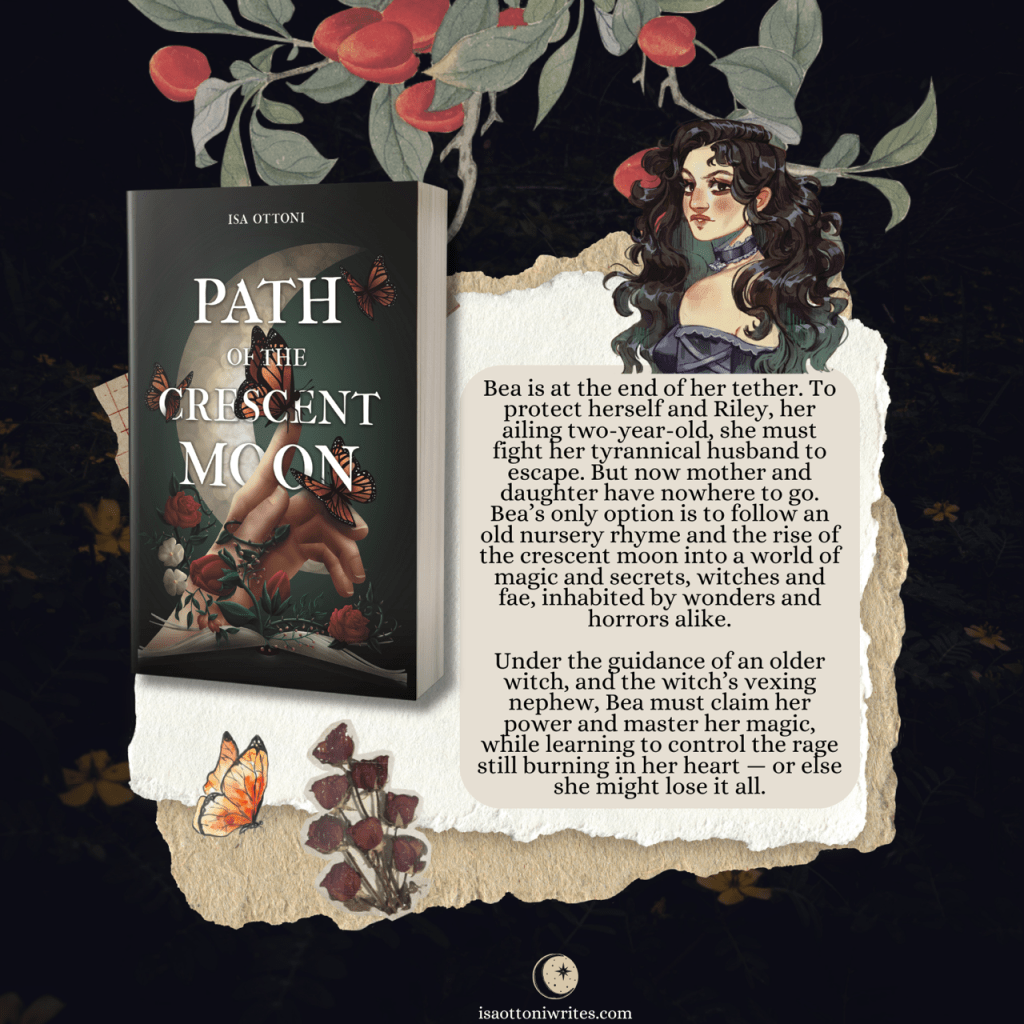
I’m currently enjoying Path of the Crescent Moon as an ARC reader and eager to chat with the author about the story, its creation and publication, and her writer’s life. Join us for some writer’s inspiration.
Let’s Meet the Author
Isa began her journey as an avid fantasy reader who often wondered if, one day, she could write a book herself. It turned out that she could.
Isa’s work began with short stories. She was hooked from the moment she began crafting her own worlds and characters, watching them dance under her typing fingers.
For Isa, the lens of fantasy helps her understand the world; the good and the bad, the whimsical and the dark. Much more than a form of escapism, she believes that speculative fiction has the potential to show a better future for ourselves, to take us on new adventures.
Isa moved continents from her hometown in Brazil to Portugal in 2017, seeking that new adventure for herself. Besides writing and reading, Isa enjoys long runs through the local parks of Porto, feeding and watering her plants with her adoring husband, and obsessing over the fanart of her favourite fantasy protagonists.
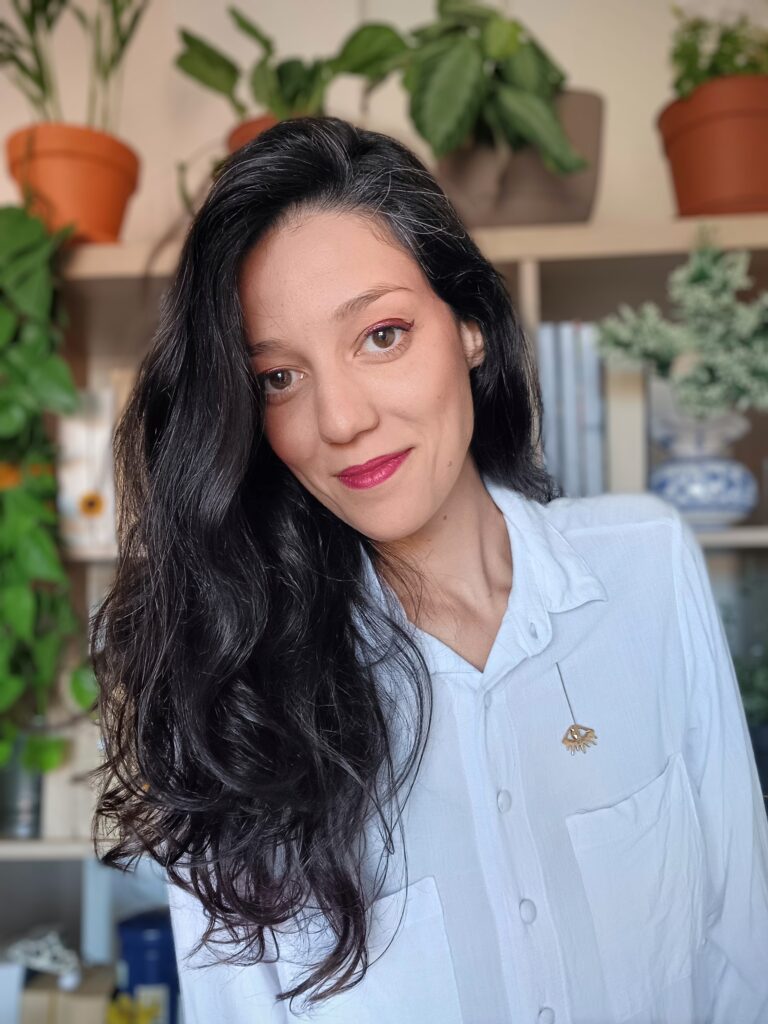
She also believes that books are political and that we can change the world one story at a time.
Let’s Get Started
Thank you so much for visiting my Spotlight, Isa. I love having an author join me during such an exciting milestone. Your novel is out! And it’s amazing. From the start, I was hooked by the intriguing characters. Your stories have found excellent homes in a variety of magazines and anthologies. Can you start by sharing your experiences with the different publications and, eventually, finding and collaborating with your small press publisher, Owl Talyn Press?
Thanks so much for having me again, Darci!
I began with short stories, finding magazines with submission calls that aligned with whatever I had written. There’s a lot (and I mean A LOT) of rejections in any writer’s journey, but I’ve learnt to never take it personally. When we manage to find a home for a story, it’s the best feeling ever.
The process is very similar for short stories and novels: you’re an unagented author, so you’re submitting directly to editors. The only difference is the material you need to prepare.
For short stories, a small cover letter and a mini blurb is enough. For a novel, you may need a synopsis, a summary, author bio, and parts of your manuscript. Pay especial attention to the details, such as what exactly the publishers are looking for, the format of your submission, and when possible, who you’re writing to. Use your voice when crafting the cover letter, try to show why your story would be a good fit, then hit send and hope for the best.
Finding Owl Talyn Press was a dream come true. They were willing to give my book a chance, and it’s been wonderful working with them. I couldn’t be happier!
That’s excellent advice. Thank you! Tell us about your novel and how we can find it.
Path of the Crescent Moon is a fantasy novel made of witchy rage and moonlight. It’s for the angry souls, the soft souls, the ones who would very much love to get lost in a dark forest and learn the secrets of the night.
We follow Bea, a young mother who will do anything to save her child. In her journey, we discover how far we are willing to go for our loved ones, and to what depths we will fall if we fail.
When you have the chance to exact revenge, do you take it? When you have the power to set the world ablaze, do you provoke the spark? If your immediate answer is not a hard “no”, then you might want to check Amazon and Owl Talyn Press for a copy of Path of the Crescent Moon.
Ooh, so moody and such fun questions to hook the reader. From my initial foray into the first chapters, I’m getting the feeling the setting is a character in itself.
Do you have more stories in the works?
Always. I’ve got a vampire novel in submission, and two works in progress. One is a novel, the other a novella, both still on the first draft stage. I’ve got short stories also in submission and probably a thousand more ideas on the back burner. What I do not have a lot of is time.
Hmmm, vampires… since I happen to be intimate with the makings of this story through our writer’s group, let me just say, yes! Vampires, and so much more…
Let’s back up a bit and talk about what inspired you to become a writer.
I’ve always loved books, loved stories and legends and myths and anything that let me wonder. For me, authors are the real super stars, so I’ve always had this idea in the back of my mind that I’d love to write my own story one day.
When I was thirty years old and done with pretending to be what I was not, I decided that it was time to do what I wanted to do; and that was writing a book.
I fell in love with the process of writing. It’s hard and maddening and terribly wonderful. My friends and community inspire me everyday and so do the books I read and the authors I love. I’m a fan girl at heart, so to be able to count myself among my idols is honestly a dream.
I love it, Isa! You share this passion for books and writing on your fantastic Instagram posts. Where do you get your story ideas?
I… have no idea, lol.
Most of my stories begin with an image, something like a stage and a masked cellist in a crimson dress; or a loose vibe, a feeling of grief, or rage, or obsession. I usually know what I want to feel, not necessarily what I want to say, and I won’t know the shape of the story until I start writing it. So maybe they come from my emotions?
I do use writing prompts with my friends: we challenge each other with three random words and write for an hour or two until we have something to share. That’s always fun and a great exercise.
Archetypes are also another starting point for me: a striving musician, a depressed vampire, a grieving witch. I like to play around with ideas and see what comes out of it. Subverting expectations and such. Anything can be a story, and finding it is the fun part.
Excellent! You likely just sent some of our readers to the keyboard to get started on an idea. Dark Cottagecore Fantasy is perfect for this novel–cozy cottage garden backdrops mixed with dark fantasy moonlit forests. I wasn’t familiar with it until Crescent Moon, and now I’m intrigued by the possibilities. Can you talk about the genre and its appeal to you as a writer? What other fantasy sub genres do you enjoy as settings for your stories and why? Are there others you plan to explore?
Cottage-core comes from this idyllic and enchanted life, a cosy cottage and a food garden, tea and biscuits, and no emails to answer or meetings to attend. It’s dream-like, utopic. But we know nothing is as simple as it looks, and there’s always darkness lurking in the corners. Forests are beautiful, but also quite dangerous. Nature is bountiful, but also mercurial.
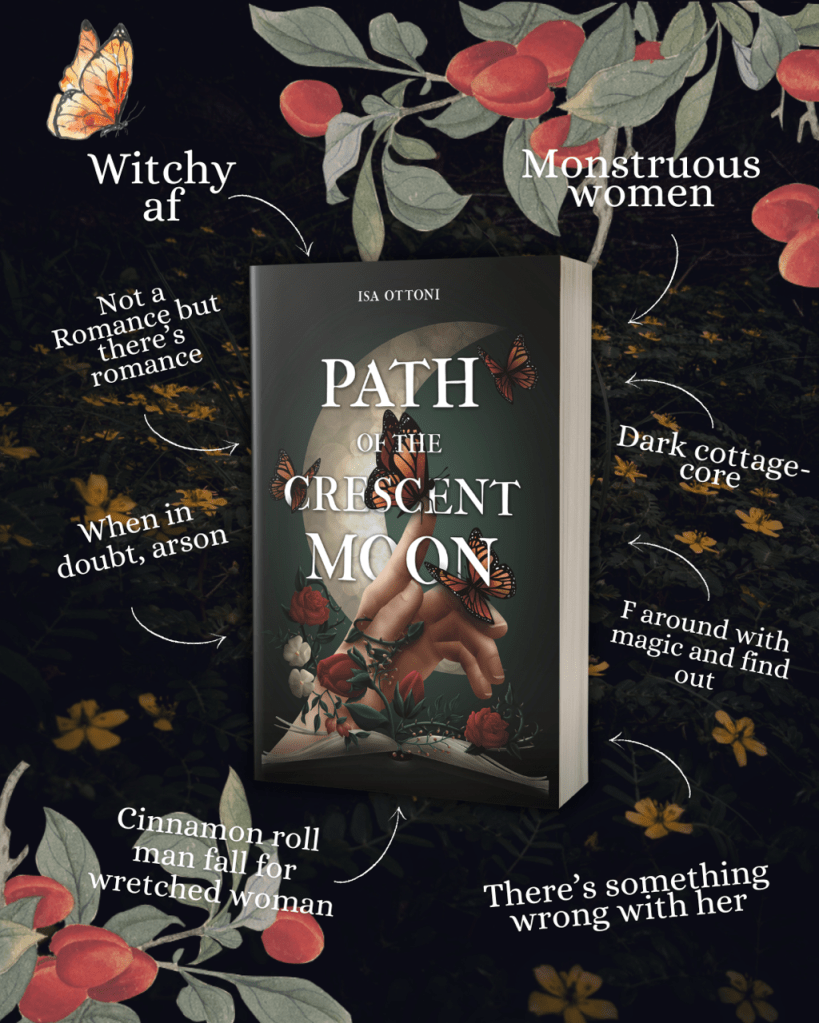
Dark cottage-core explores the shadows that live in our dreams. Nightmares are frightening, and mystical and alluring. The witch who lives in the cottage deep in the woods can save or hex you, and you won’t know until you knock on her door. I love this duality, the good and the bad that exists in everything.
I love everything dark and whimsical, so give me gothic literature, gas-lamp fantasy, historic horror, and so on. I’m also a hopeless romantic, so I want to explore it more in my writing.
I’m right there with you on this. The best thing is that these stories have always been out there, but this descriptor shines the perfect light on that spot on the shelf where readers can find it.
One of the many things I admire about you is your willingness to support authors by sitting on panels, or participating in groups and organizations, offering your experiences and expertise one on one or to the group as a whole. Can you talk about the benefits of engaging with the writing community?
Writing can be a lonely and at times terribly difficult pursuit, especially in the beginning, so finding a community can make all the difference in the world.
A community helps you stay motivated because every writer has been through the dreaded creative block, or struggled with plot holes and shallow characters. Talking things over, listening to advice, asking and giving feedback helps you hone your craft and grow as a writer. Actually, I’d say that sharing your work and actively listening to feedback is the only way to get better.
I also believe art is about connection. We make art in an attempt to translate ourselves and our inner world, in the hopes we will find someone out there who can understand us, who might have gone through the same. It’s all about connecting with other human beings, and writing and reading is the same.
In engaging with the writing community, I met people who have become dear friends even if they live far away from me. And I think this is priceless.
I can relate. Starting this writing journey during the Pandemic on lock down ironically opened the door to a community as big as the globe, yet as supportive and friendly as my neighborhood.
Will we be seeing you and Path of the Crescent Moon at public events, so we can reach back to you?
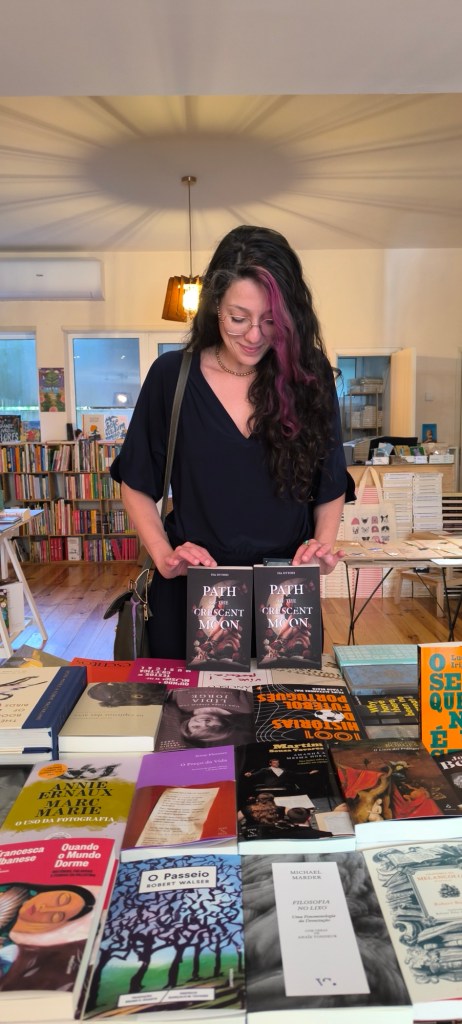
I will be chatting with dark fantasy author Lucy A. McLaren on hers and her cohost’s (sci-fi/fantasy author Lydia Baker) amazing podcast Introverted Indies soon, so stay tuned for more info on that. I also hope to do book fairs and book signings in the future, but I haven’t got anything scheduled yet.
Introverted Indies is awesome and a great place to find new authors and their books. In addition to interviews, you can enjoy authors reading their works.
I did an interview with Lucy a year ago February. So fun! I also interviewed Lucy and Lydia.
For bookish fun and news on sales and events for Path of the Crescent Moon, follow Isa on Instagram and TikTok.
Now that you’ve published your first novel, what are your key takeaways on the writing process? In other words, your best practices.
Write your first draft as if no one is watching, because they aren’t. That draft is just a blue print of your story, and it’s messy and ugly, and that’s okay.
Your second (sometimes third) draft is where you make the story work. It still doesn’t have to be pretty, but here is where you solve the plot holes and flesh out your characters, their motivations, ambitions, how it all plays out. Only after that you can start making the prose pretty, working the sentences and so on.
I find that showing my work to a critique partner or writing group earlier on is best, even if the prose is rough. They are usually the ones who can help me make the story make sense. This way, I won’t waste a lot of time worrying about sentence level edits, only to have to rewrite the whole chapter because of a plot hole.
Be patient. Writing is a marathon, not a race. There will be lots of rewrites anyway, edits and revision, so it’s important to enjoy the process.
Wonderful! Thank you for such awesome advice from the perspective of living it. For more on what it’s like to be part of a writer’s group, check out my Spotlight with Dylan and Isa.
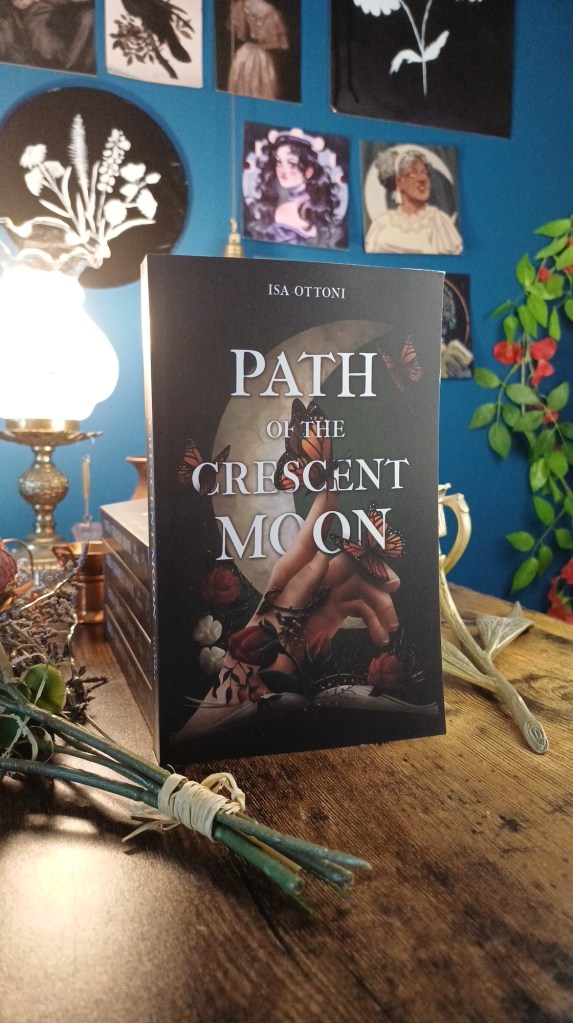
Your cover is gorgeous. Can you talk about your cover design collaboration?
Matisse is a wonderful artist, and I’m so happy I got to work with her.
I started by looking at the covers of books with a similar vibe than mine, like dark cottage-core, witchy books, and found there were lots of flowers, vines, birds, and that they used a darker palette of colours.
From there, I picked the themes and symbols in my book: the monarch butterfly, the crescent moon (of course), the wild flowers and the books.
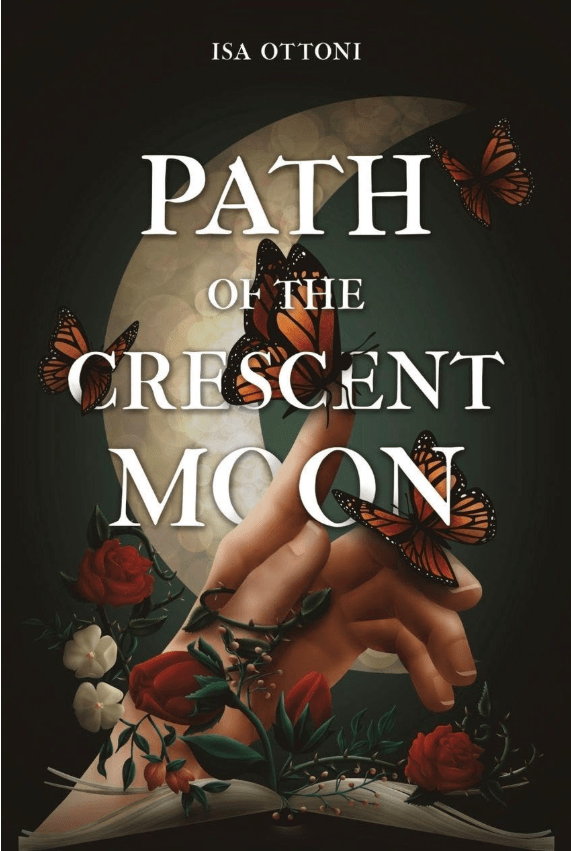
I made a mood board on Canva, and Matisse was able to bring these disconnected ideas to life. She had four sketches done, and we (my editors and I) chose the one you see today.
Thanks for the resource! Here’s Matisse’s website also. Speaking of websites, I’m super impressed with yours. Any tips or advice on building an appealing author landing page?
Oh, so truth be told, my dad made it for me, since he is a programmer and I had no idea where to start!
He chose the template and added all the plugins and popups and what nots to make it work while I chose what would go in each page and link. I also made all the graphics on Canva, trying to build a visual identity with the colours, pictures, and fonts, and I think it worked well. I also made sure no AI was used.
It was his advice to have all my published short stories there, as they could be a way to introduce my work to new readers. Having them on my website means that they are searchable, people can Google and find them easily, and that can convert in actual sales for my book.
I’ve got a Newsletter now too, so people can subscribe directly on my website.
I love a great family collaboration story, and what a success.
What are your top tips and advice on balancing your creative time with daily life? Do you have a regular writing schedule, a favorite writing spot?
No regular writing schedule, more like seizing every opportunity to write. I don’t write everyday, that is literally impossible for me, so I don’t feel bad if I spend a whole day without it.
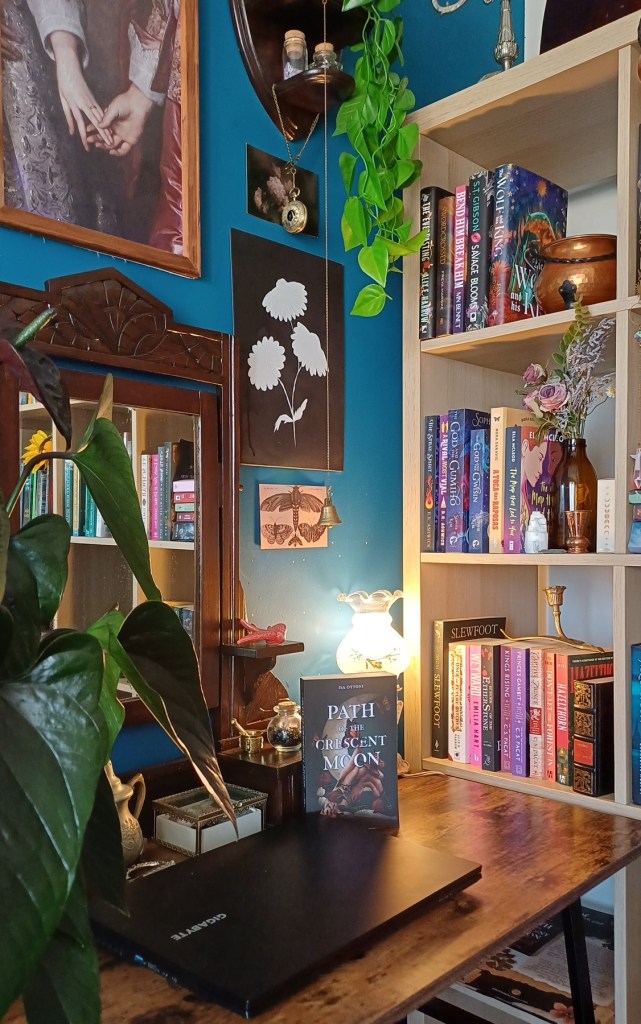
But I do make an effort to write consistently, which means finding time in my routine for it. It’s not a difficult thing to do, because I love writing even when it’s hard. If the words aren’t coming, I either leave it to come back later, or I write something bad and broken either way. Those are always fun.
My favourite writing spot now is my desk which has a nice witchy atmosphere around it. But I’ll write on the sofa or at work if I have a break during the day.
I can picture you at all these places. Thanks again Isa for dropping by! I can’t wait to see what’s next for you.
Any parting advice for aspiring writers?
Write. That sounds obvious but it’s too easy to get caught in the “planning to write” stage. So, write. Write bad words, ugly sentences, broken stories; put it all out there and have fun. Slowly, things will start making more sense while you read and learn and write some more, and one day you will notice that you wrote a book and that the book is kinda good.
And Darci, thank you so much for having me and for being this amazing friend!
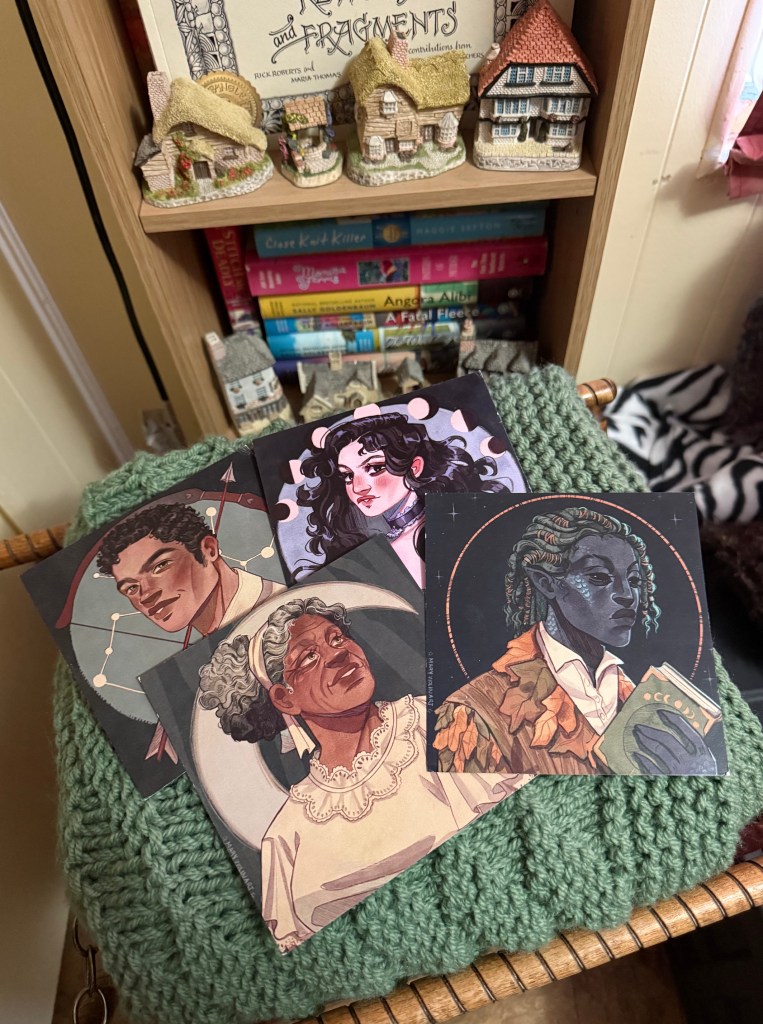
Back to you, Isa 😍 Ooh, and let me share my Path of the Crescent Moon character art as the grande finale. Get in touch with Isa to collect your very own!


Comments welcome!